Every summer, dramatic headlines about shark attacks surge across news feeds. A single sighting can shut down a beach, spark viral videos, and dominate the nightly news. It’s easy to walk away with the impression that shark encounters are spiralling out of control.
But are shark attacks actually becoming more common — or are we simply seeing them more because of media attention, population growth, and the way humans now use the ocean?
To find out, we need to look beyond headlines and examine long‑term data, fatality trends, and the environmental and human factors shaping modern shark–human interactions.
What Counts As A Shark Attack?
Before diving into the numbers, it’s important to understand what researchers classify as a shark incident. According to the Florida Museum of Natural History, shark interactions fall into three main categories:
- Unprovoked incidents — when a shark bites a human without any human‑initiated interaction
- Provoked incidents — when humans initiate contact, such as spearfishing, touching, feeding, or unhooking a shark
- Minor bites vs serious injuries — many encounters involve small, non‑life‑threatening bites rather than severe trauma
These distinctions help scientists identify behavioural patterns and avoid overstating risk.
How Common Are Shark Attacks Really?
Despite their fearsome reputation, sharks are responsible for far fewer deaths than many everyday hazards. In Australian waters, the most common cause of death is not sharks — it’s drowning. The 2025 National Drowning Report recorded 695 coastal drowning deaths between 2020 and 2025, with 22% caused by rip currents.
Yet drowning rarely makes headlines. Shark sightings, on the other hand, can trigger beach closures, helicopter sweeps, and national news coverage. This imbalance shapes public perception, making shark encounters feel more common and more dangerous than they truly are.
In reality, millions of people swim, surf, snorkel, and dive in Australian waters every year. Against that backdrop, shark incidents — especially fatal ones — remain extremely rare.
Global Shark Attack Trends
Shark encounters tend to occur in regions where:
- Large populations live near the coast
- Warm waters support year‑round recreation
- Surfing, diving, and swimming are popular
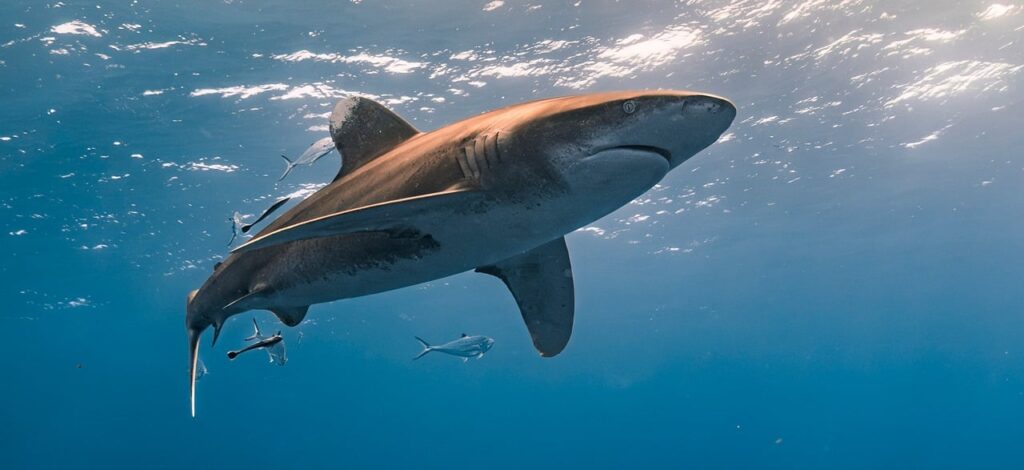
This includes Australia, the United States (particularly Florida), and South Africa — places where millions of people enter the ocean each year.
According to the Florida Museum’s 2025 global summary, there were 94 shark bites worldwide, including 12 fatalities. The United States recorded the highest number of incidents (25 bites, one fatality), followed by Australia with 23 incidents and five fatalities, a figure higher than the recent annual average.
These numbers help set the global scene — but Australia’s long‑term records offer an even clearer picture of how shark encounters have changed over time.
Shark Attack Statistics in Australia (2000–2025)
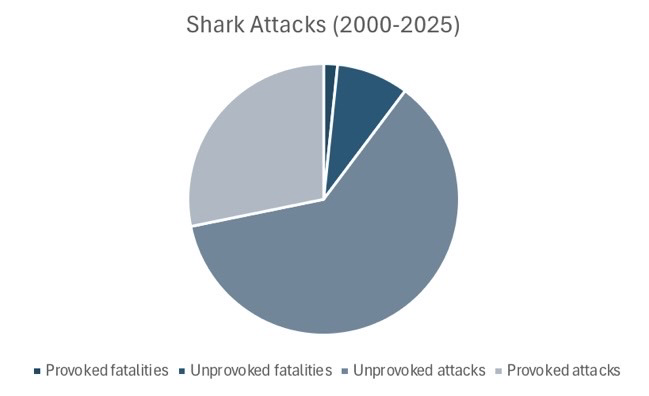
Australia maintains the Australian Shark Incident Database (ASID) — one of the world’s most detailed shark‑incident databases. Between 2000 and 2025, the country recorded:
- 559 shark bites
- 56 fatalities
- 348 injuries
- 146 uninjured incidents
Around 72% of all incidents were unprovoked.
Which Sharks Are Responsible?
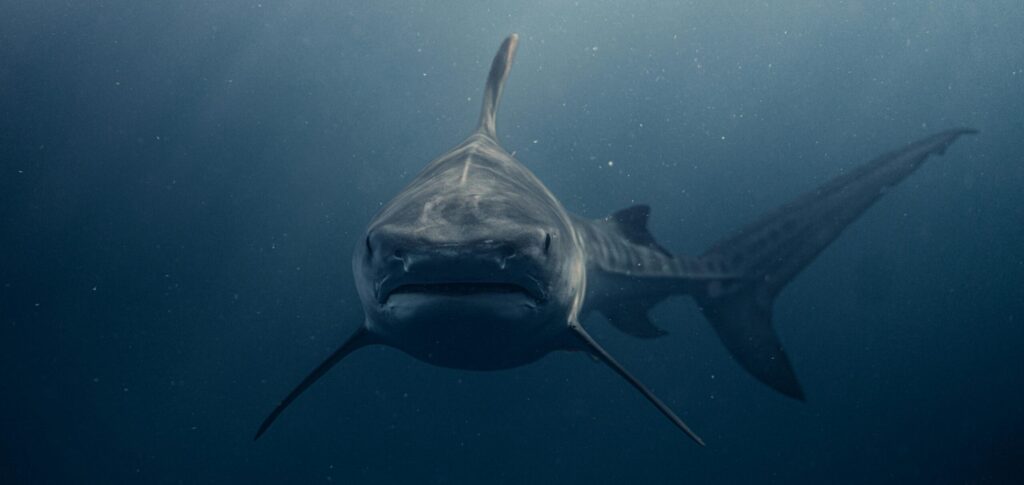
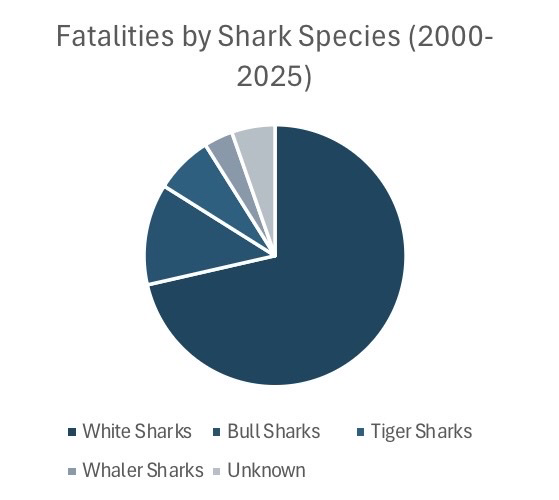
Only four shark groups were responsible for the 56 fatalities recorded over the last 25 years:
- Great white sharks — 71%
- Bull sharks — 13%
- Tiger sharks — 7%
- Whaler sharks — 4%
These species are large, powerful predators capable of inflicting serious injury — but they do not actively hunt humans.
Where Do Most Shark Attacks Occur in Australia?
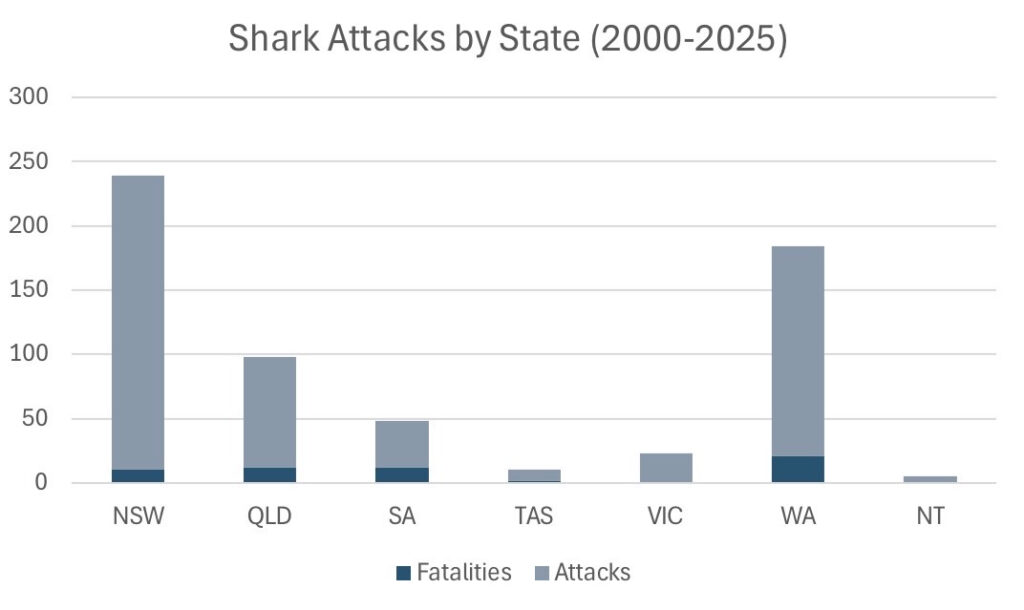
Shark incidents aren’t spread evenly across Australia — some states see far more encounters simply because more people are in the water more often.
From 2000 to 2025, New South Wales recorded the highest number of shark incidents, with 229 cases. Western Australia followed with 163, then Queensland with 86. South Australia recorded 36, Victoria 23, Tasmania 9, and the Northern Territory 5.
When looking specifically at fatalities, the pattern shifts. Western Australia recorded the most fatal incidents, with 21 deaths over the 25‑year period. Queensland and South Australia each recorded 12, New South Wales recorded 10, Tasmania recorded one, and both Victoria and the Northern Territory recorded none.
These differences reflect a mix of coastline length, water temperature, popular surf zones, and the distribution of large predatory shark species.
Who Is Most at Risk?
Human activity plays a major role in incident patterns. Of the 56 fatalities:
- 25 involved people using boardcraft (including surfers)
- 12 involved swimmers
- 8 involved divers
- 5 involved spearfishers
- 5 involved snorkellers
These activities often place people in deeper water, near drop‑offs, or around prey species — areas where sharks naturally hunt.
Are Shark Attacks Increasing? What the Data Shows
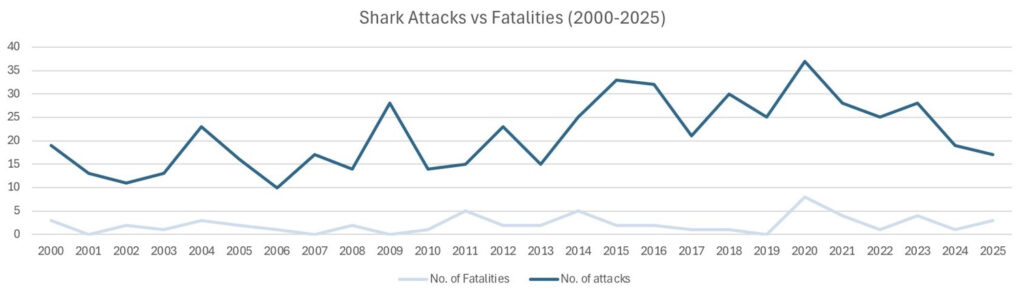
A 25‑year analysis of Australian shark‑incident data reveals a clear upward trend in total shark encounters. Incidents have been increasing at an average rate of about 0.45 additional incidents per year — roughly one extra shark incident every two to three years.
However, this rise in encounters does not translate into a rise in fatalities.
Fatal shark attacks fluctuate significantly from year to year, with occasional spikes such as those seen in 2014 and 2020. But overall, there is no statistically reliable long‑term increase in fatal outcomes. The fatality trend rises only slightly — about 0.06 per year, or one additional fatality every sixteen years — a change too small to be meaningful.
Why Aren’t Fatalities Increasing?
Even though more people are entering the ocean and more shark encounters are being recorded, several key factors help explain why deaths have not risen alongside incidents:
- Faster emergency response — Surf lifesavers, helicopters, drones, and jet skis now reach victims far more quickly than in past decades.
- Improved first aid on beaches — Many patrolled beaches have trauma kits, tourniquets, and trained responders who can stabilise bleeding within minutes.
- Better medical treatment — Advances in trauma surgery, blood transfusion protocols, and rapid hospital transport dramatically increase survival rates.
- More awareness of shark behaviour — Ocean users are more informed about avoiding high‑risk conditions, reducing the likelihood of severe bites.
- More non‑fatal bite types — Many modern incidents involve investigative or defensive bites rather than full predatory strikes.
Together, these improvements mean that while encounters may be rising, the likelihood of surviving a shark bite is higher than ever.
In short: more encounters, not more deaths.
Why Shark Incidents Are Increasing
The rise in shark encounters does not mean sharks are becoming more aggressive. Instead, researchers point to several human‑driven factors:
- More people entering the ocean
- Population growth in coastal regions
- Increased participation in surfing, diving, and swimming
- Better reporting and documentation
According to the Australian Bureau of Statisitics (ABS), Australia’s population has grown by 8.5 million people since 2000, with most of that growth concentrated along the coast. More people in the water naturally leads to more interactions with marine wildlife.
In other words, humans and sharks are simply sharing the ocean more often.
Why Shark Bites Happen
Most shark bites are not intentional attacks. Researchers believe many incidents occur due to environmental and behavioural factors such as:
- Mistaken identity — surfers or swimmers may resemble prey from below
- Low visibility — murky water increases the chance of confusion
- Curiosity — sharks often investigate unfamiliar movement
- Nearby feeding activity — baitfish schools or fishing can attract sharks
Humans are not a natural food source for sharks. Many bites are believed to be exploratory rather than predatory.
Environmental Changes and Shark Behaviour
Environmental shifts can also influence where sharks and humans overlap.
Ocean Warming and Climate Change
As ocean temperatures rise, some shark species may expand their range or spend more time in certain coastal areas. This can increase the likelihood of encounters without changing shark behaviour.
Changes in Prey Availability
If fish populations shift or decline, sharks may alter their migration routes or hunting patterns, potentially bringing them closer to popular swimming and surfing areas.
Scientists are still studying how long‑term environmental change may influence shark movement.
Reducing the Risk of Shark Encounters
While shark risk remains extremely low, ocean users can further reduce the likelihood of encounters by:
- Avoiding murky water
- Staying clear of baitfish schools
- Following local beach safety advice
- Swimming at patrolled beaches
For a deeper breakdown of practical safety strategies, see our article How to Be Shark Smart.
Why Focus on the Last 25 Years?
Using the most recent 25 years of data provides the clearest and most relevant picture because:
- Modern records are more accurate and consistent
- Human coastal activity has changed significantly
- Environmental conditions have shifted
- Older records often contain gaps or inconsistent reporting
This timeframe reflects modern ocean use, making it especially useful for understanding current shark‑incident trends.
The Bottom Line
Shark attacks may appear to be increasing, but the reality is more nuanced than headlines suggest. Long‑term data shows that shark encounters have gradually risen over the last 25 years — largely due to population growth, increased ocean activity, and improved reporting.
However, fatal shark attacks have not shown the same long‑term increase.
Sharks are not becoming more aggressive. Instead, humans and sharks are simply sharing the ocean more often in a changing environment.
Despite public fear and media attention, the overall risk of a fatal shark attack remains extremely low.
Explore More