I hadn’t been to Moreton Island in almost a decade — not since a family holiday at Tangalooma Resort when everything felt big and bright and impossibly exciting. I’d always remembered the wrecks, the colour of the water, and that feeling of being somewhere just a little wild. Coming back felt overdue. As the ferry pulled away from Brisbane, it was that same mix of nostalgia and anticipation — like returning to a place that had quietly waited for you.
Crossing to Moreton Island
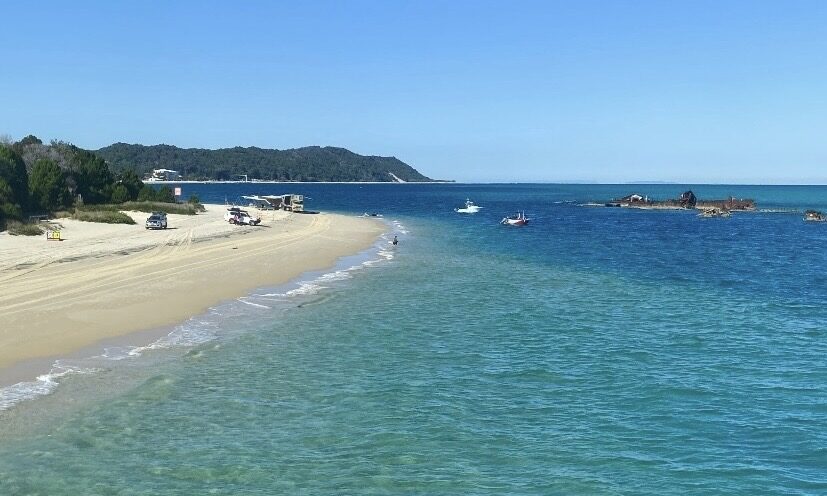
The ferry ride was smooth and sunny, the kind of winter’s day where the bay looks almost metallic. When we reached the island, the Moreton Island wrecks sat just offshore, their rusted silhouettes rising out of the blue. The surface looked a little rough, but once you were in the water it settled into an easy rhythm. Visibility hovered around ten metres — not crystal, but clear enough to feel inviting.
People were getting towed across the channel on jet skis, but I decided to swim it. There was a slight current pushing through the gap, nothing dramatic, just enough to make you aware of it. With the bottom dropping away and the viz fading into that deep green, it was a little unnerving not being able to see anything below. Every now and then I’d catch myself glancing into the haze beneath me, half expecting something large to materialise out of it. Still, it was manageable, and the pull of the wrecks was worth the nerves.
The Wrecks: A Reef Growing From Rust
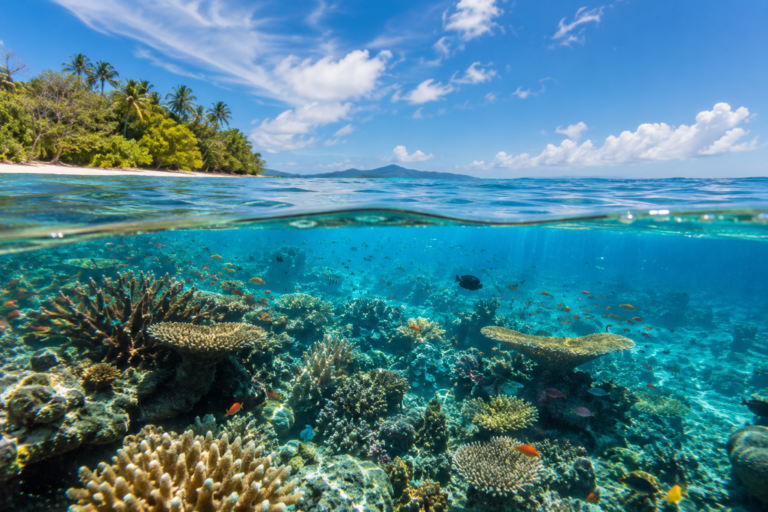
Reaching the wrecks felt like stepping into a pocket of life. Schools of tiny fish swarmed the metal frames, shifting in tight, glittering clouds. The wrecks themselves were scattered with patches of coral — small, hardy colonies clinging to the rusted ribs and giving the whole structure a softer, more organic look. Some sections were little more than skeletal frames now, while others still looked unmistakably like ships resting on their sides beneath the surface.
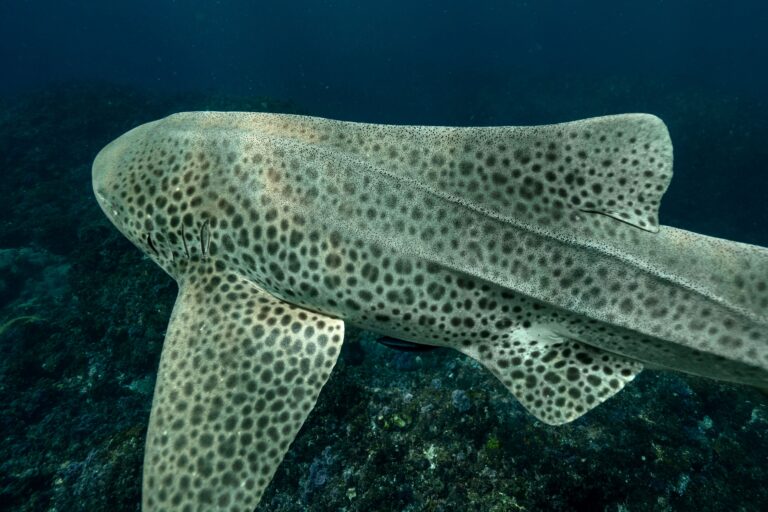
The highlight came early. A wobbegong cruised out from beneath one of the hulls, gliding along the side of the wreck with that slow, confident movement they have when they’re not hiding in a crevice. Seeing one out in the open felt rare. Later, right on the point of the furthest wreck, I spotted another — this one a yellower shade, perfectly camouflaged against the metal and coral.
On the ocean-facing side of the wrecks, the water was a little choppier, but still easy enough to navigate. The surge just added a bit of movement to the scene.
A Turtle, a Lionfish, and the Usual Show-Offs
Near the resting wobbegong, a hawksbill turtle drifted into view. It was one of those calm, unbothered individuals — scraping at the corals, circling the wreck, rising for air, then settling back into its slow loop. I hung out with it for a while, just sharing the space and watching it go about its routine.
Tucked among the shadows of the wreck, I spotted my first lionfish — one of those species I’d seen countless times in photos but never in person. It hovered in that still, ornamental way they do — fins spread, patterned, and almost too pretty for how dangerous they are.
Butterflyfish and angelfish flickered through the scene as well, including bright orange individuals that stood out sharply against the blue water and rusted steel. Every few minutes another school of tiny fish would sweep past, shifting direction all at once like they were following some invisible cue.
Sun, Salt, and Smooth Sailing Home
After the swim, I stretched out on the sand and let the sun do its thing. The wrecks sat just offshore, busy with snorkellers and fish, while the afternoon light softened across the bay. By the time the ferry returned, the day had settled into that warm, tired feeling you only get after hours in the water.
The ride back to Brisbane was smooth, the kind of crossing where you sit quietly, salty and content, replaying the best moments — the wobbegongs beneath the wrecks, the turtle looping lazily through the shallows, and the feeling of returning to a place that somehow looked exactly as I remembered it.
Interesting in visiting Moreton Island? Check out Moreton Island Travel Guide: Snorkelling, Diving & Things to Do