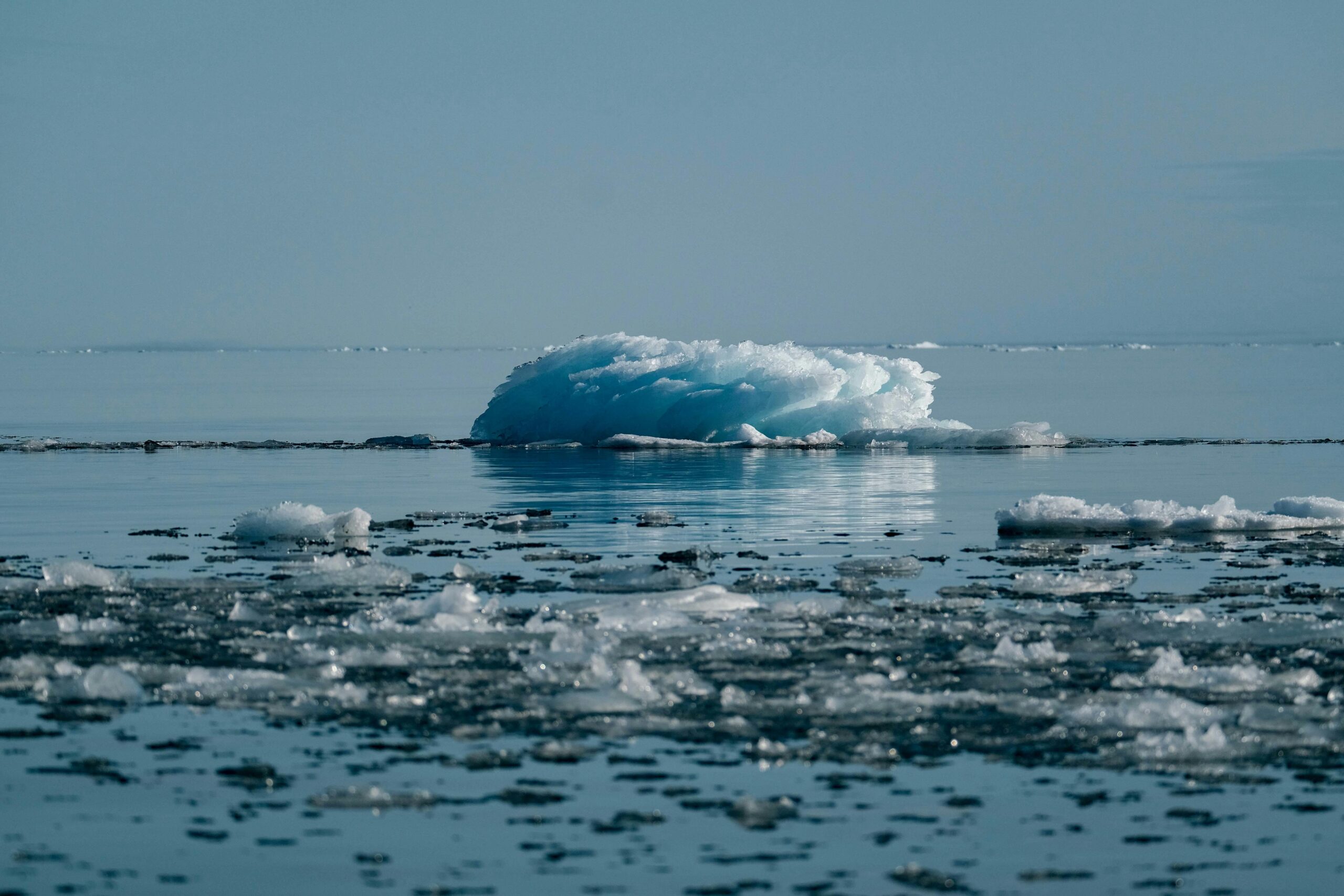
If you stood on a beach and looked out across the ocean, you probably wouldn’t notice anything unusual.
The waves still roll in. The horizon looks the same. The water appears as it always has.
Yet some of the most significant changes on Earth are happening beneath the surface.
Understanding those changes helps explain not only what is happening beneath the surface, but why it matters to all of us.
What Is Climate Change?
Climate change refers to long-term shifts in Earth’s climate system, including temperature, rainfall, ocean conditions, and atmospheric circulation.
Greenhouse Gases and the Greenhouse Effect
Greenhouse gases such as carbon dioxide, methane, and water vapour absorb and re-radiate heat within the atmosphere. While some of this heat escapes into space, some is reflected back towards Earth. This natural process, known as the greenhouse effect, helps keep Earth warm enough to support life.
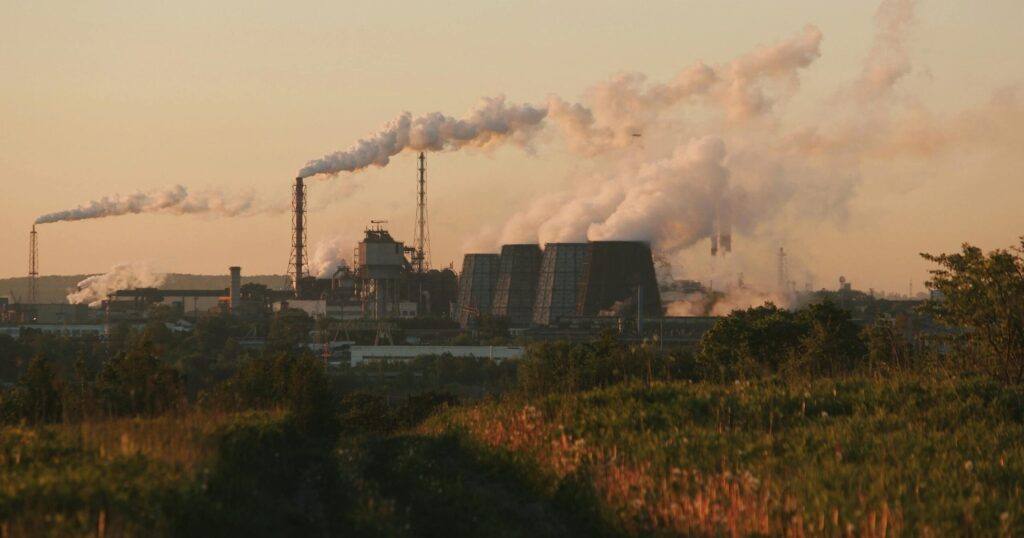
The issue is not the greenhouse effect itself. Human activities such as burning fossil fuels, agriculture, and industrial processes are increasing greenhouse gas concentrations far beyond natural levels. As more greenhouse gases accumulate in the atmosphere, more heat is retained within Earth’s climate system, driving long-term warming and altering Earth’s processes.
Natural Climate Change vs Human Influence
Earth’s climate has always changed due to factors such as volcanic activity, solar variation, orbital cycles, and natural carbon cycling.
However, the speed and scale of warming observed over the past century cannot be explained by natural factors alone. Multiple lines of evidence — from physics and chemistry to satellite observations and ocean measurements — show that human-driven greenhouse gas emissions are the primary cause of current warming.
Why the Ocean Matters
When people think about climate change, they often picture rising air temperatures.
But the ocean is where much of the story unfolds.
The ocean absorbs around 30% of the carbon dioxide produced by human activities and more than 90% of the excess heat trapped by greenhouse gases.
Water can store large amounts of heat with only a small change in temperature. As a result, the ocean has absorbed much of the warming that would otherwise be occurring in the atmosphere.
Without the ocean acting as this enormous heat sink, atmospheric temperatures would be significantly higher than they are today.
The ocean also:
- Produces around half of Earth’s oxygen
- Redistributes heat through ocean currents
- Supports fisheries and food security
- Protects coastlines from storms and erosion
- Provides jobs for hundreds of millions of people
- Supports tourism, recreation, and coastal economies
Coral Reefs: A Small Ecosystem With a Huge Impact
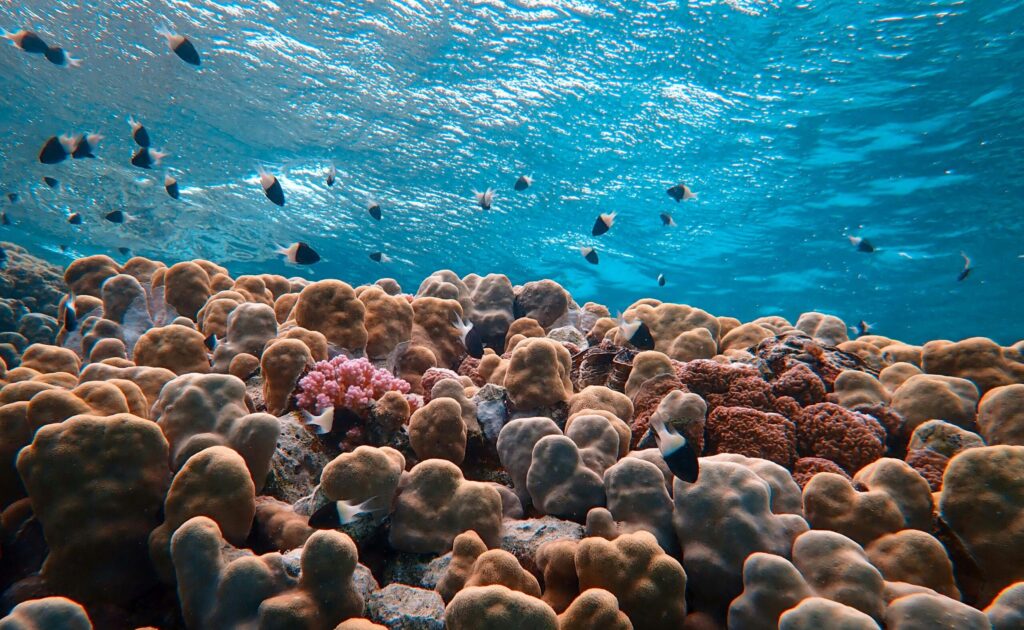
Coral reefs cover less than 1% of the ocean floor yet support roughly one-quarter of all marine species.
They provide food, shelter, breeding grounds, and nursery habitat for countless organisms while supporting fisheries, tourism, and coastal communities.
Reefs also act as natural breakwaters, reducing wave energy and helping protect shorelines from erosion and storm damage. More than half a billion people depend directly on coral reef ecosystems for food, income, or coastal protection.
Because of their ecological, economic, and cultural importance, changes to coral reefs can have consequences that extend far beyond the reefs themselves.
How Climate Change Is Affecting the Ocean
From tropical coral reefs to deep-ocean ecosystems, climate change is influencing nearly every part of the marine environment.
Many of these changes influence one another, creating cascading effects throughout the ocean.
Rising Ocean Temperatures and Marine Heatwaves
As the ocean absorbs more heat, average temperatures rise. One consequence is the increasing occurrence of marine heatwaves — prolonged periods of unusually warm ocean temperatures that can last for days, weeks, or months.
Marine heatwaves differ from long-term warming: they are acute temperature spikes layered on top of chronic warming trends. Like heatwaves on land, they place significant stress on ecosystems, altering species distributions, disrupting food webs, triggering mass mortality events, and driving coral bleaching.
As the climate continues to warm, marine heatwaves are becoming more frequent, more intense, and longer lasting.
Marine heatwaves have already caused widespread ecological impacts. In some regions, prolonged periods of unusually warm water have contributed to the loss of kelp forests, altered fish distributions, and disrupted entire marine ecosystems.
Coral Bleaching
Corals live in a symbiotic relationship with microscopic algae that provide most of their energy and much of their colour.
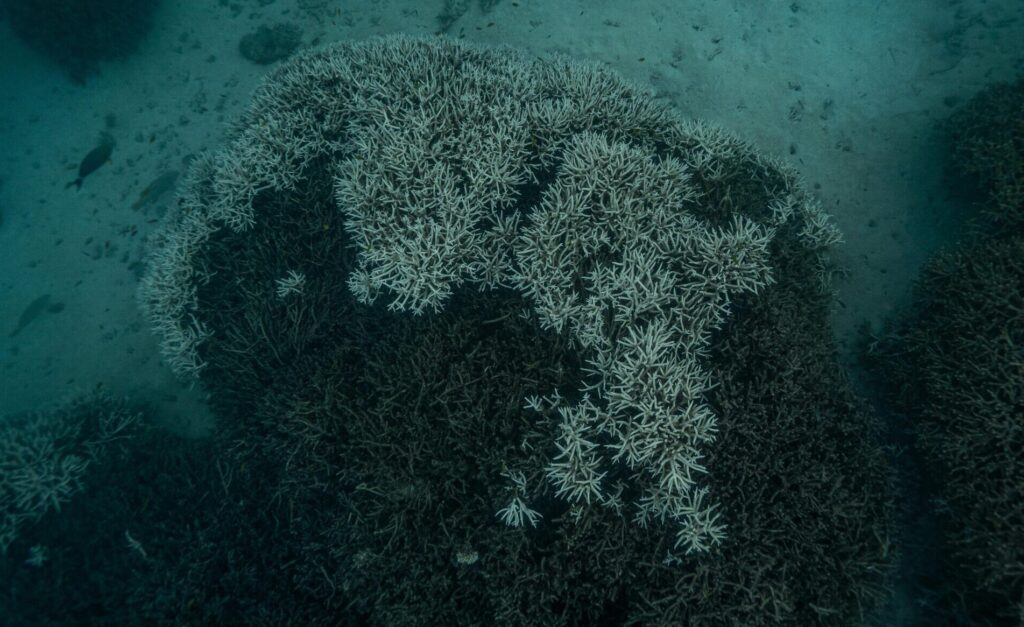
When water temperatures remain too high for too long, corals become stressed and expel these algae — a process known as coral bleaching.
Bleached corals are not dead, but they are weakened. Without their algae, they lose a major source of energy and become more vulnerable to disease, starvation, and mortality.
During severe bleaching events, a reef that was once covered in colourful corals can take on a stark white appearance as millions of corals lose the algae that normally provide their colour and energy.
Some corals can recover if temperatures return to normal quickly, but recovery takes time. When bleaching events occur too frequently, reefs may be stressed again before they have fully recovered from previous events.
This has become an increasing challenge for parts of the Great Barrier Reef, where multiple mass bleaching events have occurred within relatively short periods. As recovery windows shrink, the resilience of coral communities can decline.
Ocean Acidification
The ocean absorbs large amounts of carbon dioxide from the atmosphere. When carbon dioxide dissolves in seawater, it forms carbonic acid, which lowers ocean pH and reduces the availability of carbonate ions — essential building blocks for shells and skeletons.
With fewer carbonate ions available:
- Shell growth slows
- Reef-building becomes more difficult
- Reef structures weaken over time
- Ecosystem resilience declines
Acidification affects not only corals but also shellfish, plankton, and other organisms that form the foundation of marine food webs. Because these species support countless others, changes at the bottom of the food chain can ripple throughout entire ecosystems.
Declining Oxygen Levels
Warmer water naturally holds less oxygen than cooler water.
As ocean temperatures rise, oxygen availability can decline — a process known as ocean deoxygenation.
This can make it harder for some marine organisms to survive, grow, and reproduce, particularly in environments where oxygen levels are already low.
Combined with warming and acidification, declining oxygen levels create additional challenges for marine life.
Sea-Level Rise
Sea levels are rising due to two primary processes:
- Thermal expansion — as seawater warms, water molecules move faster and spread farther apart, increasing the volume of the ocean.
- Melting of land-based ice — glaciers and ice sheets add additional water to the ocean.
Melting sea ice does not significantly raise sea levels because it is already floating, but its loss still matters. Sea ice reflects sunlight, and without it, the darker ocean absorbs more heat.
Even small increases in sea level can have major consequences.
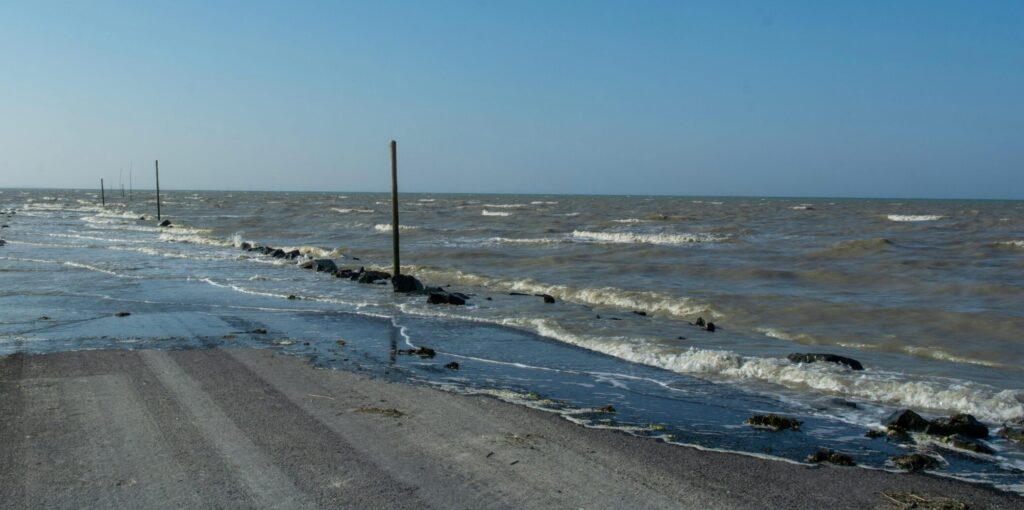
Higher sea levels raise the baseline for high tides, storm surges, and coastal flooding. Water can travel farther inland during storms, increasing erosion, damaging infrastructure, contaminating freshwater supplies, and placing greater pressure on coastal ecosystems.
Coastal habitats such as coral reefs, mangroves, and saltmarshes can also be affected as changing water levels alter the environmental conditions they depend on.
Common Misconceptions About Climate Change
Weather vs Climate
Weather describes short-term conditions such as daily temperature, rainfall, wind, and storms.
Climate describes long-term patterns measured over decades or longer.
A cold day, a severe storm, or an unusually cool season does not disprove climate change. Scientists identify climate trends over decades, not individual events.
Scientific Theories
In everyday conversation, the word “theory” often means a guess.
In science, a theory is a well-supported explanation built on evidence, testing, and repeated observation.
The theory explaining greenhouse gas-driven warming is supported by physics, chemistry, satellite observations, ocean measurements, and multiple independent scientific disciplines.
Uncertainty and Climate Models
Scientific uncertainty does not mean scientists do not understand climate change. It refers to the range of possible outcomes and the precision of measurements.
Scientists use multiple climate models to test different assumptions, scenarios, and future emission pathways. Comparing many models helps researchers identify consistent patterns and better understand the range of possible future outcomes.
While no model can predict every detail of the future, climate models have successfully reproduced many long-term trends observed in the real world, including rising global temperatures and increasing ocean heat content.
Moving Forward
Climate change is reshaping the ocean in ways that affect both marine ecosystems and human societies.
From repeated bleaching events on the Great Barrier Reef to marine heatwaves that have damaged kelp forests in parts of Australia and around the world, many of these changes are already being observed today.
The ocean remains a stabilising force, absorbing heat and carbon that would otherwise accelerate atmospheric warming — but this buffering capacity has limits.
Understanding how the ocean is changing helps explain why actions that reduce emissions, protect ecosystems, and improve resilience are increasingly important.
The ocean has absorbed much of the impact of climate change for decades. Understanding how it is changing is the first step toward protecting one of Earth’s most important life-support systems.
Explore More