
A vibrant beach scene at Gold Coast, Australia, with lifeguard gear and clear skies.

Rip Currents: How They Work and How to Get Out of One

One moment you’re standing in waist-deep water. The next, the shoreline is suddenly getting smaller no matter how hard you swim.

That sudden feeling of being swept away from shore is how many people first realise they’ve entered a rip current.

Rip currents are responsible for more drowning deaths than any other coastal hazard. They can form quickly, move fast, and catch people off guard — even on calm days. Rips can overwhelm even the strongest swimmers within minutes.

Understanding how rip currents work, how to spot them, and how to respond if caught in one can make your time in the ocean significantly safer.

How to Spot a Rip Current

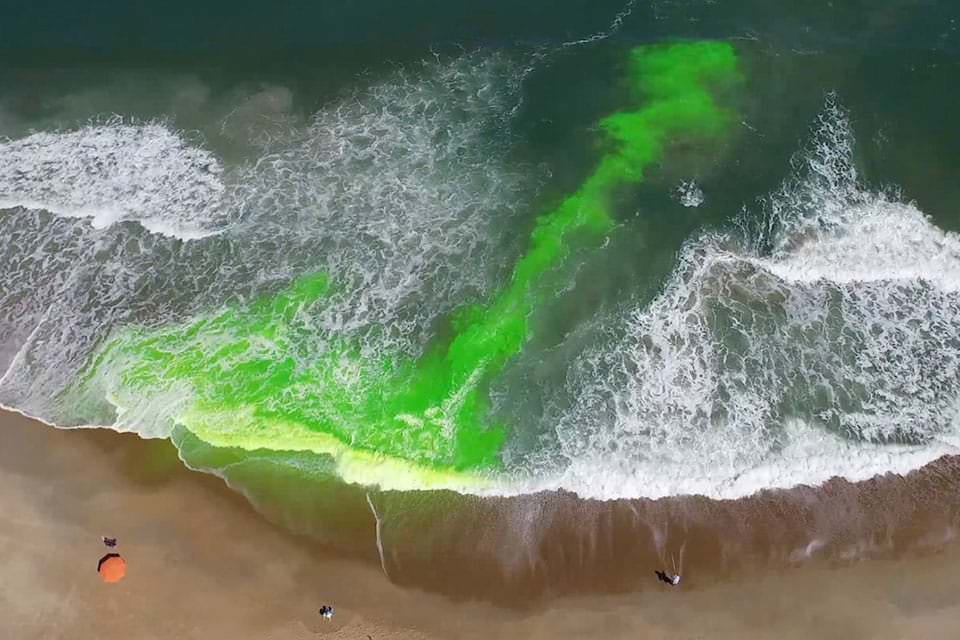
Being able to identify a rip current is one of the most useful skills you can have at the beach. Rips often look different from the surrounding surf because they disrupt the normal pattern of breaking waves.

A rip current may appear as:

  • A darker, deeper-looking channel
  • A gap between breaking ways perpendicular to the beach
  • Churning or uneven surface texture
  • Foam, sand, or seaweed drifting steadily offshore
  • Muddy or discoloured water caused by sand being pulled outward

Rips can sometimes appear calmer than the surrounding surf, which is why people are often drawn to them.

Some rip currents are obvious, while others can be difficult to spot even for experienced ocean users. If you’re unsure about conditions, ask a lifeguard or lifesaver before entering the water.

The safest place to swim is always between the red and yellow flags at a patrolled beach.

See the YouTube video below by Rip Current Safety for visual examples of a rip current

What Is a Rip Current?

A rip current is a narrow, fast-moving stream of water flowing from the beach back out to sea. Waves constantly push water toward shore, and that water needs a way to escape. When it funnels through a deeper channel or gap in the sandbank, it forms a concentrated current — like a river running back out to sea.

Typical rip speeds are around 0.3–0.6 metres per second, but strong rips can reach up to 2.4 metres per second — faster than an Olympic swimmer.

Rip currents move horizontally across the surface. They do not pull people underwater.

People drown because they panic, become exhausted fighting the current, or lack flotation and adequate swimming ability.

The Anatomy of a Rip Current

Understanding the basic structure of a rip makes it easier to respond safely.

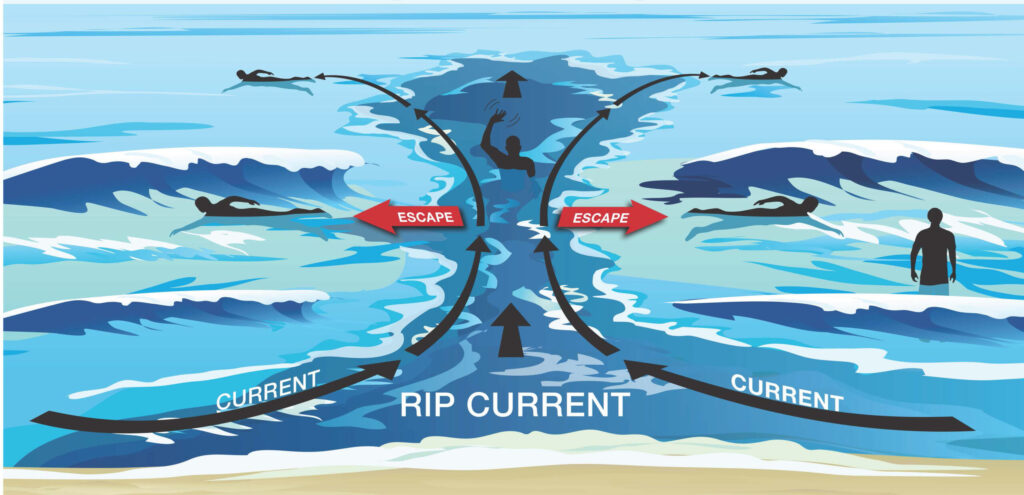
Rip currents are often fed by “feeder currents” – these move water parallel to the beach towards the rip channel, where the current is narrower and faster. After water flows through the channel, the currents slows, spreads out, and loses strength just beyond the shore break.

They do not continue pulling people endlessly out to sea.

Once beyond the shore break, swimmers can usually move sideways out of the current into the wave zone and return to shore with the help of breaking waves.

Why Rip Currents Are So Dangerous

According to the 2025 Australian National Drowning Report, rip currents remain Australia’s number‑one coastal hazard.

Between 2020 and 2025, 22% of all coastal drowning deaths in Australia were linked to rip currents — and 2025 alone reached 37%.

Most deaths occurred at unpatrolled beaches, outside patrol hours, or outside the red and yellow flags.

Rip Currents Can Change Quickly

It’s important to note that rip currents are not always fixed in one place.

Some form beside headlands, rocks, or structures and remain relatively consistent. Others shift along the beach or appear suddenly as surf conditions and sandbanks change.

A beach that looked safe at 9am can develop a strong rip by midday as the tide drops or wave energy increases.

How to Survive a Rip Current

Here’s the simplest, safest sequence to follow if you’re caught in a rip:

Relax and Float

Floating keeps your airway clear and prevents panic. Fighting the current wastes energy quickly.

Raise One Arm for Help

A raised arm is a recognised distress signal that can attract attention from lifeguards, surfers, or people on the beach.

Swim Parallel Toward the Breaking Waves

If you feel capable, swim sideways toward the wave zone, where water is moving back toward shore.

Do not try to swim directly against the rip.

Conserve Energy and Assess the Situation

If swimming sideways isn’t working, stop, float again, and try another direction.

Your goal is to stay afloat, stay calm, and work with the ocean rather than exhausting yourself fighting against it.

First Aid and Rescue Considerations

If someone is caught in a rip current, avoid rushing straight into the water unless you are confident in your own swimming and rescue ability. Panicked drowning victims can unintentionally pull rescuers underwater.

  • If possible:
  • Call 000 immediately
  • Alert a lifeguard or lifesaver
  • Throw them something that floats — a board, bodyboard, esky lid, pool noodle, or any buoyant object
  • Talk to them calmly and encourage them to float

Once rescued, check whether they are breathing. If not, begin CPR.

Keep them warm and monitor them closely — even if they seem fine. People who have inhaled or swallowed water can deteriorate quickly, so medical assessment is important.

Final Thoughts

Rip currents are powerful, fast-moving, and often difficult to spot, but they are not unpredictable. Learning how to recognise them, understanding how they behave, and knowing how to respond calmly can make a huge difference in an emergency.

A little ocean knowledge can go a long way — both for your own safety and for the people around you.

Frequently Asked Questions

Do rip currents pull you under?

No. Rip currents pull people outward, not downward. They move horizontally along the surface, like a fast-flowing conveyor belt.

Will a rip pull me all the way out to sea?

No. Most rip currents lose strength beyond the breaking waves. They generally carry swimmers only a relatively short distance offshore before weakening.

Can strong swimmers get caught in rip currents?

Yes. Rip currents can overpower even experienced swimmers, especially in large surf or when panic and exhaustion set in.

Is a rip the same as an undertow or a riptide?

No. These are incorrect terms often used to describe rip currents. Rips do not pull people underwater and are not directly created by the tidal cycle. Rip currents can form at any tide level, although they can strengthen around certain tidal stages, especially low tide. 

Do children get caught in rips more easily?

Yes. Children are lighter, less stable on their feet, and have limited swimming ability.

Parents and carers must actively supervise children at all times near the water, even in shallow areas.

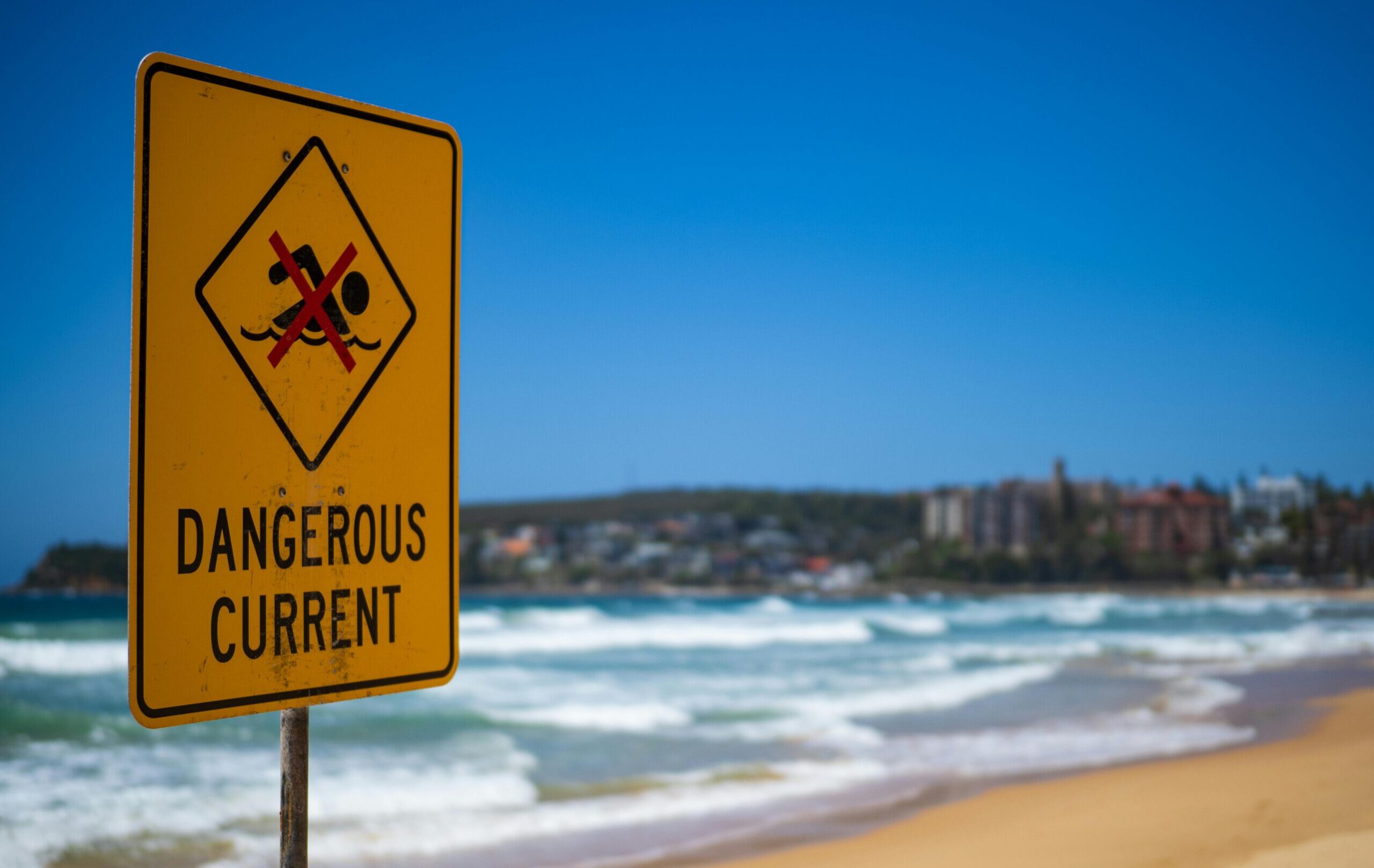
Dangerous current warning sign on Manly Beach in Australia, with blue sky and ocean waves.

Explore More

Shopping Cart
Scroll to Top