


Seeing a shark while you’re in the ocean is one of those moments where everything sharpens — the water feels louder, your senses heighten, and for a heartbeat the world goes still. Even experienced ocean‑goers feel it: that mix of awe, adrenaline, and uncertainty.
But here’s the part that often gets lost in the fear: most shark encounters are calm, brief, and completely uneventful. Sharks are cautious, intelligent animals, and when they approach people, it’s usually investigative rather than predatory.
The most effective way to stay safe is to avoid higher‑risk situations in the first place. Understanding when and where sharks are more active — and recognising the environmental conditions that increase risk — dramatically reduces the likelihood of negative encounters. If you haven’t already, read How to Be Shark Smart for practical ways to reduce risk before entering the water.
But if you unexpectedly find yourself in the water with a shark nearby, the following guidance can help you stay composed and keep the situation calm.
Pause, Breathe, and Assess the Situation
Sharks detect movement, vibration, and electrical signals in the water. Calm, controlled movement presents very differently to a shark than erratic splashing or panic.
Take a breath.
Let your body settle.
Observe the shark’s size, distance, and behaviour.
A relaxed shark moves with smooth, steady motions.
An agitated shark may show several behaviours at once, including:
- lowered pectoral fins
- an arched back
- sudden acceleration or deceleration
- zig‑zag or erratic swimming
- quick, jerky movements
When multiple signs of agitation appear together, it’s a strong cue to create distance and leave the area calmly.
Keep the Shark in View
Sharks often circle or pass by to investigate unfamiliar objects.
Facing the shark reduces the chance of surprise and signals that you’re aware of its presence.
Avoid turning your back or swimming away frantically — this can trigger curiosity.
Maintaining awareness is often enough for the shark to lose interest and move on.
Move Smoothly and Give the Shark Space
If possible, maintain a vertical position in the water — it reduces your silhouette from below and makes you appear more confident.
Begin moving calmly toward shore, a boat, or your board, giving the shark plenty of space.
Avoid blocking its path or making sudden directional changes.
Use slow, controlled movements and keep splashing to a minimum.
Rapid kicking or erratic movement can increase a shark’s curiosity and make the situation feel more chaotic than it is.
The goal isn’t to flee — it’s to leave the area steadily and deliberately.
Additional Considerations for Spearfishers
Spearfishing increases the likelihood of attracting sharks due to struggling fish, vibrations, and blood in the water.
To reduce risk:
- secure fish quickly
- remove catches from the water promptly where possible
- tow catches well behind you
- if a shark becomes interested in your catch, release it and move to another location
Use What You Have as a Barrier
If a shark comes closer than you’re comfortable with, calmly place an object between yourself and the animal.
A surfboard, bodyboard, camera, pair of fins, or snorkel can help create space without escalating the interaction.
If necessary, extend the object gently toward the shark’s snout to redirect its approach.
Keep movements slow and deliberate rather than aggressive.
Most sharks investigating humans are not hunting — and many encounters end once the shark loses interest.
If Contact Happens (Extremely Rare)
Physical contact between sharks and people is extremely uncommon, but if it does occur, staying as calm as possible becomes critical.
If a shark bites or makes forceful contact:
- target sensitive areas like the eyes or gills if you need to defend yourself
- avoid frantic struggling, which can worsen injuries
- focus on creating an opportunity to leave the water safely
Once out of the water:
- call 000 immediately
- apply firm pressure to stop bleeding
- use a tourniquet for severe limb bleeding if trained
- begin CPR if necessary
If assisting someone else, only enter the water when it is safe to do so.
When It’s Time to Leave the Water
Not every shark sighting means you need to get out immediately.
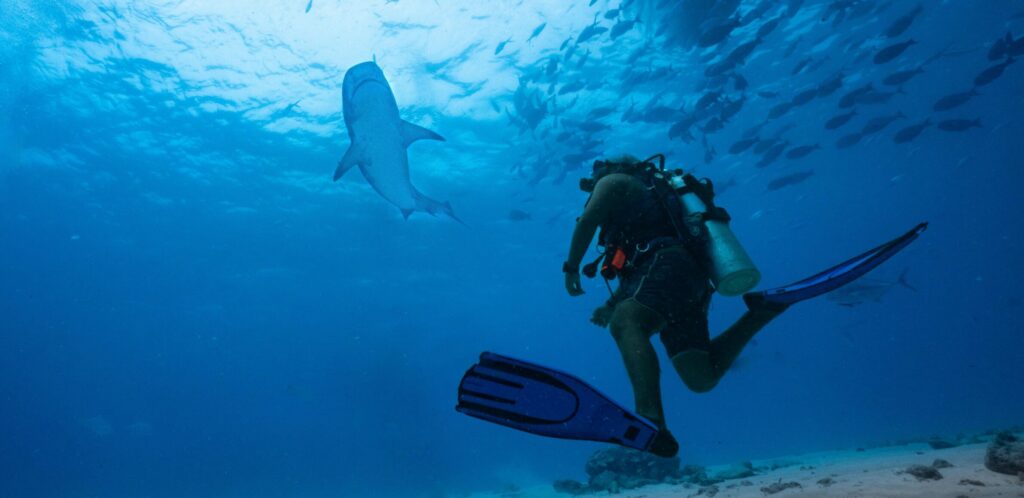
Many snorkellers and divers enter the water specifically to see sharks — and do so safely every day. Species like the Grey nurse shark are naturally shy and generally uninterested in people.
However, you should strongly consider leaving the water if:
- the shark is very large
- visibility is poor
- the shark begins displaying agitated behaviour
- you are alone or far from safety
- baitfish or feeding activity are present
- you feel unsure or uncomfortable
Trust your instincts — they’re part of your safety toolkit.
After You’re Out of the Water
Let nearby ocean users know about the sighting, especially if the shark appeared large or agitated.
If lifeguards are present, report the encounter so they can assess conditions and inform others if needed.
You can also log sightings through your state’s shark reporting app or local marine authorities to help keep other ocean users informed.
The Bottom Line
Most shark encounters are peaceful moments — reminders that we share the ocean with ancient, highly adapted animals that are far less interested in humans than popular culture suggests.
By staying calm, keeping the shark in sight, and moving with intention, you significantly reduce the likelihood of escalation.
With the right knowledge and respect for ocean conditions, sharing the water with sharks can be not only safe, but one of the most extraordinary experiences the ocean offers.
Frequently Asked Questions
Should you punch a shark?
Only as a last resort. Most encounters end without aggression, and staying calm, maintaining distance, and leaving the water steadily are far more effective than trying to fight the animal.
If a shark makes forceful contact and you need to defend yourself, targeting the eyes or gills may help create a moment to break away — but this is extremely rare.
Does splashing attract sharks?
Yes. Excessive splashing, frantic kicking, or erratic movement can resemble distressed prey and may increase a shark’s curiosity, especially in low‑visibility conditions.
Should you maintain eye contact with a shark?
Keeping the shark in view reduces the chance of surprise and helps you monitor its behaviour. Many species dislike direct eye contact — it signals awareness and confidence.
Can you out‑swim a shark?
No. Sharks are built for speed and efficiency. Calm, deliberate movement toward safety is far more effective than trying to sprint away.
Is it safer to stay in a group?
Yes. Sharks are less likely to approach someone who is close to others. Staying near your group — especially when diving or snorkelling — reduces curiosity‑driven approaches.
Do bright colours attract sharks?
Bright or high‑contrast colours can stand out underwater. Neutral, darker gear helps you blend into the environment and reduces visual interest.
Should you stay completely still?
Not frozen — just calm. Stillness helps you reset, but gentle, controlled movement is what allows you to create distance without drawing attention.