
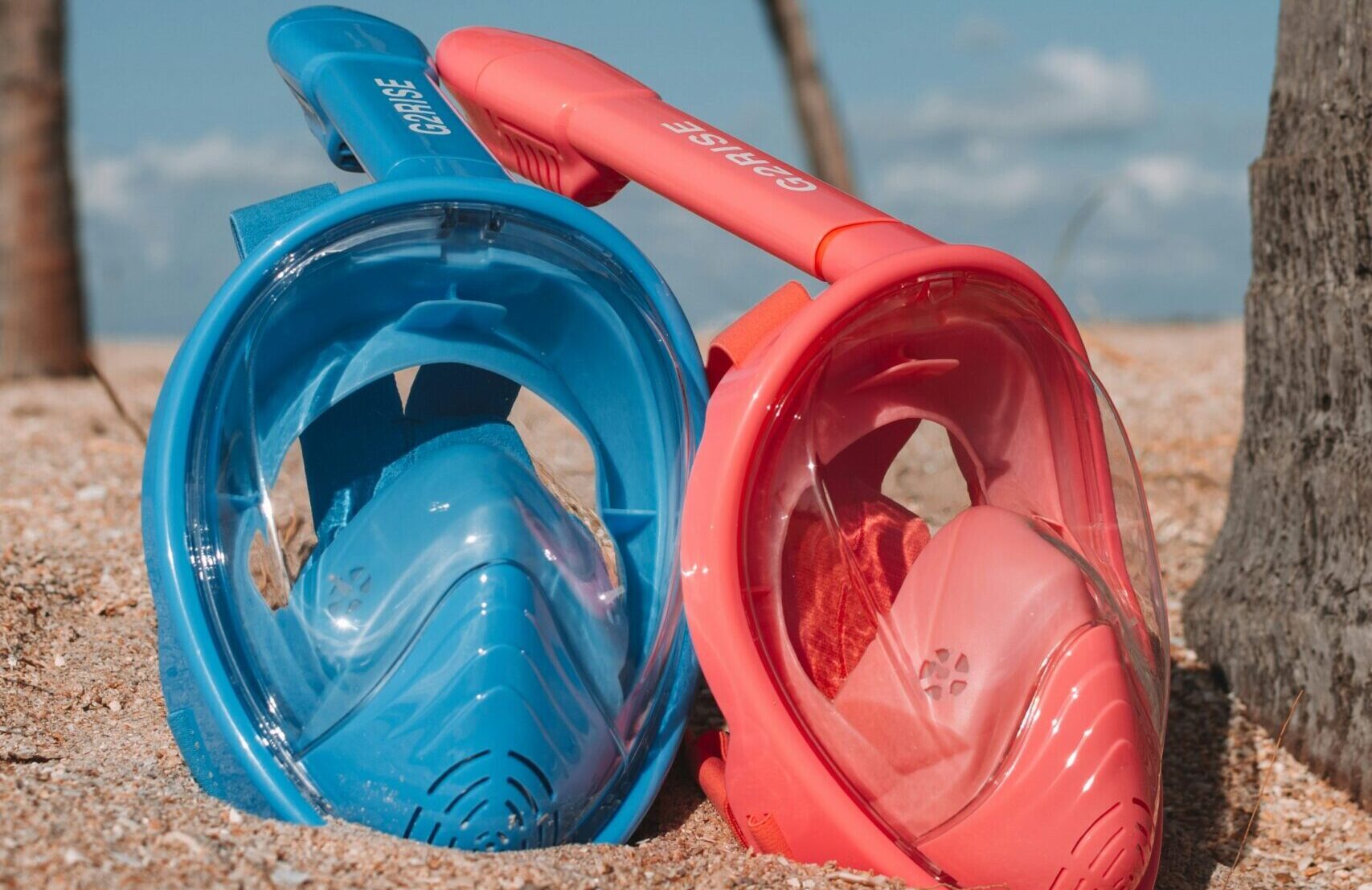


Walk into almost any beachside tourist shop and you’ll see them hanging on the wall: full‑face snorkel masks promising easier breathing, a wider view, and a simpler snorkelling experience.
They look like an obvious upgrade.
Yet many experienced snorkellers and dive operators continue to prefer traditional masks and snorkels. The difference isn’t just habit — it comes down to how each design performs in real‑world conditions.
Like any piece of equipment, full‑face snorkel masks have both advantages and limitations. While many people use them without incident, concerns have been raised about breathing performance, emergency removal, equalisation, and how these masks behave when conditions change.
Understanding these trade‑offs can help you decide whether a full‑face snorkel mask is the right choice for you.
Why Are Full‑Face Snorkel Masks So Popular?
It’s easy to see why these masks appeal to beginners.
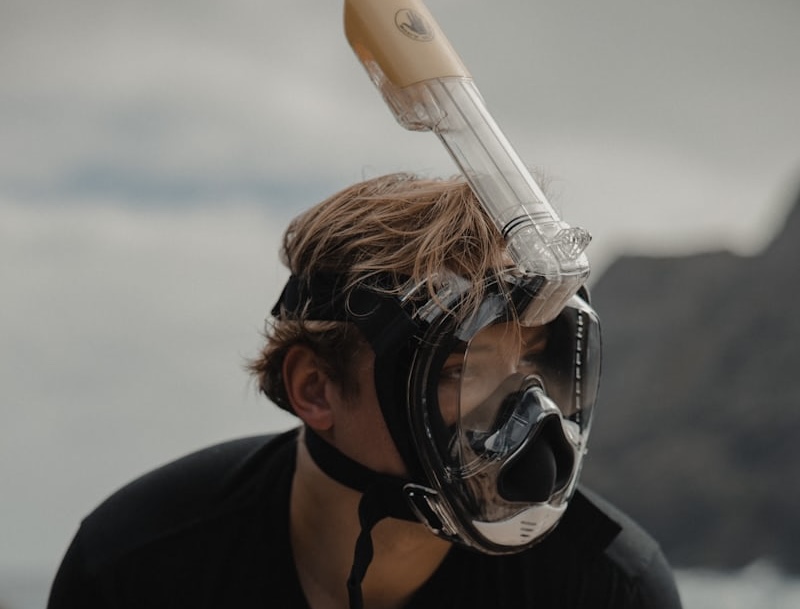
Full‑face snorkel masks cover the entire face and combine the mask and snorkel into a single unit. Many users enjoy them because they offer:
- the ability to breathe through both the nose and mouth
- a wide field of view
- no snorkel mouthpiece to bite on
- a simple, all‑in‑one introduction to the underwater world
For calm, shallow‑water snorkelling, these features can make the experience feel more approachable.
But the same design elements that make full‑face masks appealing also introduce limitations that traditional masks avoid.
Breathing Concerns
One of the most widely discussed issues with full‑face snorkel masks relates to how air moves through the mask.
Because these masks have a larger internal air space and more complex airflow pathways, exhaled air isn’t cleared as efficiently — especially when the snorkeller is exerting themselves. Swimming, kicking against current, or dealing with waves increases the amount of carbon dioxide (CO₂) the body produces. If the mask cannot clear that CO₂ quickly enough, it can build up inside the mask.
Symptoms associated with CO₂ buildup can include:
- headaches
- dizziness
- confusion
- panic
- loss of consciousness
These symptoms can be dangerous to experience in the ocean, and many have been identified as contributing factors in some fatal snorkelling incidents.
Traditional snorkels have a simpler, shorter breathing pathway with far less internal air space, reducing the potential for exhaled air to remain inside the system.
Leaks, Fogging, and Difficulty Clearing
A full‑face snorkel mask covers your entire face. While this can feel comfortable, it also changes how you respond if something goes wrong.
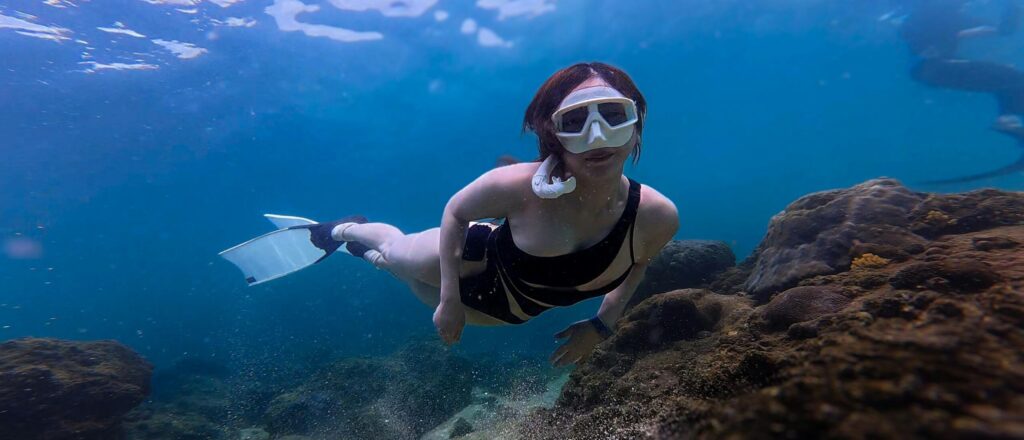
Traditional snorkel masks are designed to be cleared quickly and easily. If water enters the mask, you can simply lift the bottom edge, exhale through your nose, and push the water out. If necessary, the mask can be removed and replaced within seconds.
Full‑face snorkel masks work differently:
- if water enters the mask, the entire mask usually needs to be removed to drain it
- the larger strap system can make removal slower and more awkward
- fogging is harder to manage because you cannot break the seal to clear it
These situations can be more difficult for inexperienced snorkellers, particularly if they feel anxious or disoriented. An improper fit can also increase the likelihood of leaking, fogging, and general discomfort.
Traditional masks remain easier to clear, reseal, and remove in an emergency.
Equalisation and Diving Limitations
Most full‑face snorkel masks are designed for surface use only. Many models physically block access to the nose, making equalisation difficult or impossible.
This means:
- duck‑diving is limited
- exploring deeper reef areas is impractical
- pressure discomfort may occur even at shallow depths
Traditional snorkel masks allow easy access to the nose, making equalisation straightforward and giving snorkellers more freedom to explore beneath the surface.
Limitations in More Challenging Conditions
Full‑face snorkel masks generally perform best in calm, sheltered water. As waves, currents, wind chop, or swimming effort increase, their design limitations become more noticeable.
More effort means more CO₂ production, which increases the importance of efficient airflow — something full‑face masks struggle with under load.
This doesn’t mean full‑face masks cannot be used outside perfectly calm water — but they are less versatile than traditional setups.
Traditional masks and snorkels are used confidently across a wide range of environments, from shallow lagoons to more exposed coastal locations.
Price, Quality, and Safety
This is where the difference between mask types becomes especially important.
Traditional masks
You can buy a cheap traditional mask and snorkel and still get safe, reliable performance. Even budget sets often:
- clear easily
- seal well enough for recreational snorkelling
- allow equalisation
- work across a wide range of conditions
Traditional masks have a simple design — a single air space and a separate snorkel — which means there’s very little that can go wrong. A basic, well‑fitting traditional mask can outperform an expensive full‑face mask in terms of safety and versatility.
Full‑face masks
With full-face masks, quality becomes particularly important because airflow design, sealing, and construction can vary significantly between models.
Cheaper models often have:
- poorer airflow design
- less reliable seals
- lower‑quality materials
- inconsistent manufacturing
These issues can increase the risk of CO₂ buildup, leaks, fogging, and difficulty clearing.
To reduce these risks, you need a high‑quality, well‑tested full‑face mask — and these are significantly more expensive. Even then, the fundamental limitations remain:
- harder to clear
- harder to remove quickly
- limited equalisation
- less suitable for varied conditions
So while a traditional setup can be both affordable and safe, a full‑face mask must be expensive to be safer, and still cannot match the versatility of a traditional mask.
This is a key reason many operators and experienced snorkellers continue to recommend traditional equipment.
Bans and Restrictions
Concerns about breathing performance, emergency removal, and mask clearing have led some tour operators, resorts, and marine parks to restrict or discourage the use of full‑face snorkel masks.
Policies vary. Some operators allow them, while others require waivers or recommend traditional equipment instead.
For example, Lady Elliot Island does not allow full‑face snorkel masks on guided snorkelling tours. Guests who choose to use their own masks independently must sign a waiver acknowledging the associated risks. These policies often arise from incident reviews and safety assessments, not personal preference.
Are Traditional Masks Really More Difficult?
Many people choose full‑face snorkel masks because they believe traditional equipment is harder to use. For some beginners, breathing through both the nose and mouth may feel more natural at first.
However, traditional snorkelling equipment is often simpler than expected.
A traditional mask and snorkel are:
- easy to learn
- easy to clear if water enters the mask
- quick to remove and replace
- suitable for a wide range of conditions
- modular (you can upgrade or swap parts)
- widely used by experienced snorkellers, dive operators, and instructors
Higher‑quality full‑face masks may address some concerns better than cheaper models, but they still have inherent limitations that traditional snorkel systems generally avoid.
Conclusion
Full‑face snorkel masks offer an appealing all‑in‑one design and can be enjoyable to use in calm, shallow water when properly fitted. However, concerns about breathing performance, mask clearing, equalisation, and emergency removal have led many operators and experienced snorkellers to favour traditional mask‑and‑snorkel setups.
For relaxed surface snorkelling in sheltered conditions, a quality full‑face mask may work well for some users. But for versatility, ease of clearing, duck‑diving, affordability, and confidence across a wider range of environments, a traditional mask‑and‑snorkel setup remains the safest and most versatile choice for most snorkellers.