
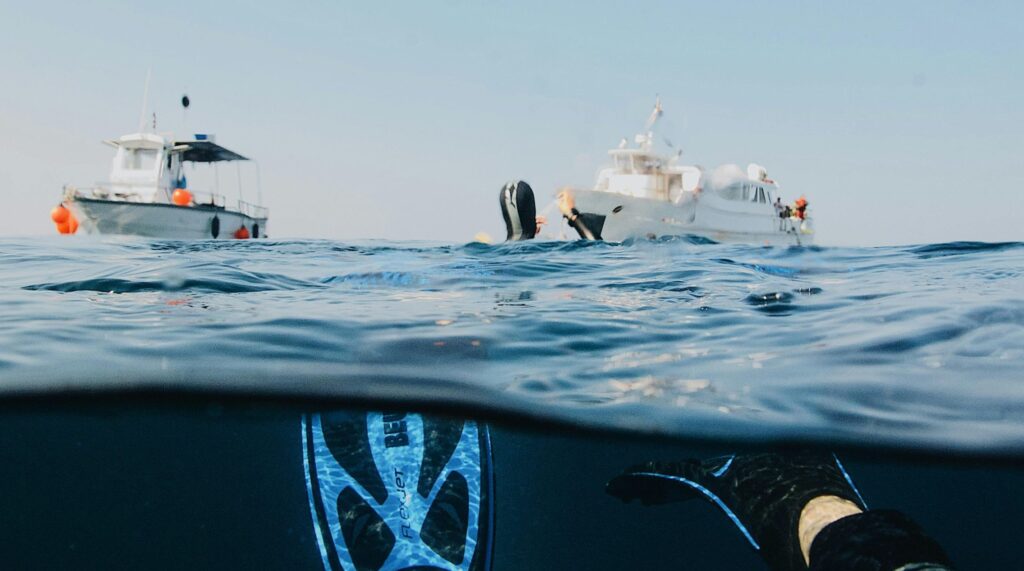

Snorkelling, freediving, and scuba diving allow you to experience the ocean in a way few other activities can. But every fin kick, touch, and decision underwater has an effect on the environment around you.
Reducing your impact comes down to awareness, control, and respect. Healthy reefs and marine ecosystems depend not only on conservation efforts, but also on the behaviour of the people who visit them.
Small actions matter. When thousands of people interact with reefs and marine life every day, even minor disturbances can accumulate over time. By moving carefully and making thoughtful choices, you help protect these environments.
1. Master Buoyancy and Fin Awareness
Good control in the water is the foundation of low-impact ocean exploration. Most accidental environmental damage underwater comes from poor buoyancy, uncontrolled fins, or a lack of spatial awareness.
Scuba Diving
For scuba divers, mastering buoyancy control is essential for both protecting the environment and improving overall diving safety.
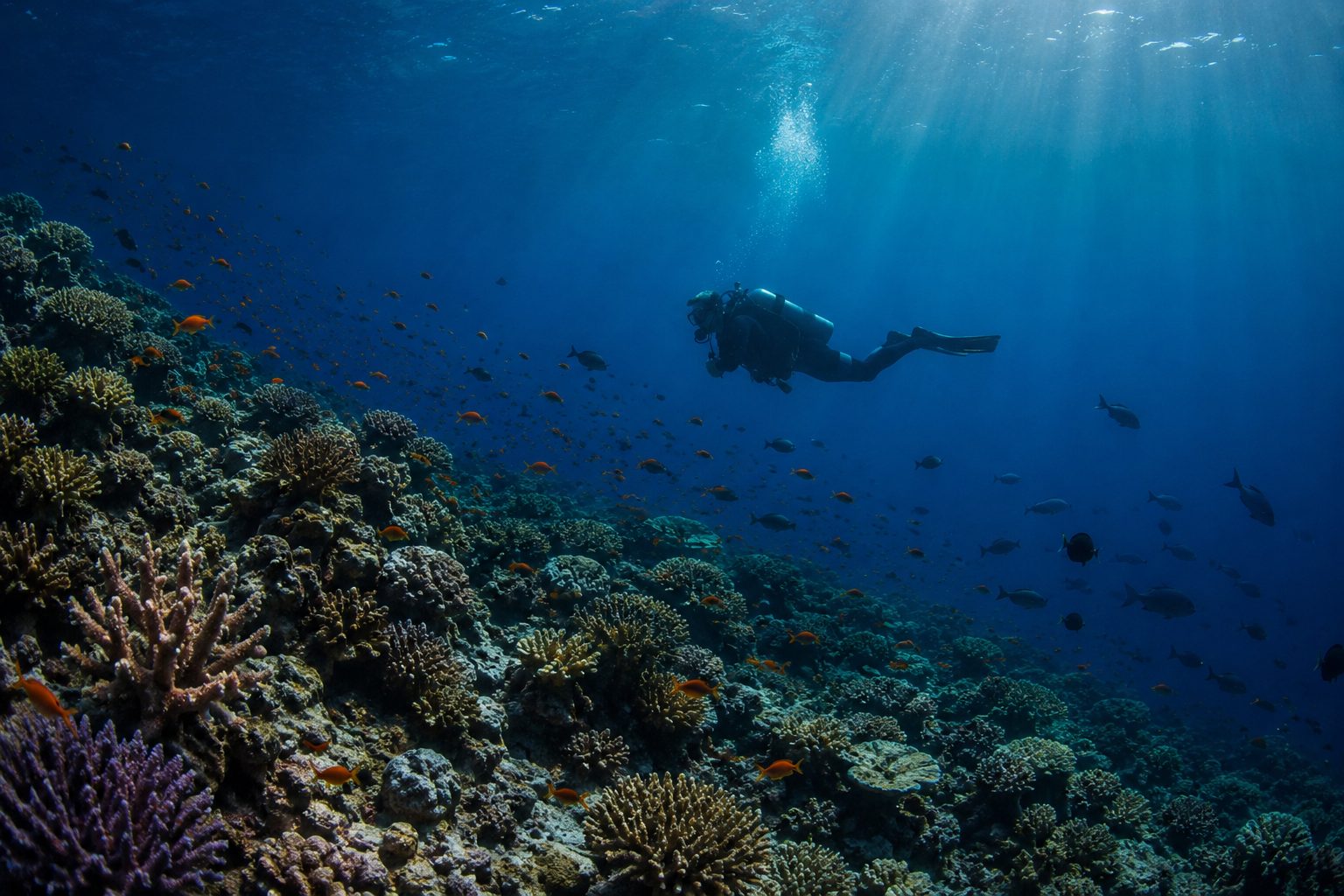
Neutral buoyancy allows you to move through the water without touching the reef or seabed. Keeping your body in a horizontal position helps keep your fins behind you rather than below you, reducing the risk of accidental contact with coral or the seabed.
Slow, controlled fin kicks also help minimise turbulence and sediment disturbance in sensitive areas.
Taking time to properly weight yourself and regularly practise buoyancy skills can make a major difference to both your control and your environmental impact underwater. If you’re unsure about weighting, ask a dive professional to check your setup.
Snorkelling and Freediving
Snorkellers and freedivers can also reduce their impact by staying aware of body position and fin placement, especially in shallow water.
Remaining horizontal at the surface or after descents helps keep fins away from coral and reduces sediment disturbance.
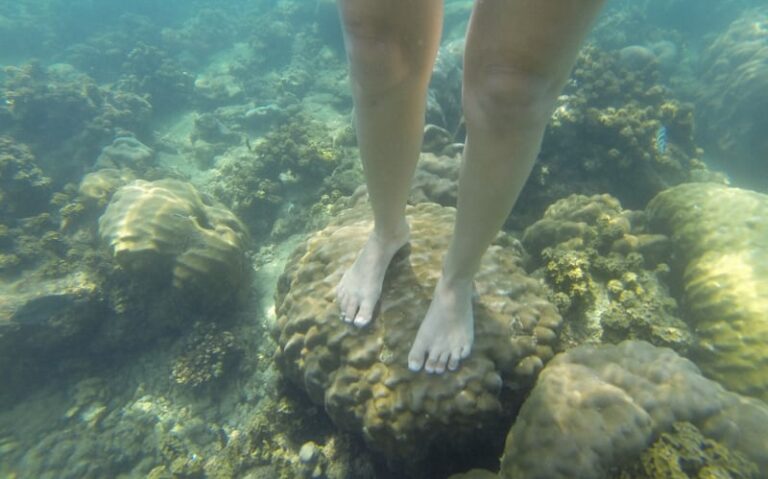
Avoiding rapid kicking and unnecessary standing on reef structures further reduces the risk of accidental damage.
2. Follow a Strict No-Touch Policy
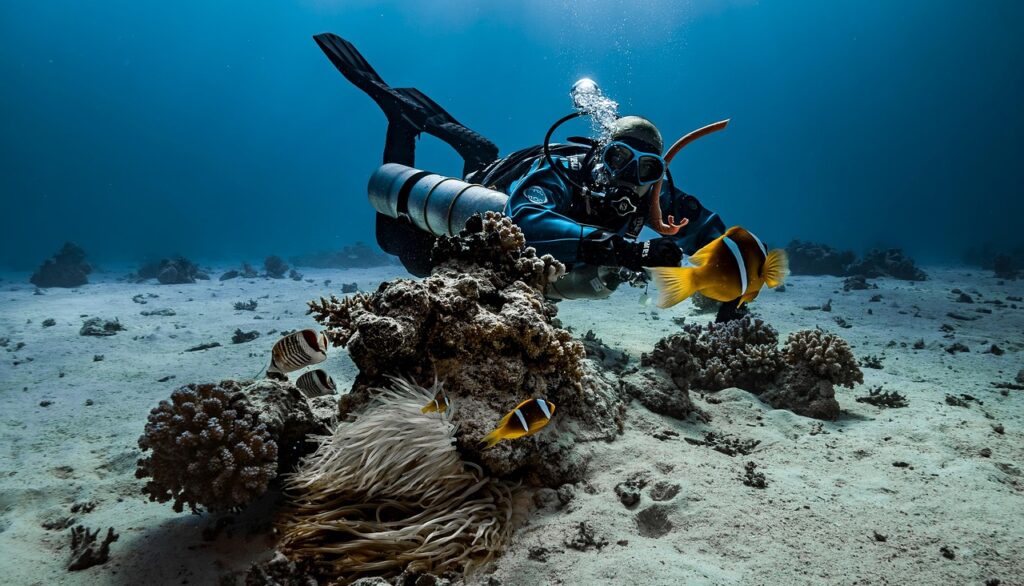
The ocean is full of living organisms that are often far more delicate than they appear. Even brief or seemingly harmless contact can cause injury, stress, or long-term damage.
A good rule underwater is simple: if it’s alive, leave it alone.
Follow these simple steps:
- Never touch coral, sponges, or marine life.
- Avoid standing on reef, rock platforms, or seagrass beds.
- If standing is absolutely necessary, choose bare sand only.
- Secure all equipment, including gauges, cameras, and accessories.
- Avoid grabbing coral or rocks for stability.
- Never touch, restrain, or attempt to move marine animals.
- Avoid kneeling on the seabed unless necessary for safety.
- Avoid wearing gloves unless required for cold water or safety, as gloves can encourage unnecessary contact.
Good buoyancy and positioning eliminate the need to hold onto the environment.
3. Respect Wildlife by Giving It Space
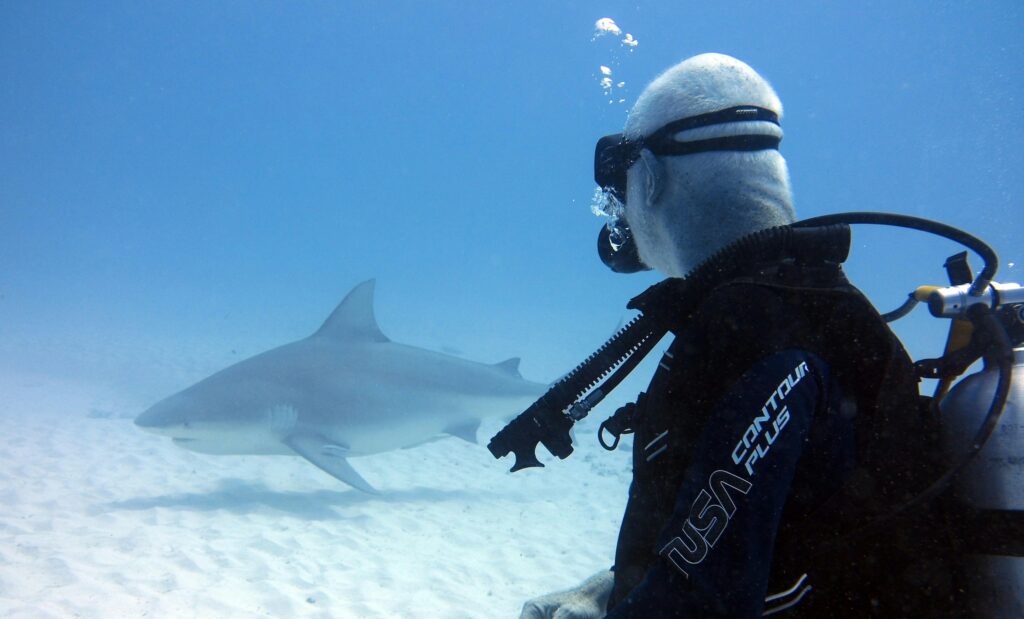
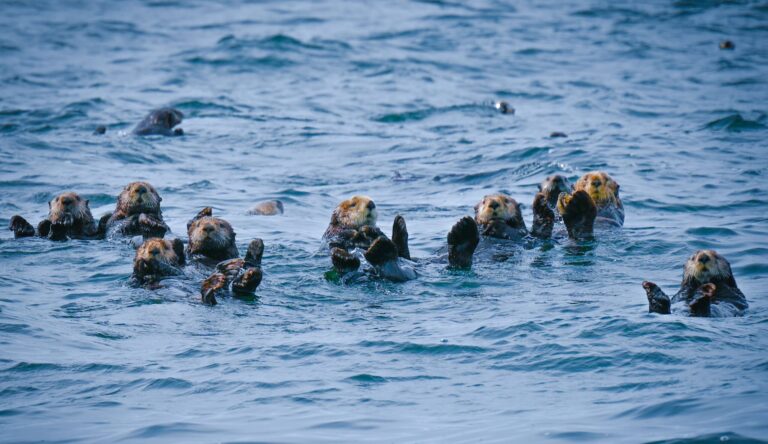
Wildlife encounters are often the highlight of any snorkel or dive, but the best interactions happen when animals behave naturally and voluntarily.
Approaching too closely, blocking an animal’s path, surrounding it, or chasing it can create stress and alter natural behaviour. Repeated disturbance may even cause animals to avoid important feeding, cleaning, or resting areas.
Best Practices Around Marine Life
- Keep a respectful distance and allow animals to choose whether to approach.
- Move slowly and predictably.
- Avoid sudden movements or rapid direction changes.
- Never chase, corner, ride, or pursue wildlife.
- Keep fins, cameras, and equipment clear of animals.
- Avoid flash photography around sensitive species.
- Never feed wildlife.
If an animal approaches you, remain calm and still. If it moves away, let it go.
Always follow local wildlife interaction regulations and marine park rules, as legal approach distances and protections vary between species and locations.
4. Reduce Waste and Prevent Pollution
Everything you bring to the ocean should leave with you.
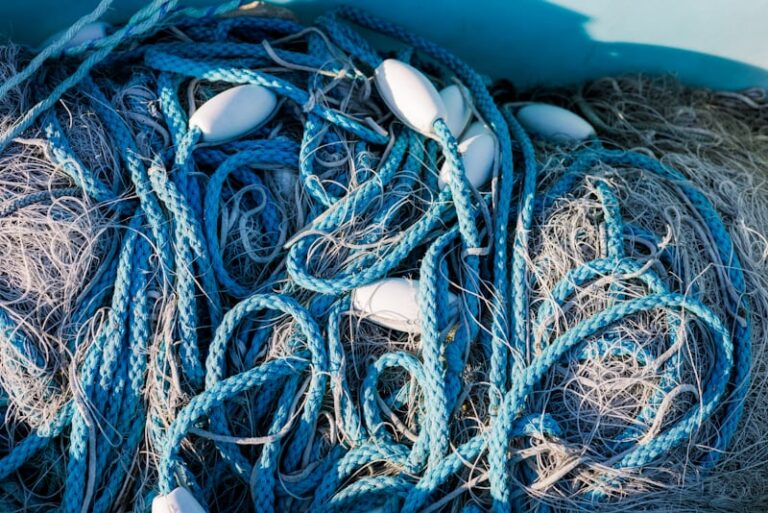
Plastic pollution, fishing line, food packaging, and other debris can injure wildlife, damage reefs, and persist in the environment for decades.
Simple habits make a meaningful difference:
- Use reusable drink bottles and containers instead of single-use plastics.
- Secure gear and loose items on boats so nothing blows overboard.
- Properly dispose of rubbish once back on land.
- Remove small pieces of debris during your dive or snorkel if it is safe to do so.
- Report large debris or entangled wildlife to local authorities or marine park staff.
Leaving a site cleaner than you found it is one of the simplest ways to give back to the environments you enjoy.
5. Reduce Chemical Impact on Marine Ecosystems
Many sunscreens and personal care products contain chemicals that can affect marine ecosystems, particularly in heavily visited reef areas.
You can reduce your impact by:
- Choosing reef-conscious sunscreen products where possible.
- Preferring mineral-based sunscreens containing non-nano zinc oxide or titanium dioxide.
- Applying sunscreen well before entering the water so it has time to absorb.
- Wearing rash guards, wetsuits, leggings, or other sun-protective clothing to reduce the amount of sunscreen needed.
No sunscreen is completely impact-free, but reducing unnecessary chemical exposure helps minimise pressure on already stressed reef systems.
6. Take Only Memories, Leave Only Bubbles
The phrase “take only memories, leave only bubbles” is popular among divers for good reason.
Shells, coral fragments, rocks, and sand all play roles within marine ecosystems. Removing natural materials may seem harmless, but widespread collection can gradually alter habitats and is illegal in many marine parks.
Responsible ocean exploration means:
- Taking nothing from the environment.
- Leaving no rubbish or damage behind.
- Avoiding disturbance to wildlife and habitat.
- Leaving sites in the same — or better — condition than you found them.
The healthiest reefs are usually the ones that appear untouched.
7. Choose Responsible Operators — Or Be One
If you join a snorkelling or dive tour, the operator you choose directly affects the sites you visit.
Responsible operators actively reduce environmental impact and encourage good behaviour in the water.
Look for operators who:
- Use public moorings instead of anchoring on reefs.
- Limit group sizes.
- Provide environmental briefings before entering the water.
- Follow wildlife interaction guidelines.
- Promote respectful in-water behaviour.
- Support marine research or conservation initiatives.
If You Boat Independently
- Anchor only on sand, never on coral or seagrass.
- Use public moorings whenever available.
- Approach snorkellers and divers slowly and carefully.
- Secure loose items so nothing blows overboard.
- Follow marine park rules and protected area regulations.
Protecting marine environments starts before you even enter the water.
8. Reduce Your Carbon Footprint
Your environmental impact begins long before you reach the ocean.
Travel, fuel use, tourism infrastructure, and consumption all contribute to climate change, which is one of the greatest long-term threats facing marine ecosystems worldwide.
You can reduce your impact by:
- Carpooling or sharing transport where possible.
- Choosing local dive or snorkel sites occasionally instead of always travelling long distances.
- Supporting operators that use efficient boating practices.
- Reducing unnecessary waste during trips.
- Supporting reputable conservation or carbon-offset initiatives if you choose to offset emissions.
Protecting reefs also means addressing the broader environmental pressures affecting them.
9. Keep Learning About the Ocean
The more you understand marine environments, the easier it becomes to interact with them responsibly.
Learning about local species, seasonal conditions, marine park regulations, and ecosystem threats helps you make better decisions in the water. It also makes your experiences more rewarding, as you begin recognising behaviours, habitats, and ecological relationships you may have previously overlooked.
Responsible ocean users are usually informed ocean users.
Sharing accurate knowledge with others also helps build a culture of respect around marine environments.
10. Support and Advocate for Conservation
Conservation is not limited to scientists, researchers, or marine organisations. Everyday choices and behaviour also influence the future health of the ocean.
You can contribute by:
- Supporting reputable marine conservation organisations.
- Participating in citizen science programs and wildlife sighting projects.
- Choosing tourism operators that prioritise environmental responsibility.
- Respecting marine protected areas and no-take zones.
- Encouraging responsible snorkelling and diving practices within your community.
Individual actions may seem small, but collective behaviour has enormous influence over time.
Key Message
Reducing your impact underwater is not about perfection — it’s about awareness and intention.
When you move carefully, maintain control, respect wildlife, and make thoughtful decisions before, during, and after entering the water, you help protect the ecosystems you enjoy exploring.
The ocean is not just a place to visit. It is a living environment that supports extraordinary biodiversity, coastal communities, and countless interconnected ecosystems around the world.
Exploring it is a privilege — protecting it is the responsibility that comes with it.