Ghost Gear: The Fishing Equipment That Doesn’t Stop Fishing

Imagine losing something at sea and never seeing it again.

Most of us would assume the story ends there. But disappearing and being gone are not always the same thing. Some lost objects continue affecting the ocean long after they vanish from view.

For certain types of fishing equipment, that impact can last for years.

This is the problem of ghost gear.

What Is Ghost Gear?

Ghost gear refers to fishing equipment that has been lost, abandoned, or discarded and is no longer actively managed by fishers.

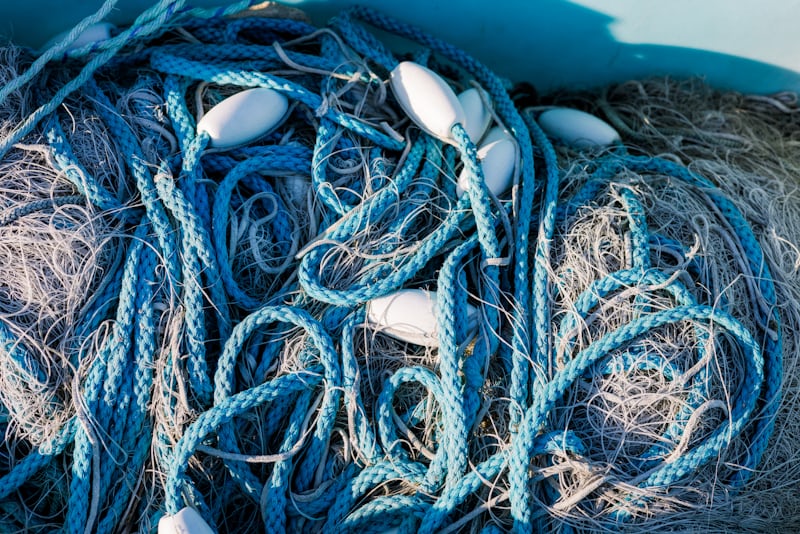
It includes nets, ropes, lines, traps, pots, cages, and other equipment. Ghost nets are the most visible example, but they represent only part of a much larger issue.

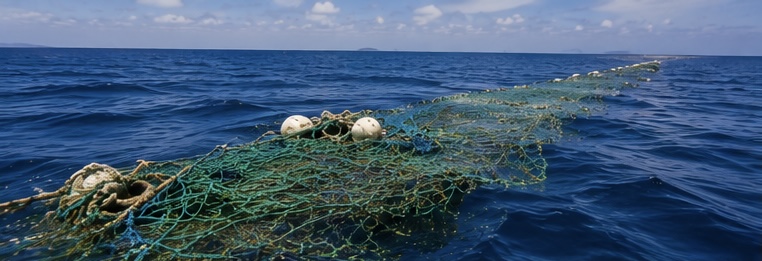
Unlike most marine debris, ghost gear was designed to catch animals. Losing it does not remove that ability. Depending on the type of gear, it may drift with currents, hang suspended in the water column, snag on reefs, or settle on the seafloor — continuing to affect marine life long after it is lost.

A Problem Measured in Tonnes

It’s easy to picture ghost gear as a few lost nets drifting through the ocean.

The reality is far larger.

Researchers estimate that up to one million tonnes of fishing gear enter the ocean each year through loss, abandonment, or disposal. Over time, this accumulates and becomes a major source of marine plastic pollution.

In some regions, the scale is striking. Studies estimate that abandoned fishing gear makes up to 70% of floating macroplastics in major ocean gyres. Fishing nets alone account for roughly 46% of the Great Pacific Garbage Patch.

Many ghost nets stretch for kilometres and can weigh several tonnes. These are not small pieces of debris drifting unnoticed through the water, but large structures capable of travelling vast distances and affecting entire ecosystems.

How Ghost Gear Affects Marine Life

Almost any marine animal can be affected.

Fish, sharks, rays, turtles, dolphins, whales, seabirds, and crustaceans can all become entangled in ghost gear. Some drown. Others starve or suffer injuries that make it difficult to swim, feed, or avoid predators.

Animals may also swallow hooks, fishing line, and net fragments, leading to internal injuries, blockages, infection, and starvation.

As ghost gear drifts, it becomes covered in algae, barnacles, and other organisms. These hitchhikers can travel vast distances, spreading invasive species, parasites, and diseases into new environments.

Lost gear can also create a chain reaction. Fish trapped in nets attract predators, which may become entangled themselves — a cycle known as ghost fishing.

Because modern gear is made from durable synthetic materials, this process can continue for years. Even when gear is no longer catching animals, it breaks apart into smaller fragments, contributing to the growing problem of microplastics.

Sea Turtles Are Especially Vulnerable

Sea turtles are among the animals most frequently found entangled in ghost gear.

Part of the reason is that ghost gear occurs in nearly every habitat turtles use — coastal feeding grounds, nesting beaches, and the open ocean.

Species that spend much of their lives offshore, such as the endangered leatherback and olive ridley turtles, are particularly likely to encounter drifting gear. Once entangled, they may struggle to swim, feed, surface for air, or reach nesting beaches.

A Habitat-Level Problem

Ghost gear affects more than individual animals. A single piece of lost gear may impact multiple habitats during its lifetime.

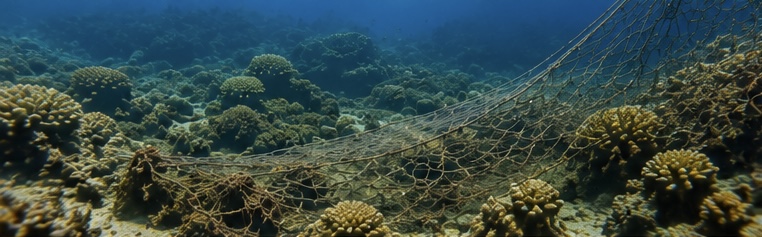
Imagine a large fishing net becoming snagged on a coral reef. With every wave and changing tide, the net shifts back and forth across the reef beneath it. What began as a single piece of lost equipment can continue causing damage long after it arrives.

But reefs are not the only places affected. Ghost gear can also become trapped in seagrass meadows, tangled among mangrove roots, or washed onto shorelines. In some cases, the same piece of gear may move through several different habitats before finally coming to rest.

The impacts are not limited to wildlife and habitats. Ghost gear can also become tangled in boat propellers and other equipment, creating hazards for vessels and the people on board.

Finding and Recovering Ghost Gear

Once ghost gear enters the ocean, removing it is often far more difficult than it sounds.

Much of it drifts below the surface or becomes tangled in remote areas that are difficult to access. Some gear travels hundreds or even thousands of kilometres before washing ashore or becoming caught on a reef, meaning the place where it is found is often far from where it originally entered the ocean.

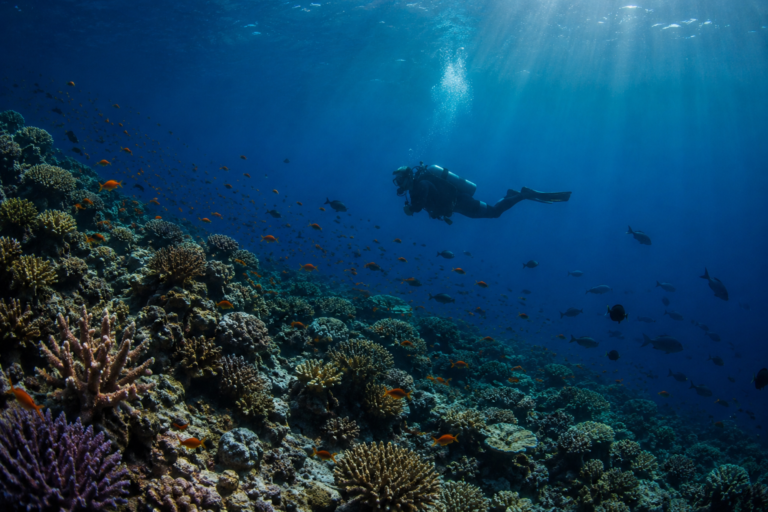
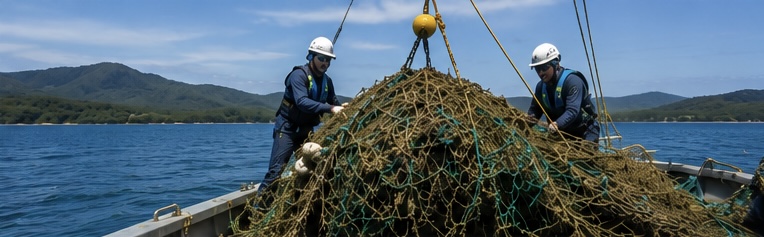
Recovery efforts take many forms. Divers remove nets from coral reefs, vessels retrieve drifting gear, and aerial surveys and drones help locate debris in remote coastal regions.

Around the world, governments, conservation organisations, researchers, and local communities work together to tackle the problem. In Australia, the Australian Government’s Ghost Nets Initiative and its successor, the Ghost Nets and Marine Debris Initiative, support efforts to remove ghost gear and reduce marine debris. Internationally, organisations such as Ocean Conservancy collaborate with fishing industries, governments, and conservation groups to reduce abandoned gear and improve recovery.

Every net recovered is one less hazard for marine life — but there is still a long way to go.

Northern Australia: A Ghost Gear Hotspot

Northern Australia is recognised as one of the world’s major ghost gear hotspots.

Currents and weather patterns carry debris into the Gulf of Carpentaria, Torres Strait, and surrounding waters, where it accumulates along remote coastlines.

In parts of the Gulf, up to 90% of marine debris originates from outside Australia, highlighting the international nature of the problem.

The region is also globally important for sea turtles, providing feeding and nesting habitat for six of the world’s seven species. Estimates suggest that between 4,000 and 10,000 turtles became entangled in ghost nets in northern Australian waters over the past decade.

Indigenous ranger groups play a major role in addressing the issue, patrolling remote coastlines, recovering nets, collecting data, and rescuing surviving wildlife where possible. These efforts have removed thousands of nets and other pieces of fishing gear from northern Australian environments.

Why Prevention Matters Most

Removing ghost gear is important, but preventing it from entering the ocean in the first place is even more effective.

Many fisheries now use gear-marking systems that help identify lost equipment and improve recovery. Reporting programs encourage fishers to notify authorities when gear is lost, while GPS tracking systems make it easier to locate equipment before it becomes a long-term problem.

Researchers are also exploring new materials and gear designs that may reduce environmental impacts if equipment is lost.

Recovered nets are increasingly being recycled into products such as flooring, clothing, sunglasses, and other plastic goods, helping divert material from landfill while encouraging retrieval efforts.

Progress Is Being Made, But There Is Still a Long Way to Go

Awareness of ghost gear has increased significantly over the past two decades.

Recovery programs have removed thousands of nets from coastlines and marine habitats. Tracking technology is improving. More fisheries are adopting measures designed to prevent gear loss, and governments, researchers, conservation organisations, and fishing industries are increasingly working together on solutions.

Yet the scale of the challenge remains enormous.

Large quantities of fishing gear continue to enter the ocean every year, and many of the world’s most affected regions remain difficult to monitor and manage. Lost gear continues to accumulate in remote areas, often far from the places where it originated.

Progress is being made, but there is still a long way to go.

The Problem That Doesn’t End When Gear Is Lost

Most marine debris drifts passively through the ocean.

Ghost gear is different.

Whether it is a net, rope, line, or trap, it can continue affecting wildlife and habitats long after it disappears from view. That ability to keep causing harm is what makes ghost gear such a significant conservation challenge.

But it is also a problem people increasingly understand. Around the world, lost gear is being recovered, prevention measures are improving, and awareness continues to grow.

Every piece of ghost gear removed from the ocean is one less trap waiting beneath the surface.

Explore More

Scroll to Top