Coral reefs can withstand cyclones, pounding surf, and decades of natural change — yet a single human touch can damage them.
It feels counterintuitive. Reefs look solid, permanent, and almost indestructible from the surface. But what we see is only the limestone framework. The living layer that makes a reef function is far more delicate than most people realise.
Coral Is More Fragile Than It Looks
Although coral reefs resemble colourful underwater rock formations, corals are living animals.
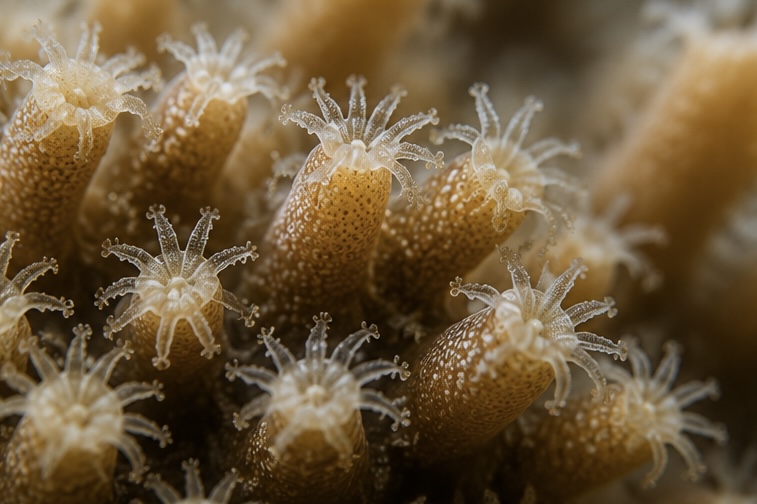
Reef-building corals are colonies of tiny animals called polyps that build the limestone skeletons forming the reef. In many species, the living tissue covering that skeleton is less than 1 mm thick — a biological skin stretched over stone.
That tissue is protected by a thin mucus layer that acts as the coral’s first line of defence. This mucus helps remove sediment, blocks harmful microorganisms, and reduces infection risk. Producing it requires energy, and when it’s disturbed, corals must spend resources replacing it rather than growing or reproducing.
Not all corals are equally fragile.
Branching species such as staghorn and table corals can break with surprising ease. Many grow only a few centimetres per year, meaning a single snapped branch may represent years of growth lost in seconds.
Massive corals are more resistant to breakage, but their living tissue remains vulnerable. Even a small abrasion forces the colony to spend energy on repair.
What Happens When Coral Is Touched?
The effects of touching coral are often invisible.
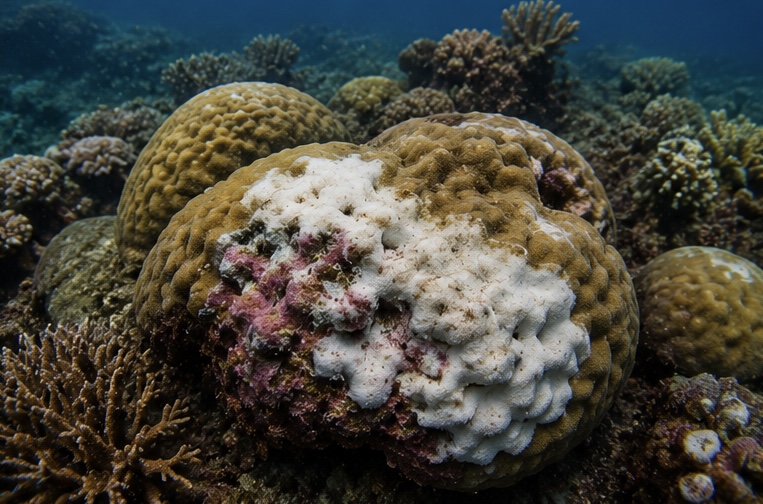
Even brief contact can damage living tissue or remove part of the protective mucus layer, leaving the coral more exposed to infection and environmental stress.
Human skin can also introduce contaminants such as natural oils, sunscreen residues, and bacteria. A single touch won’t destroy a colony, but it creates damage the coral must repair.
And reefs rarely experience just one touch.
How Human Contact Can Increase Disease Risk
Coral diseases are an increasing concern on reefs worldwide. In some regions, disease outbreaks have damaged entire reef systems, becoming another major challenge alongside bleaching and declining water quality.
Damaged tissue creates openings for infection. When the mucus layer is disturbed or tissue is scraped, bacteria and other pathogens can reach areas that would normally be protected.
Healthy corals are often able to resist disease, but stressed or injured corals are far more vulnerable. A small injury can leave a colony exposed long after the original contact occurred.
Touching Isn’t the Only Problem
Most reef damage from visitors is accidental.
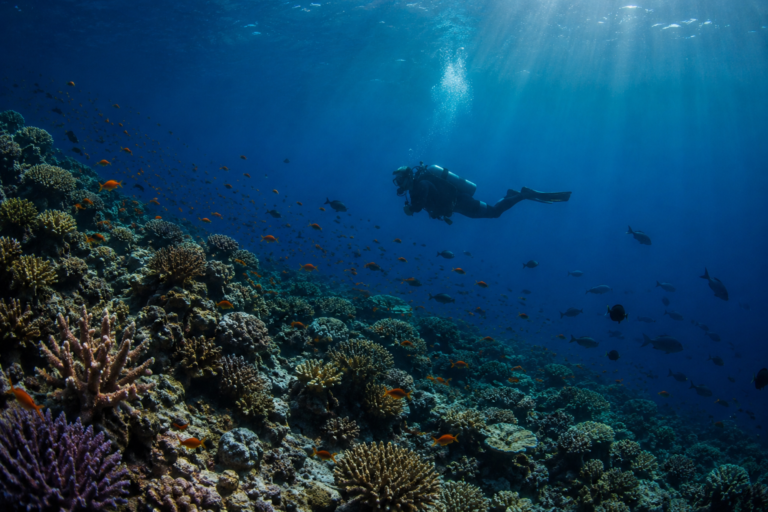
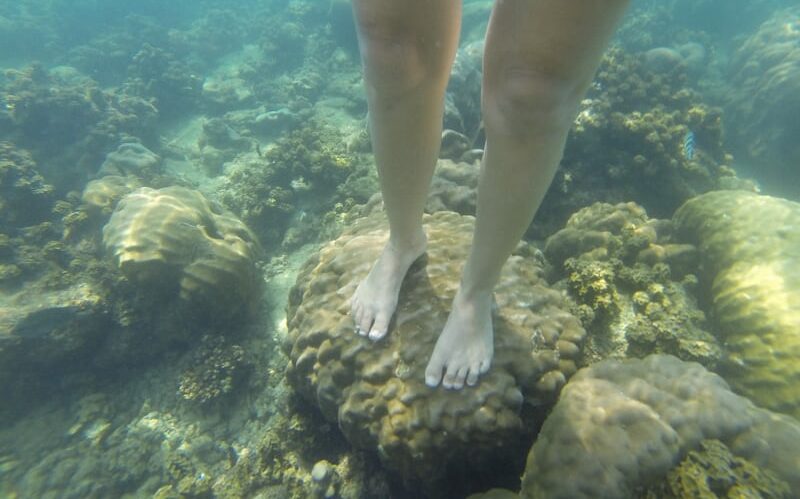
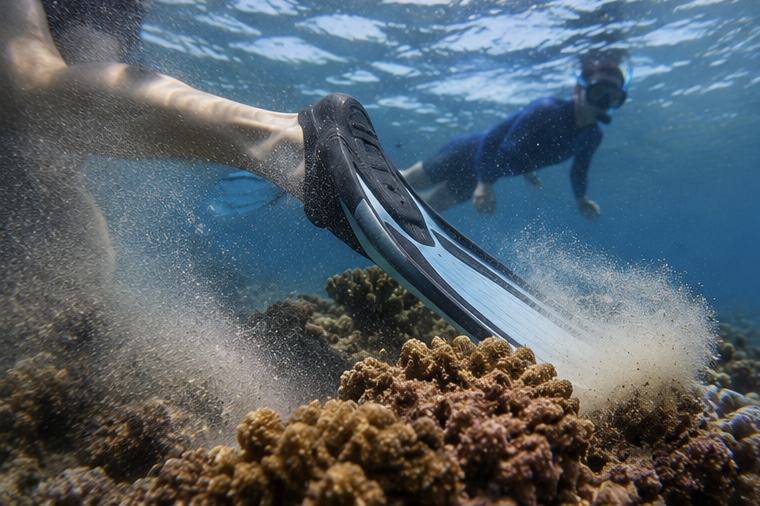
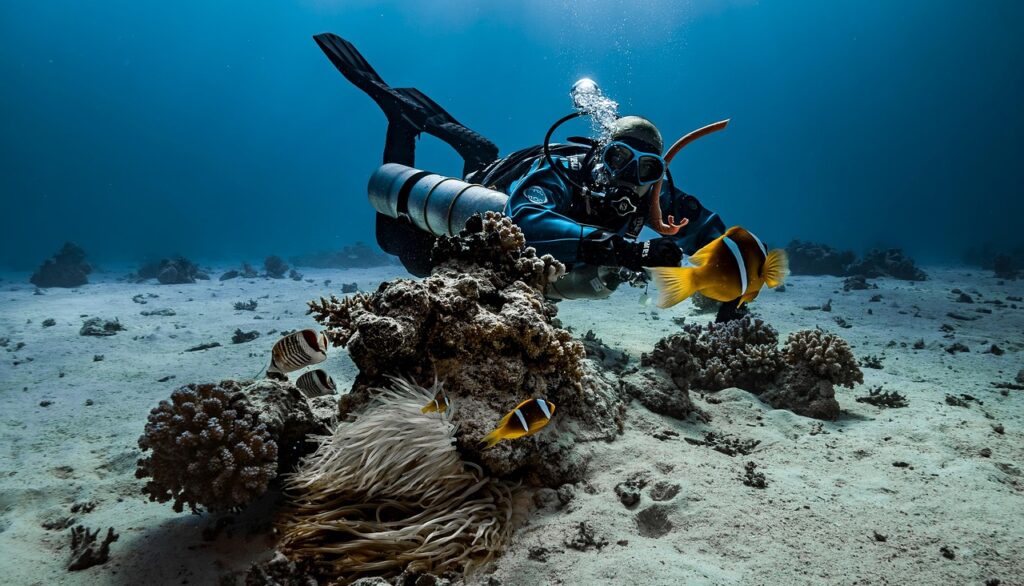
Snorkellers may stand on coral while adjusting equipment. Divers may brush reefs with fins, cameras, or gauges. Strong currents can tempt people to grab coral for stability. Underwater photographers may also damage coral while positioning themselves for a shot.
Most people don’t intend to damage reefs. The problem is that many impacts occur before they realise they’ve made contact at all.
Why Small Impacts Matter
A single touch won’t devastate a reef.
But coral reefs are among the most visited natural environments on Earth. At popular sites, tens of thousands of people may enter the water each year. What seems insignificant at the level of one visitor becomes meaningful when repeated hundreds or thousands of times.
A reef experiences the combined effect of many small disturbances over months, years, and decades.
Conservation often succeeds not by preventing one catastrophic event, but by reducing the countless small pressures that slowly wear ecosystems down.
Why Reefs Need Every Advantage They Can Get
Coral reefs face growing challenges worldwide.
Rising ocean temperatures have increased the frequency of bleaching events. Pollution, sediment runoff, declining water quality, and disease outbreaks add further pressure.
Healthy corals can often recover from minor injuries. Stressed corals struggle.
Reducing avoidable impacts is one of the simplest ways people can help. Unlike many global threats facing reefs, physical contact is one pressure that can be reduced immediately through awareness and responsible behaviour.
No snorkeller can solve climate change, but everyone can avoid adding unnecessary stress.
Healthy reefs support biodiversity, protect coastlines, sustain fisheries, and contribute billions to tourism economies worldwide.
How Snorkellers and Divers Can Reduce Their Impact
Protecting reefs doesn’t mean staying out of the water. Many people develop a deeper appreciation for reefs after experiencing them firsthand.
Simple actions can make a meaningful difference:
- Maintain good buoyancy while diving.
- Avoid standing on coral or reef structures.
- Keep fins, cameras, and equipment clear of the reef.
- Be especially careful in shallow water and strong currents.
- Observe marine life without touching it.
- Give yourself space when taking photographs.
For a full guide, see How to Reduce Your Impact When Snorkelling or Diving.
The best reef encounters are often the ones where nothing is disturbed at all.
A Small Choice Can Make a Big Difference
Coral reefs may look tough, but their living surface is remarkably delicate.
A brief touch may not seem important in the moment. Yet when repeated across thousands of visitors and combined with the many other pressures reefs already face, those small impacts add up.
Understanding that coral is alive changes the way we see a reef. It becomes more than scenery — it becomes a living ecosystem built by countless tiny animals, growing slowly over years, decades, and centuries.
Sometimes, one of the simplest ways to help protect a reef is simply to admire it without touching it.