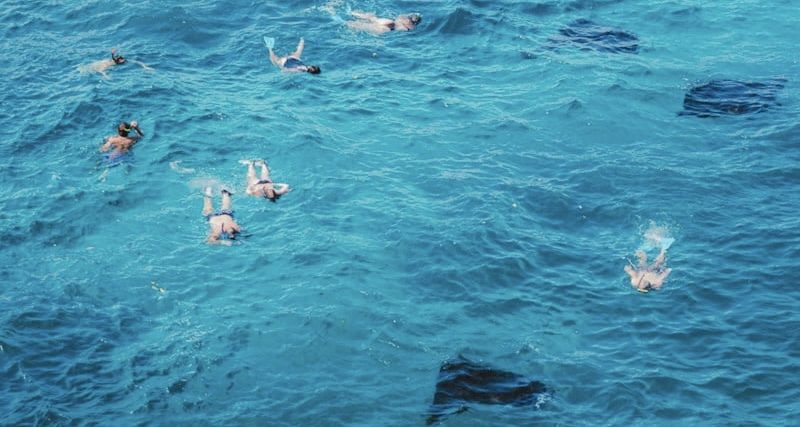
manta ray, ocean, aerial view, coral reef, turquoise water, marine life, sea, tropical, underwater, wildlife, nature, aquatic, swimming, reef, blue, biodiversity, ecosystem, formation, animal, clear water, summer, vacation, scenic, ai generated

Manta Rays: The Gentle Giants of the Ocean

Few marine animals capture people’s imagination quite like manta rays.

Underwater, they move with a grace that seems to defy their size. Their broad, wing-like bodies glide through the water in slow, sweeping motions, giving the impression that they’re flying rather than swimming.

For generations, these gentle giants have fascinated people around the world. Yet despite being among the ocean’s most recognisable animals, manta rays remain full of surprises — and scientists are still uncovering new insights into their behaviour, biology, and even their species diversity.

There’s far more to manta rays than their size and graceful appearance.

What Exactly Is a Manta Ray?

At first glance, manta rays look like oversized stingrays. Both belong to the ray group of fishes, but mantas are part of the family Mobulidae, which also includes devil rays and other mobulas.

Although they share a common ancestry, manta rays have evolved for a very different lifestyle. Many stingrays spend much of their time resting on the seabed, whereas mantas are built for life in the open ocean. Their broad, diamond-shaped bodies and enormous pectoral fins allow them to travel efficiently through the water over vast distances.

Another key difference is their tail. Unlike stingrays, manta rays lack a venomous barb. Instead, their long tail is used primarily for balance and stability while swimming. Combined with a diet of tiny plankton and small fish, this makes manta rays completely harmless to humans.

Despite their gentle nature, manta rays are giants. The largest individuals can reach wingspans of more than seven metres and weigh up to two tonnes, making them the largest rays in the world.

Reef Manta Rays vs Giant Manta Rays

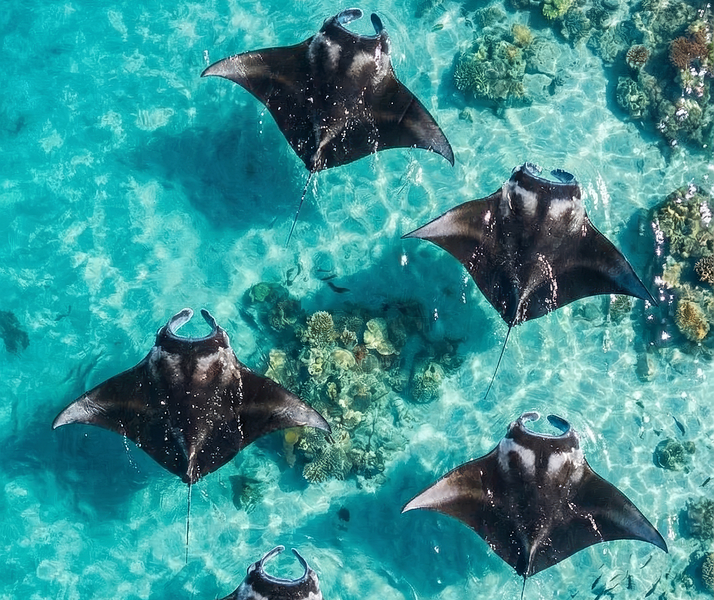
Scientists currently recognise three manta ray species. The two most familiar are the reef manta ray (Mobula alfredi) and the giant oceanic manta ray (Mobula birostris), while a third Atlantic species was formally described in 2024.

Although they look similar at first glance, reef and giant manta rays live somewhat different lives. Reef mantas tend to remain associated with tropical coral and rocky reefs, while giant mantas spend more time roaming offshore islands, seamounts, and open-water habitats.

These different lifestyles are reflected in their size. Reef mantas typically reach wingspans of around five metres, while giant oceanic mantas can exceed seven metres. The largest manta ray ever recorded measured almost nine metres from wingtip to wingtip.

Scientists can also distinguish the two species using physical features. Giant mantas possess a calcified lump behind the dorsal fin, while reef mantas do not.

A Manta’s Unique Appearance

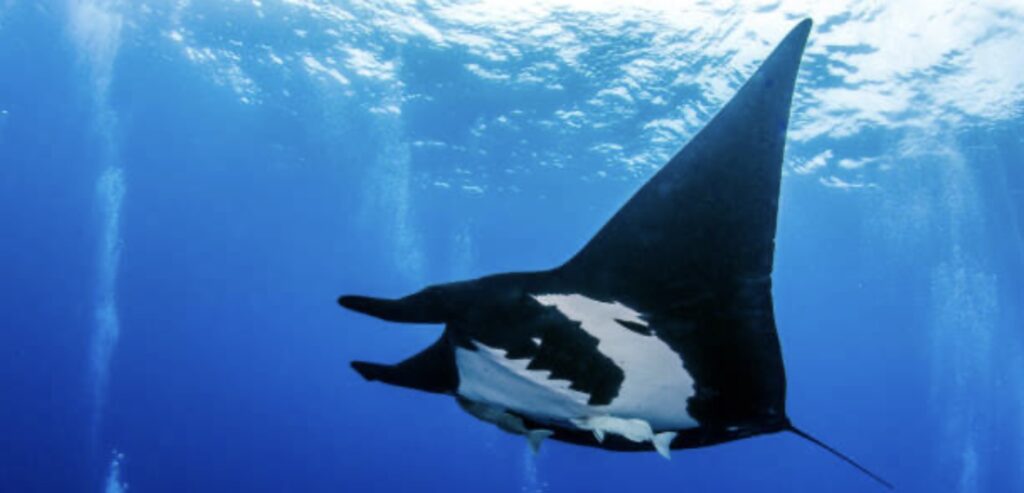
Every manta ray carries a unique pattern of black spots (or white for melanistic mantas) across its belly. Much like fingerprints in humans, no two patterns are exactly alike. Researchers use these markings to identify individuals and track them over many years, allowing some mantas to be recognised throughout their lives.

These markings have revealed a surprising amount about manta ray movements and behaviour, but they are only part of what makes mantas visually distinctive.

Some individuals are melanistic, appearing almost entirely black above and below, with only small patches of white. Manta rays are the only known rays to exhibit this form of melanism.

At the other end of the spectrum is one of the world’s most famous manta rays, “Inspector Clouseau”. Believed to be the only known pink-bellied manta ray, its unusual colouration is thought to be the result of a rare genetic mutation.

Built for Life in the Open Ocean

Everything about a manta ray’s body is designed for efficient movement.

Their enormous pectoral fins act like underwater wings, generating lift as they glide through the water. Rather than relying on constant bursts of speed, mantas move with slow, powerful strokes that allow them to cover large distances while conserving energy.

This efficiency is important because manta rays are constantly on the move. To extract oxygen from the water, they must keep water flowing across their gills, spending much of their lives cruising through the ocean in search of food and suitable habitats.

Long-Distance Travellers

Manta rays are found in warm and temperate oceans around the world. Some of the best-known populations occur around places like Lady Elliot Island, Ningaloo Reef, Hawaii, and the Maldives, where seasonal food availability and cleaning stations attract large numbers of mantas.

Some populations undertake seasonal migrations spanning hundreds or even thousands of kilometres. Individuals may move between feeding grounds, breeding areas, and cleaning stations as ocean conditions change throughout the year.

These movements also play a role in reproduction. During the breeding season, females may be followed by long “courtship trains” of males, sometimes stretching to dozens of individuals as they compete for mating opportunities.

Although most of their lives are spent gliding beneath the surface, mantas occasionally put on spectacular aerial displays. Scientists are still investigating exactly why manta rays breach, but communication, courtship, and parasite removal are among the leading theories.

How Manta Rays Feed

Despite their enormous size, manta rays survive by feeding on some of the smallest organisms in the ocean.

Their diet consists primarily of plankton, tiny crustaceans, fish eggs, and other microscopic prey suspended in the water column.

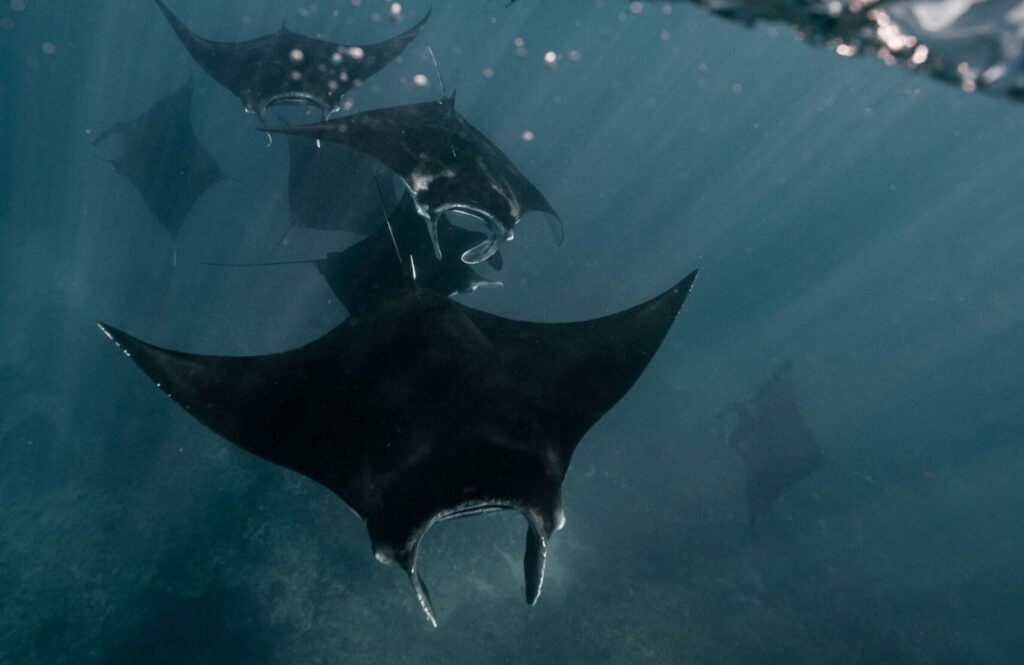
To capture this food, manta rays use specialised structures called cephalic fins. These flexible appendages extend from either side of the mouth and can be unfurled to funnel water and prey inward while feeding.

As water enters the mouth, filtering structures trap food particles while clean water exits through the gills. A feeding manta can process thousands of litres of seawater every hour, extracting tiny prey from water that appears almost empty to human eyes.

Feeding Strategies

When food is abundant, mantas employ a range of feeding strategies. Some skim just beneath the surface, while others use currents to concentrate plankton into dense patches.

They may also work together. Groups sometimes form feeding trains, with multiple individuals following one another through productive areas. Others perform repeated barrel rolls, looping through the same patch of water to maximise the amount of food they collect using their wake.

The most dramatic example is cyclone feeding. In these events, dozens of manta rays swim in a spiralling column that helps concentrate plankton, allowing each animal to feed more efficiently.

It’s a remarkable strategy for an animal that can weigh two tonnes yet depends on prey measured in millimetres.

From below of wild dangerous big rays swimming on blue clean water surface in sunny day

One of the Smartest Fish in the Ocean

Manta rays are not just impressive physically. They are also considered among the most intelligent fish on Earth.

Their brains are the largest relative to body size of any living fish, with particularly well-developed regions associated with learning, decision-making, and sensory processing.

But intelligence is not measured by brain size alone. Research suggests manta rays are capable of learning from experience and remembering important locations, with individuals returning to the same feeding grounds and cleaning stations year after year.

Some studies have even suggested a degree of self-awareness. In mirror experiments, manta rays responded to their reflections with unusual, exploratory movements that differed from their reactions to other animals.

This ability to learn and adapt may help explain why mantas appear so comfortable navigating complex environments. They rely on a combination of sensory information, including vision and smell, to locate food and move through their surroundings.

Many divers describe manta rays as unusually curious. Rather than immediately swimming away, they may circle nearby, make repeated passes, or appear to investigate people in the water. While scientists cannot know exactly what a manta ray is thinking, these behaviours hint at a level of awareness rarely associated with fish.

Why Manta Rays Matter

Connecting Ocean Ecosystems

Manta rays are more than just impressive animals. They also play an important role in the ecosystems they inhabit.

As they move between offshore waters, reefs, and coastal habitats, manta rays help transport nutrients across large areas of the ocean. This movement contributes to nutrient cycling and helps connect ecosystems that might otherwise remain more isolated.

Their importance can also be seen at cleaning stations. These locations, where smaller fish remove parasites and dead skin from larger animals, become gathering points for mantas and support a variety of ecological interactions on surrounding reefs.

Supporting Coastal Communities

The value of manta rays extends beyond ecology. In many parts of the world, they are a major driver of marine tourism.

Destinations known for manta encounters attract thousands of visitors each year, generating significant income for local communities. In many regions, a living manta ray is worth far more to local economies than one caught in a fishery, creating a strong incentive to protect both the animals and the habitats they depend on.

Threats and Conservation

Despite their size, manta rays are vulnerable animals.

A major reason is their slow rate of reproduction. Female manta rays typically give birth to a single pup every two years or so after a pregnancy lasting around 12 to 13 months. The pups are born alive and fully independent from birth.

This strategy has served manta rays well for millions of years, but it also means populations recover slowly when numbers decline. Although mantas can live for 40 to 50 years, they produce relatively few offspring throughout their lifetime.

Human activities pose additional challenges. Manta rays can become entangled in fishing gear or be accidentally caught as bycatch. In some parts of the world, they have also been targeted for their gill plates, which were traded for use in traditional medicines despite a lack of scientific evidence supporting their effectiveness.

Today, the giant oceanic manta ray is classified as Endangered, while the reef manta ray is listed as Vulnerable on the IUCN Red List.

Fortunately, awareness of manta rays has grown significantly in recent decades. Marine protected areas, fishing restrictions, research programs, and responsible wildlife tourism are all helping to improve the outlook for these remarkable animals.

Still Full of Surprises

Watching a manta ray glide through the water is an experience many people never forget.

Their size and grace are often the first things people notice, but they are only part of the story. Beneath that calm, effortless movement lies an animal with remarkable intelligence, unique behaviours, and adaptations that continue to surprise scientists.

The more researchers learn about manta rays, the more remarkable these gentle giants become.

Explore More

Scroll to Top