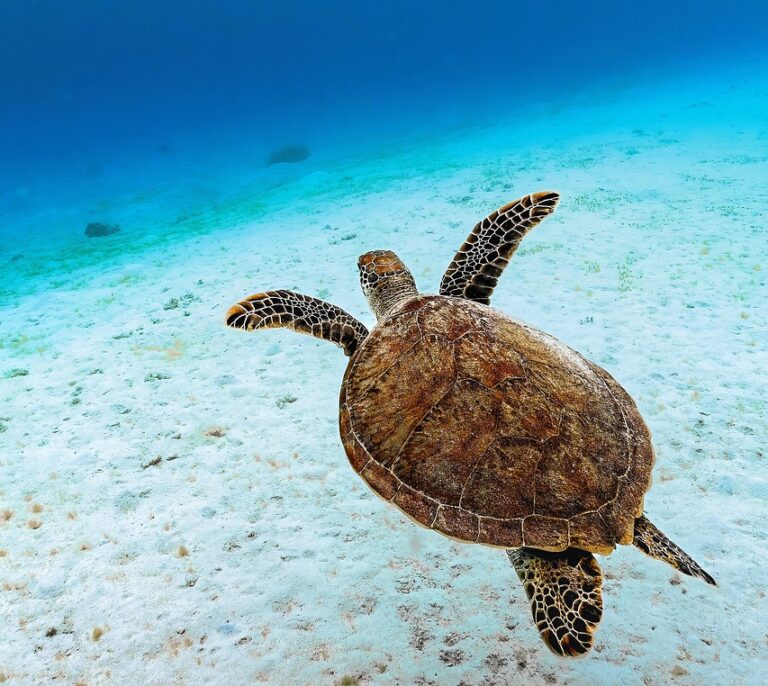
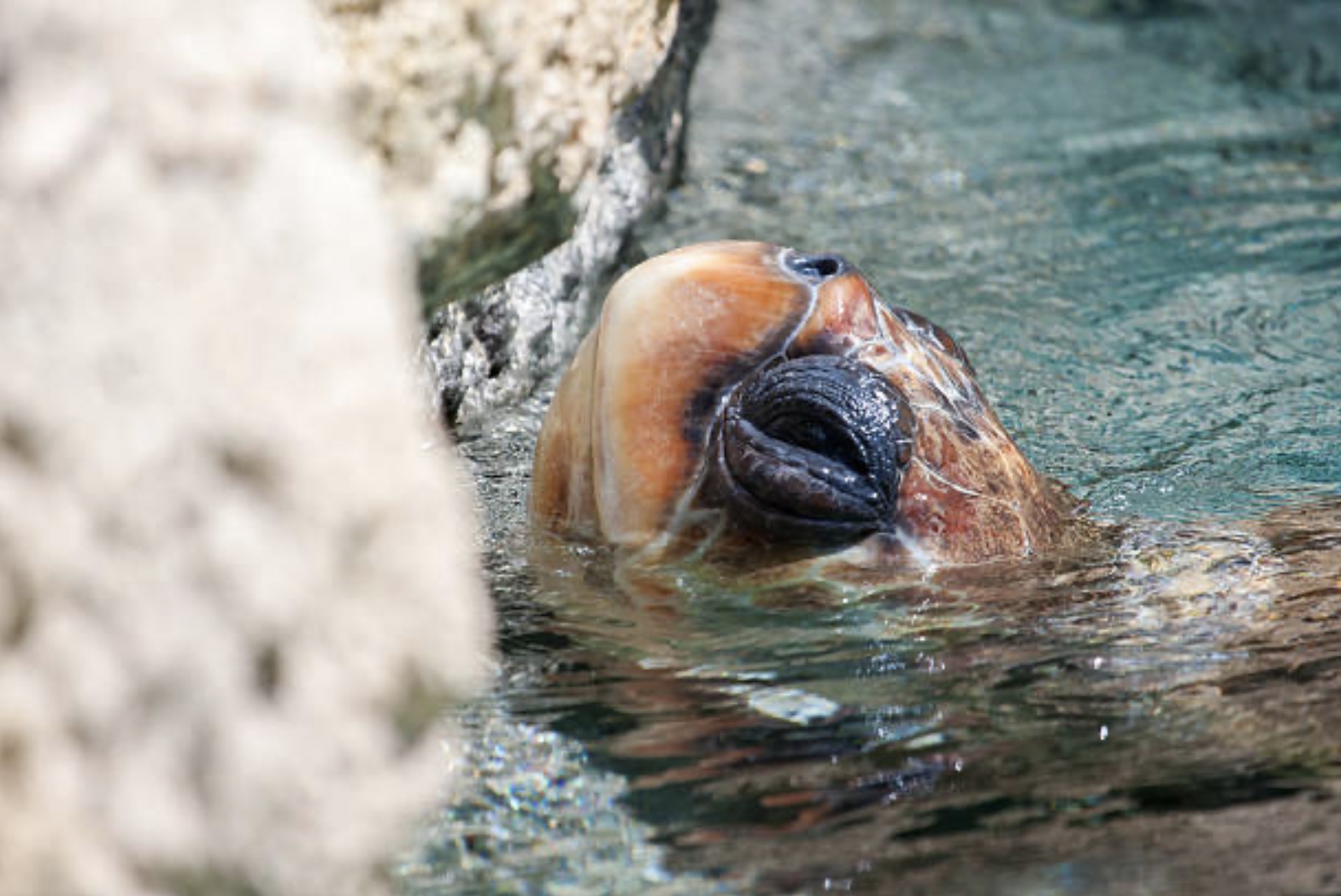

A green turtle hauls itself onto a tropical beach after years spent crossing the open ocean.
As it rests on the sand, clear droplets stream from its eyes.
To anyone watching, it looks remarkably like the turtle is crying.
But those apparent tears are actually evidence of one of the clever adaptations that allows sea turtles to survive in a world of saltwater.
Living in Saltwater Is a Challenge
The ocean is a difficult place for any animal to maintain the right balance of water and salt.
Seawater contains far more salt than the fluids inside a turtle’s body. Every day, sea turtles take in small amounts of salt through the water around them and the prey they eat, including jellyfish, crustaceans, and seagrass.
Like humans, sea turtles have kidneys that help regulate salt levels. However, their kidneys alone aren’t capable of removing enough salt to solve the problem.
So sea turtles evolved a second system.
The Secret Is Hidden Behind Their Eyes
Behind each eye sits a salt gland.
These glands filter excess salt from the bloodstream and produce a concentrated salty fluid that drains through ducts near the eyes. As the fluid runs down the face, it creates the appearance of tears.
The process is surprisingly efficient. In some species, such as the loggerhead turtle, the fluid produced by the glands can be more than twice as salty as seawater itself.
Rather than wasting valuable water, sea turtles are able to remove large amounts of salt while retaining the fluids they need to stay hydrated.
Without these glands, life in the ocean would be much more difficult.
Sea turtles use their salt glands throughout their lives, both in and out of the water. However, the fluid is most noticeable on land, where it can collect around the eyes and create the appearance of tears.
Why Hatchlings Often Look Like They’re Crying
Photographs of “crying” turtles are often taken during the hatchling stage.
As baby turtles emerge from their nests and scramble towards the water, moisture can sometimes be seen around their eyes. Their salt glands are already functioning, helping prepare them for life at sea from the moment they enter the ocean.
Of course, if any turtle had a reason to cry, it might be a hatchling. Within minutes of emerging from the sand, it faces hungry birds, crabs, fish, and countless other dangers.
The tears, however, have nothing to do with the challenges ahead.
They’re simply part of a biological system that has been helping sea turtles survive for millions of years.
Sea Turtles Aren’t the Only Ones
Many marine animals have evolved ways to remove excess salt.
Seabirds such as albatrosses, gulls, and petrels possess salt glands near their eyes. The concentrated salt solution drains into their nasal passages and is often expelled through the nostrils.
Marine iguanas in the Galápagos use an even more dramatic approach. They regularly eject excess salt by forcefully sneezing, sometimes leaving a fine spray of salt crystals around their noses.
Different animals have found different solutions, but the challenge is the same: living in a salty environment without allowing salt levels inside the body to become dangerously high.
A Clever Adaptation
The next time you see a photograph of a sea turtle with tears streaming from its eyes, it’s worth remembering that you’re not witnessing emotion.
You’re witnessing an adaptation that has helped sea turtles survive in the ocean for millions of years.
What looks like a moment of sadness is actually a reminder of how perfectly these animals are adapted to life at sea.