green sea turtle, green turtle, sea turtle, turtle, reptile, animal, sea, ocean, underwater, endangered species, nature, sea, sea, sea, sea, sea

How Sea Turtles Find Their Way Home

Imagine leaving home as a newborn and spending the next 20 years travelling across an entire ocean.

You cross thousands of kilometres of open water. You survive predators, follow currents, and wander far beyond sight of land.

Then, somehow, you find your way back to the same stretch of coastline where your journey began.

That is exactly what many sea turtles do.

Scientists are still piecing together the full story, but evidence suggests sea turtles possess one of the most remarkable navigation systems in the animal kingdom.

Learning Home’s Signature

A sea turtle’s journey begins beneath the sand.

After hatching, young turtles emerge from their nest and race toward the ocean. Once they reach the water, they don’t remain in the shallow coastal habitats where they were born. Instead, they head offshore into the open ocean.

Scientists believe this early stage of life may be more important than it appears.

Research suggests hatchlings can detect and remember the magnetic characteristics of the area where they hatch. In effect, they may be recording a unique magnetic signature that becomes a lifelong reference point.

Years or even decades later, that information may help guide them back to the same coastline when it is time to breed.

It is a remarkable possibility: a hatchling only a few centimetres long may be storing information that it won’t need until adulthood.

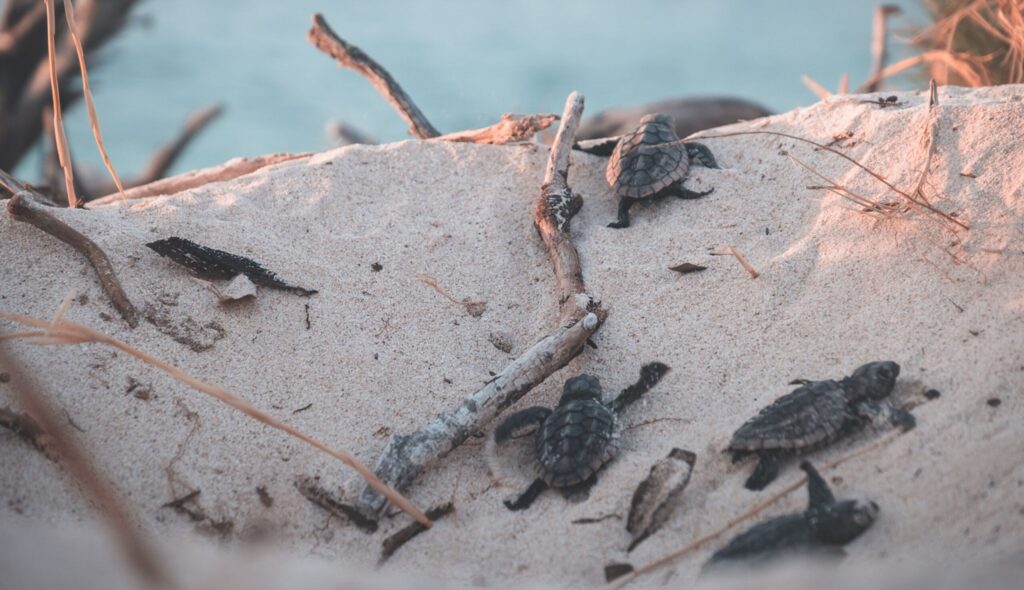
Group of hatchling sea turtles crawling on a sandy beach towards the ocean.

A Built-In Magnetic Map

The leading theory for how sea turtles navigate involves something humans can’t naturally sense at all — the Earth’s magnetic field.

Although invisible to us, the Earth’s magnetic field varies slightly from place to place. Scientists think sea turtles can detect these subtle differences and use them as a kind of natural map.

Research has shown that turtles respond to magnetic conditions from different locations in predictable ways. In one study, young loggerhead turtles exposed to magnetic conditions matching different parts of their migration route adjusted their swimming direction accordingly.

The findings suggested turtles aren’t simply detecting magnetic fields. They may actually be using magnetic information as both a compass and a map.

Rather than relying on a single clue, turtles appear able to determine both which direction they should travel and where they are relative to where they want to go.

The Earth’s magnetic field also shifts slightly over time, creating yet another puzzle that scientists are still trying to understand.

The Lost Years

Armed with this remarkable navigational ability, young turtles disappear into one of the most mysterious periods of their lives.

Scientists often refer to this stage as the “lost years”.

After leaving the coast, juvenile turtles can spend years drifting and travelling through the open ocean. Because they are difficult to track during this time, much of their early life remains poorly understood.

Depending on the species, turtles may travel hundreds or even thousands of kilometres before settling into feeding grounds.

For decades, they may roam vast stretches of ocean far from the beach where they hatched.

Yet when adulthood arrives, many return.

Female sea turtles frequently make long migrations back to the same region where they were born, completing a journey that began years earlier as a hatchling scrambling across the sand.

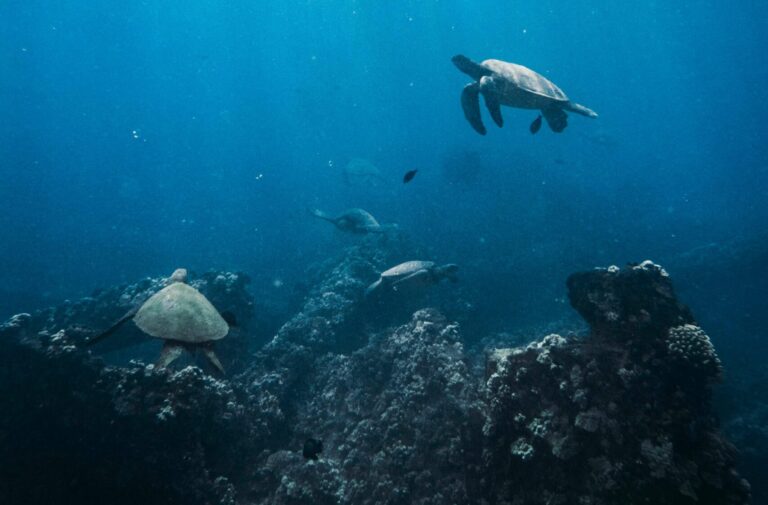
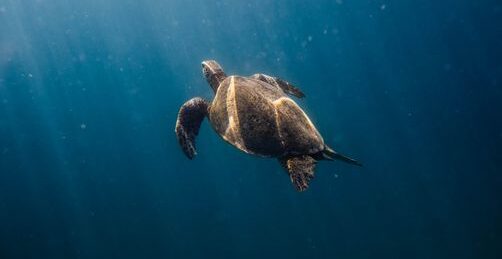
A sea turtle gracefully swims through the deep blue waters off the coast of Hawaii.

More Than One Navigation Tool

The Earth’s magnetic field is unlikely to be the only clue sea turtles use.

Scientists suspect turtles also draw on information from waves, ocean currents, water chemistry, and possibly visual landmarks when they are close to shore.

In fact, hatchlings appear to use wave direction during their first moments at sea, helping them move away from the coast and toward deeper water.

Exactly how all of these clues work together remains uncertain.

Navigation across an entire ocean is an incredibly complex task, and sea turtles probably rely on multiple sources of information depending on where they are and what stage of life they are in.

One of Nature’s Great Mysteries

Sea turtles have been navigating the world’s oceans for millions of years, long before humans developed maps, compasses, or satellites.

Scientists have uncovered some of the clues behind this extraordinary journey, but many questions remain unanswered.

Even today, one of the ocean’s oldest travellers is still keeping some of its secrets.

Explore More

Scroll to Top