
Imagine looking down into the blue and seeing what appears to be a moving wall.
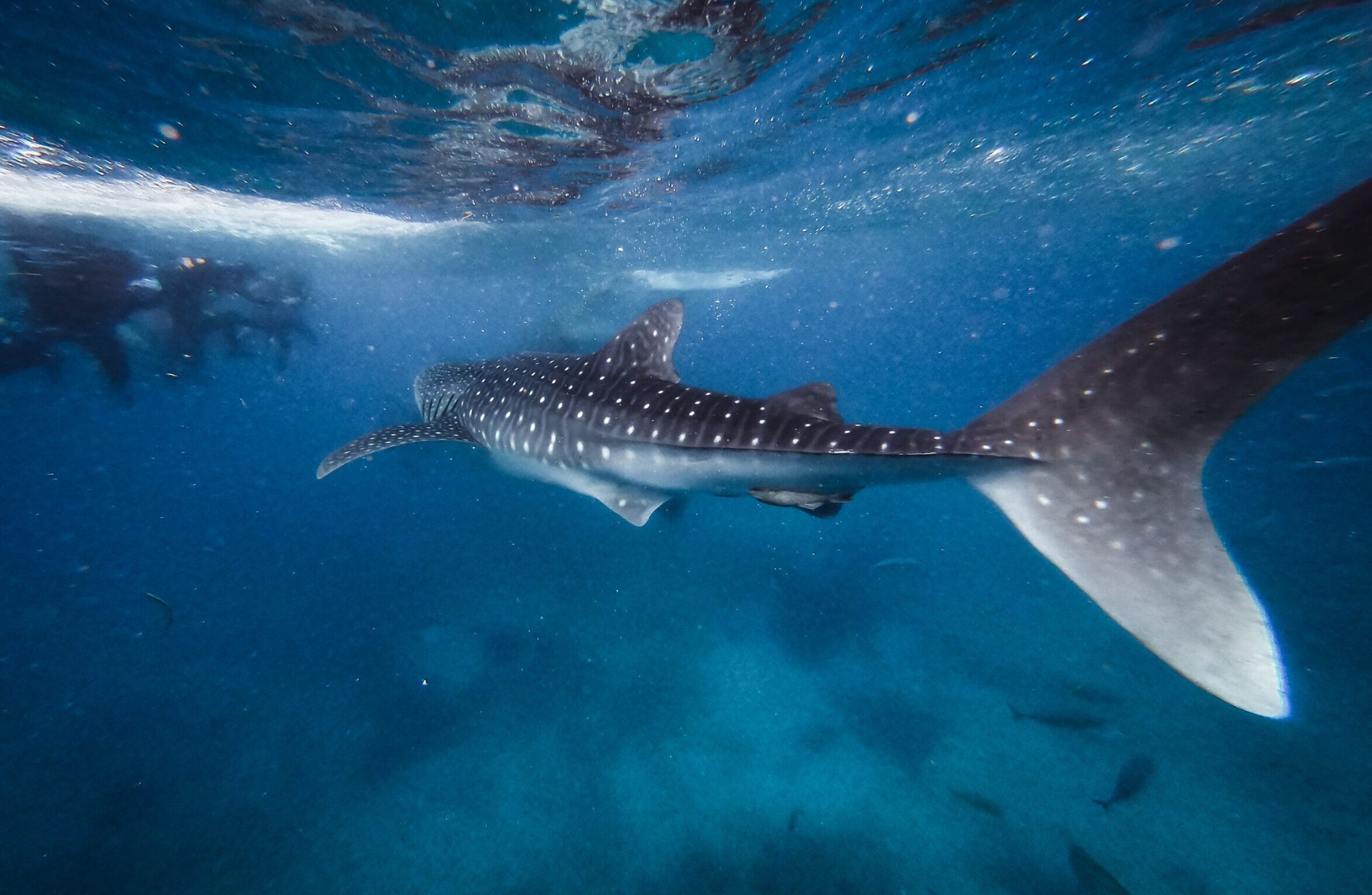
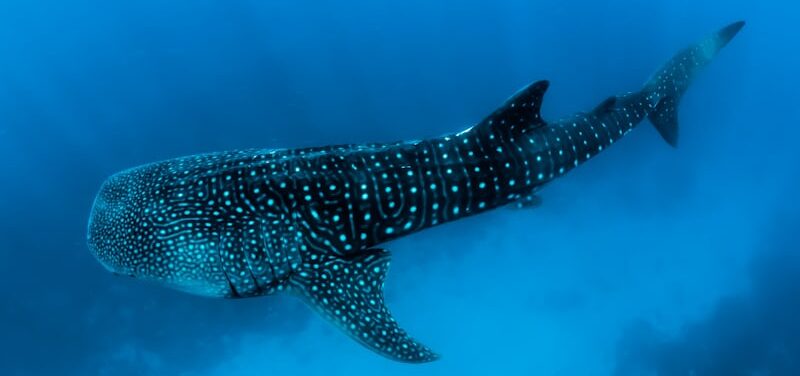
Slowly, a pattern of pale spots emerges from the water. A broad head follows. Small fish hover around a whale shark’s body as it glides past in slow, graceful movements.
Whale sharks are among the most recognisable animals in the sea, but they are also one of the most unusual. The world’s largest fish survives not by hunting large prey, but by feeding on organisms small enough to fit on your fingertip.
Understanding how that contradiction works reveals a very different kind of shark.
Meet the Whale Shark
Whale sharks operate on a scale that is difficult to appreciate until you see one in person.
As the largest fish on Earth, they can reach around 18 metres in length and weigh as much as 19 tonnes. Yet despite their immense size, whale sharks are not whales at all. They are true sharks, belonging to a group known as carpet sharks.
They are also among the longest-lived fish in the ocean, with scientists estimating they can live for well over a century.
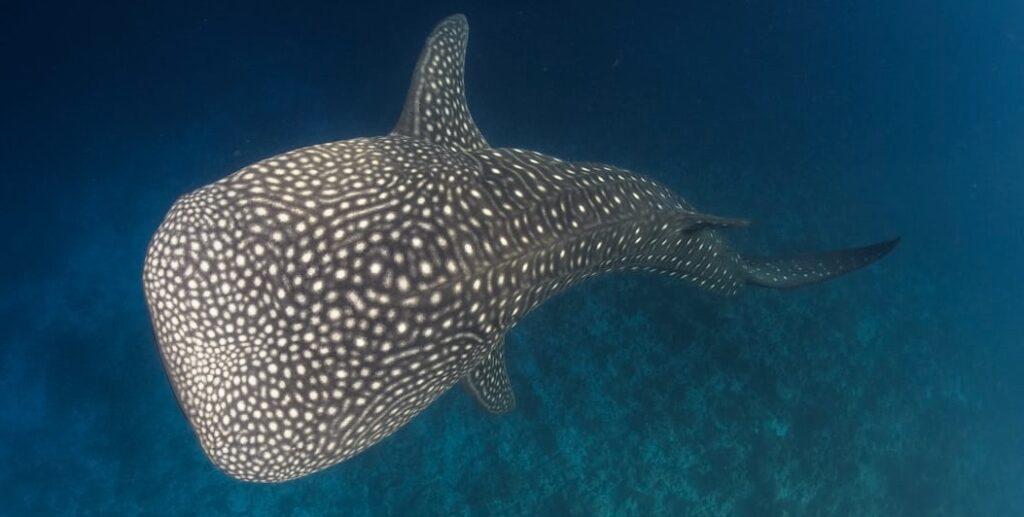
Whale sharks are instantly recognisable thanks to the pale spots and stripes covering their bodies. Like fingerprints, these patterns are unique to each individual and allow researchers to identify whale sharks from photographs.
A Diet Built on Tiny Prey
The most surprising thing about whale sharks is not their size.
It’s what they eat.
Most giant marine animals survive by hunting large prey. Whale sharks became the largest fish on Earth by doing the opposite.
Instead, they feed primarily on plankton, krill, fish eggs, and other tiny organisms drifting through the water. Many are only a few millimetres long.
This creates one of the ocean’s most remarkable contradictions: the largest fish on Earth survives by eating some of the smallest creatures in the sea.
How Whale Sharks Feed
Whale sharks are filter feeders.
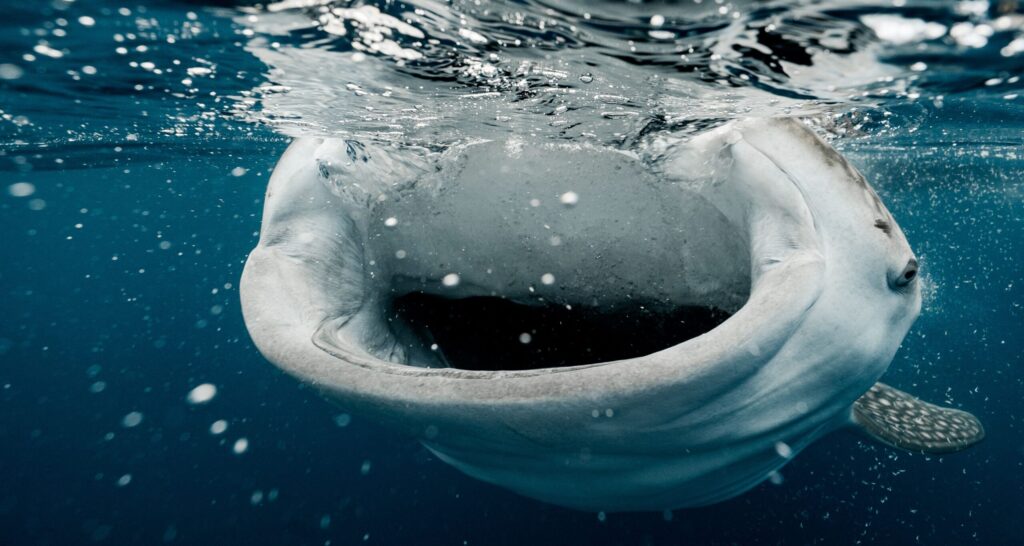
As they swim, they open their enormous mouths and take in large volumes of water. Special filtering structures inside their gills trap food particles while the water is expelled.
Although individual plankton are tiny, they can occur in enormous numbers. Seasonal blooms, fish spawning events, and coral spawning can create huge concentrations of food.
Scientists estimate that a large whale shark can consume more than a tonne of plankton and other tiny prey in a single day when feeding conditions are favourable.
Following Food Across Oceans
Because their food is patchy and temporary, whale sharks rarely stay in one place for long.
Rather than following herds of prey, they follow events. A plankton bloom, fish spawning aggregation, or coral spawning event can suddenly create an abundance of food. Once conditions change, the sharks move on.
This lifestyle has turned whale sharks into long-distance travellers.
Satellite tracking has revealed that individuals can travel thousands of kilometres across oceans in search of feeding opportunities.
Many of the whale sharks seen at Ningaloo Reef in Western Australia arrive between April and July. Their arrival coincides with seasonal food events, including coral spawning and plankton blooms that create temporary feeding opportunities.
After leaving Ningaloo, some travel north towards Indonesian waters and the broader eastern Indian Ocean, while others continue on journeys spanning thousands of kilometres.
The Hidden Life of a Whale Shark
Much of a whale shark’s life remains hidden from view.
Although they are often seen feeding near the surface, whale sharks spend much of their time far offshore, making them surprisingly difficult to study. As a result, scientists are still uncovering basic details about their behaviour, movements, and life cycle.
The Deep-Diving Giant
Most people associate whale sharks with warm, sunlit waters, but they are capable of remarkable dives.
Some individuals have been recorded descending deeper than 1,000 metres below the surface, far beyond the depths where most people ever imagine encountering a whale shark. At these depths, sunlight no longer penetrates the water.
Scientists suspect these dives may help them find food, navigate, or move between water layers, although the exact reasons are still being investigated.
For an animal so often seen at the surface, whale sharks spend surprisingly large parts of their lives in the deep ocean.
From Tiny Pup to Ocean Giant
Reproduction is one of the least understood parts of a whale shark’s life.
Scientists still do not know where most whale sharks breed or give birth. In fact, much of what we know about their reproduction comes from remarkably few observations.
One of the most important observations occurred in 1995, when researchers examined a pregnant female carrying more than 300 pups at different stages of development. The discovery confirmed that whale sharks are ovoviviparous — meaning the eggs hatch inside the mother and the young are born alive rather than being laid as eggs — and it also revealed that they can carry large numbers of offspring.
Those pups are less than a metre long at birth — remarkably small for an animal that can eventually grow longer than a bus and weigh up to 19 tonnes.
Despite discoveries like these, many questions about whale shark reproduction and early life remain unanswered.
Sharks Under Pressure
Despite their size, whale sharks face a number of threats.
- Vessel strikes: Whale sharks often feed near the surface, putting them at risk of collisions with boats.
- Fishing gear: They can become entangled in nets or accidentally caught as bycatch.
- Plastic pollution: Because they filter huge volumes of water, whale sharks can ingest floating plastic alongside their food.
- Slow population recovery: Whale sharks grow slowly, mature late, and likely reproduce infrequently, making population recovery difficult.
These pressures have contributed to population declines in parts of the species’ range, leading to whale sharks being listed as Endangered on the IUCN Red List.
Because these sharks travel across entire oceans, protecting them requires cooperation between multiple countries.
An Encounter Few People Forget
Few marine animals leave a stronger impression than a whale shark.
Perhaps it is the contrast between their size and their calmness. Or perhaps it is the simple fact that animals this large seem as though they should not exist.
Whatever the reason, people often describe seeing a whale shark in the wild in the same way: photographs never quite prepare you for the moment one appears out of the blue.
For a few moments, the scale of the ocean feels very different. What looked like a moving wall becomes a reminder that some of the ocean’s most extraordinary animals still exist beyond the limits of everyday experience.