anglerfish, fish, museum, ocean life, marine life, aquatic life, anglerfish, anglerfish, anglerfish, anglerfish, anglerfish

Why Do Animals Look Weirder With Depth?

Imagine seeing a fish with a transparent head, a squid that glows in the dark, or a creature with a mouth so large it can swallow prey almost its own size.

These animals might look like something from science fiction, but they are very real. Most live far below the surface, in parts of the ocean where sunlight never reaches and food can be scarce for weeks or even months at a time.

The deeper scientists explore, the stranger marine life seems to become. But there is a reason for this. What looks bizarre to us is often the result of millions of years of adaptation to one of the most extreme environments on Earth.

Life Becomes More Challenging With Depth

As you descend through the ocean, the environment changes dramatically.

Sunlight fades until it disappears completely. Temperatures drop. Pressure increases. Food becomes harder to find. In many areas, animals may go long periods without encountering a meal.

The deeper an animal lives, the more specialised it often becomes. Features that appear unusual or even monstrous to us can be essential for survival.

When There Is No Light, Eyes and Bodies Change

The deep ocean is a world of permanent darkness.

Some animals have evolved enormous eyes to capture every possible trace of light. Others have gone in the opposite direction, reducing their eyes because vision is no longer useful.

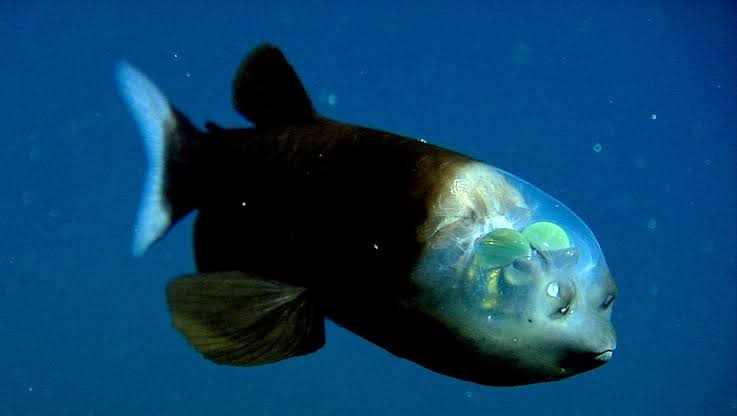
One of the strangest examples is the barrel-eye fish. Its head is covered by a transparent dome, allowing its tubular eyes to look upward through the top of its skull. This helps it spot the silhouettes of prey drifting above in the darkness.

Many deep-sea animals are also black or red. Black helps them blend into the darkness, while red light does not penetrate to great depths, making red animals effectively invisible.

Finding Food Means Taking Every Opportunity

In shallow water, food is often plentiful. In the deep sea, it can be much harder to come by.

Most ocean life depends directly or indirectly on sunlight. Near the surface, microscopic phytoplankton use sunlight to grow, forming the foundation of marine food webs. But sunlight only reaches the upper layers of the ocean.

Far below, there is no photosynthesis. Most deep-sea animals survive on a slow rain of organic matter drifting down from above, sometimes called “marine snow”, along with the occasional dead fish, squid, or whale carcass that sinks into the depths.

As a result, many species have evolved large mouths, expandable stomachs, and impressive teeth.

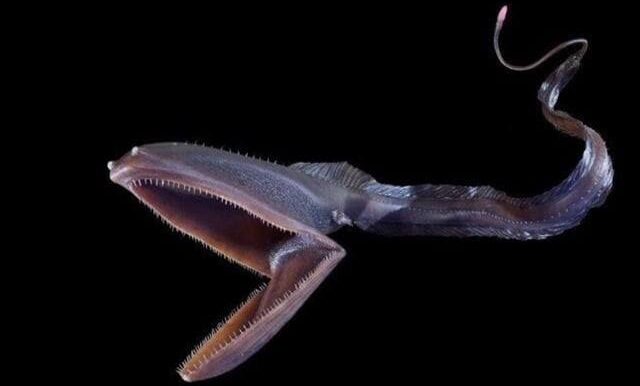
The gulper eel is a classic example. Its mouth is far larger than its body would suggest, allowing it to swallow prey that might otherwise be too large to eat.

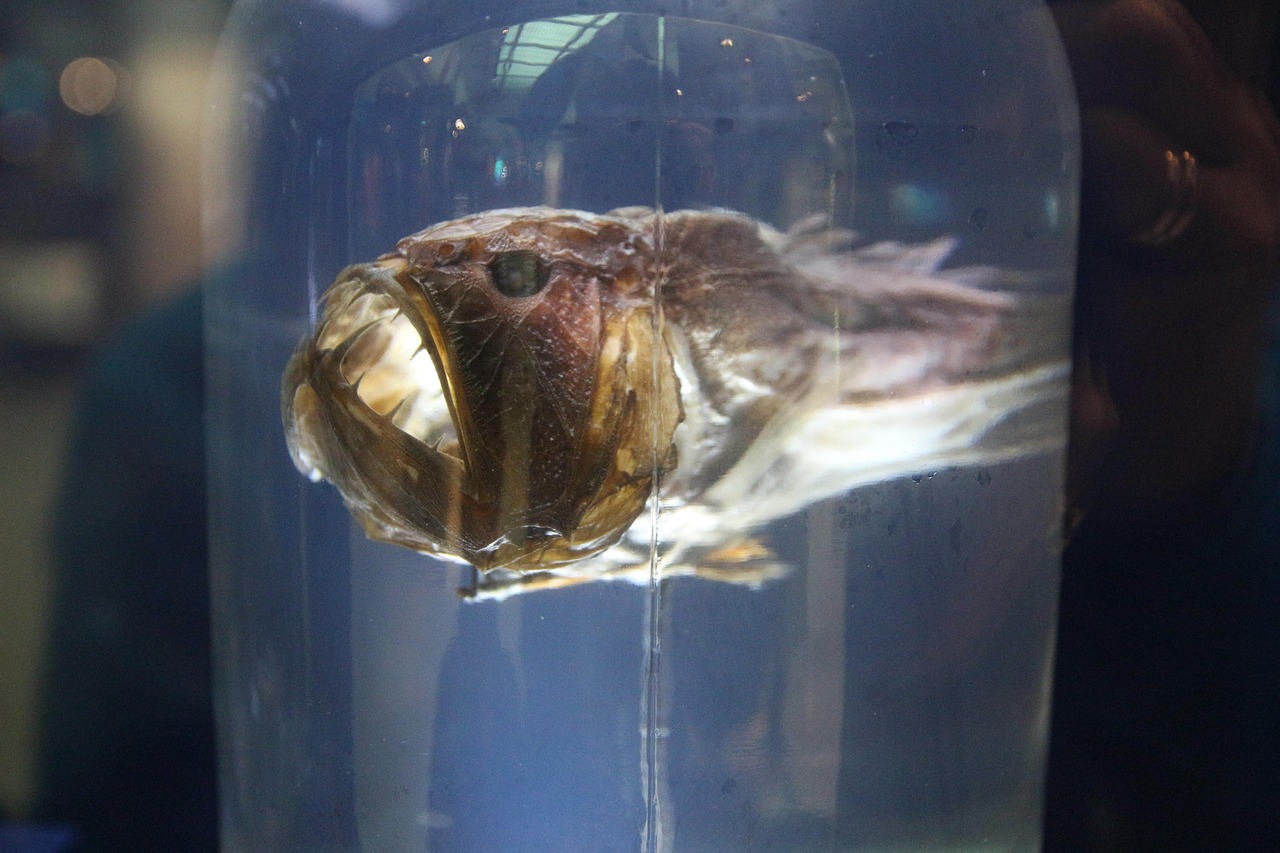
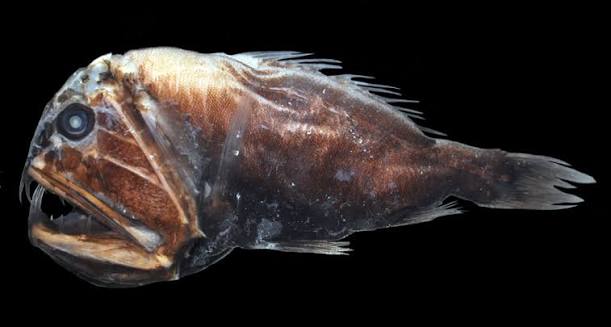
Similarly, the fangtooth fish has some of the largest teeth relative to body size of any fish in the ocean. While it looks terrifying, those oversized teeth simply increase its chances of holding onto a rare meal.

Some Animals Make Their Own Light

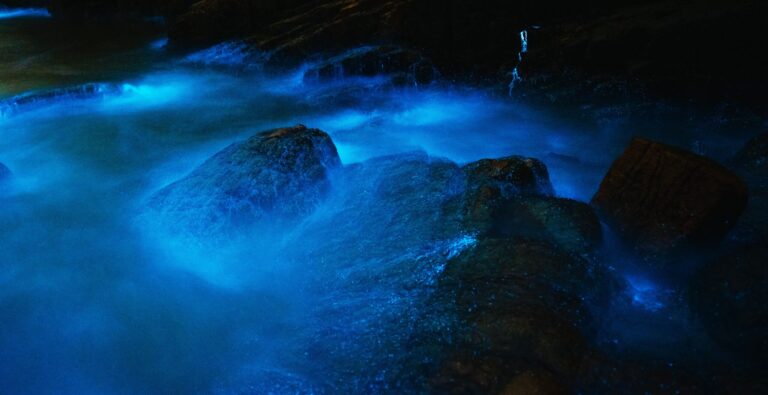
One of the most remarkable deep-sea adaptations is bioluminescence — the ability to produce light through chemical reactions. (For a deeper look, see Bioluminescence: Why the Ocean Glows)

Scientists estimate that most animals living in the open deep ocean use bioluminescence in some way.

They may use it to:

  • Attract prey
  • Communicate with potential mates
  • Confuse predators
  • Camouflage themselves

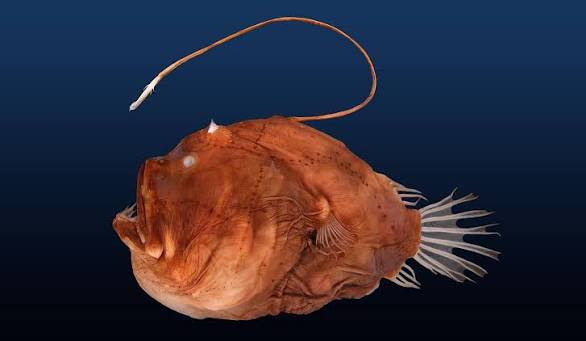
The anglerfish is perhaps the most famous example. A glowing lure extends from its head, acting like a fishing rod in the darkness. Curious prey approach the light, only to discover the predator waiting behind it.

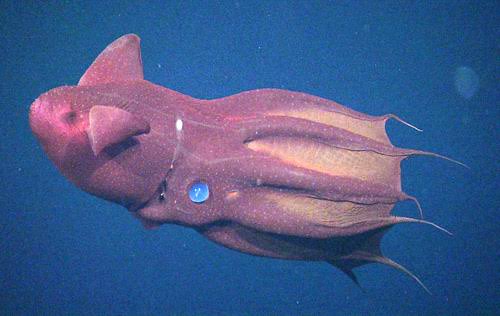
Some species use light defensively. The vampire squid, for example, can release a cloud of glowing mucus into the water, distracting predators long enough to escape.

Pressure Shapes Their Bodies Too

Pressure increases rapidly with depth. At 1,000 metres below the surface, the pressure is roughly 100 times greater than at sea level.

Deep-sea animals have evolved bodies that can function under these extreme conditions. Many have softer tissues, reduced skeletons, and fewer gas-filled spaces than shallow-water species. These adaptations help them cope with the crushing pressure of the deep ocean.

While pressure influences how deep-sea animals are built, darkness and food scarcity are usually responsible for their most unusual-looking features.

Why the Blobfish Looks So Different

Some deep-sea animals look strange because we are seeing them outside the environment they evolved for.

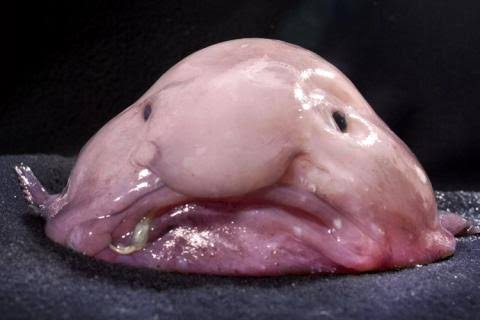
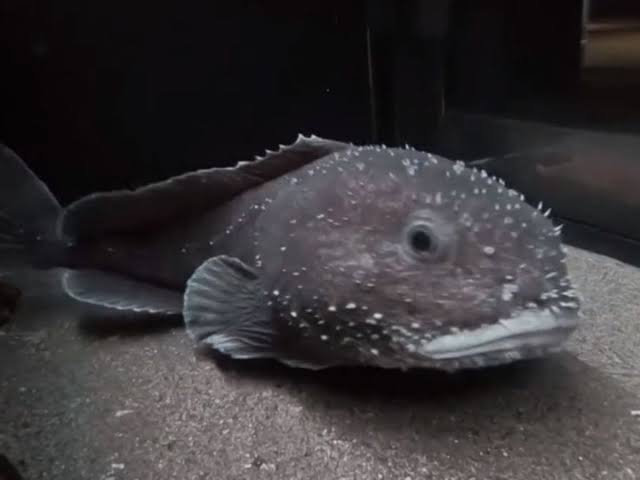
Perhaps the most misunderstood example is the blobfish.

Photos of blobfish often show a drooping, gelatinous face that appears almost melted. However, those images were taken after the animal was brought to the surface.

At the depths where blobfish normally live, the surrounding pressure helps support their soft body. Removed from that environment, their tissues lose shape and collapse, creating the famous appearance that made the species an internet sensation.

In its natural habitat, a blobfish looks much more like an ordinary fish than most people realise.

We’re Still Discovering What Lives Below

Despite covering more than half of the planet, the deep ocean remains one of Earth’s least explored environments.

Extreme pressure, darkness, cold temperatures, and the cost of operating deep-sea submersibles make exploration difficult. As a result, scientists continue to discover new species, many of which possess adaptations unlike anything seen before.

In some cases, animals are observed only a handful of times before disappearing back into the darkness.

A Different Definition of Normal

If humans had evolved thousands of metres below the surface, deep-sea animals might not seem strange at all.

What we call “weird” is often just unfamiliar. Every oversized eye, glowing lure, transparent head, and needle-like tooth exists because it solved a problem that life in the deep ocean presents.

The deeper scientists explore, the more unusual creatures they discover. But perhaps the real surprise isn’t how strange these animals are — it’s how many different ways evolution has found to survive in a world almost completely unlike our own.

Explore More

Scroll to Top