Why Do Rays Jump Out of the Water?

Every so often, the ocean does something that seems to defy common sense.

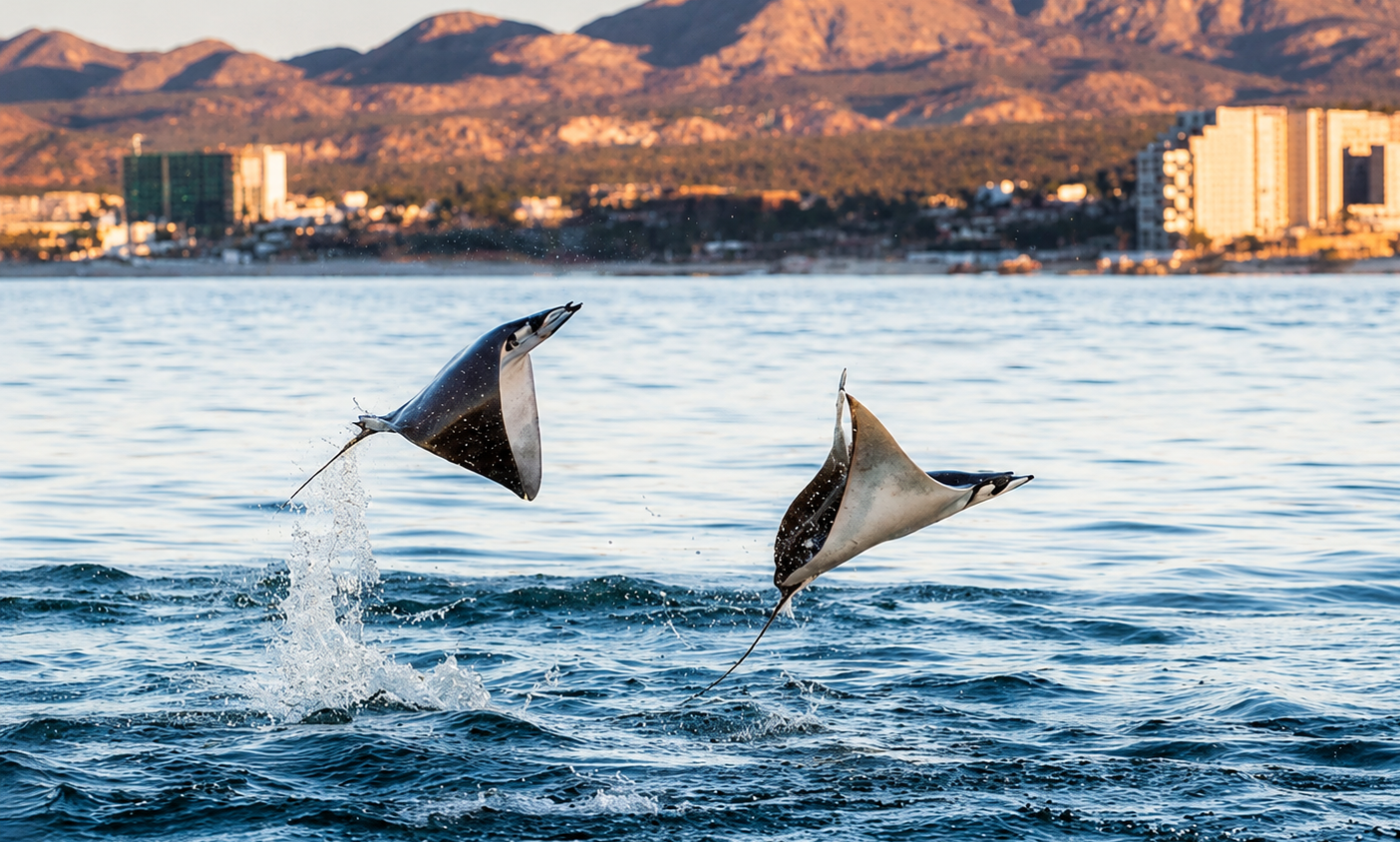
A broad, winged shape erupts from the surface, hangs in the air for a moment, then crashes back down in a plume of white spray.

The animal responsible isn’t a dolphin, whale, or seal.

It’s a ray.

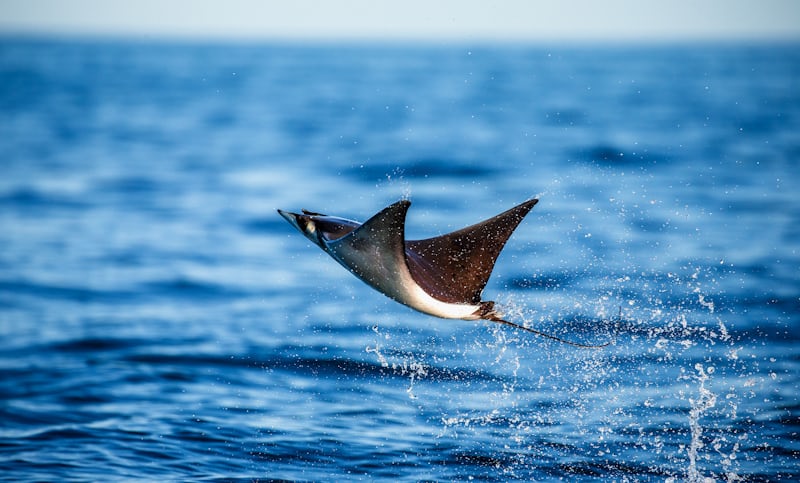
Around the world, species such as eagle rays, manta rays, and devil rays regularly launch themselves clear of the water. Scientists call the behaviour breaching, and despite decades of observations, they still can’t fully explain why it happens.

Which Rays Actually Jump?

Not all rays are known for leaving the water, but a few species have turned breaching into a signature behaviour.

Spotted eagle rays are among the most frequently observed breaching rays, often bursting from the surface in graceful arcs before disappearing beneath the water again. Along Australia’s east coast, Heron Island is one of the best places to witness this spectacle.

Manta rays perform some of the most dramatic breaches of all. Despite weighing hundreds of kilograms and spanning several metres across, they are capable of launching their entire bodies clear of the water.

Devil rays are also renowned for breaching. While generally smaller than mantas, they are often observed leaping repeatedly and can sometimes gather in large schools, creating remarkable displays as multiple individuals launch themselves from the surface.

Other ray species occasionally break the surface, but these groups are the ocean’s most frequent aerial performers.

Check out our video taken of an eagle ray breaching at the Heron Island harbour:

An Expensive Behaviour

Breaching may look effortless, but it isn’t.

Unlike fast-swimming predators such as tuna, rays have broad, flattened bodies designed for efficient gliding. To become airborne, they must build momentum underwater before carrying it through the surface and into the air.

For larger species, the feat is especially impressive. Manta rays can weigh hundreds of kilograms, yet they are still capable of launching their entire bodies clear of the water.

The amount of energy involved is one reason scientists believe breaching serves an important purpose.

Why Is This Behaviour So Difficult to Explain?

Scientists usually identify the purpose of a behaviour by looking for patterns.

If rays only jumped while escaping predators, the explanation would be straightforward. If they only jumped during mating season, researchers would have a strong clue.

But breaching doesn’t follow a single pattern.

Rays leap near cleaning stations. They leap during courtship. They leap while travelling. They leap when predators are nearby. They also leap in situations where no obvious trigger can be identified.

This is what makes the mystery so fascinating. The same behaviour appears in so many different circumstances that scientists increasingly suspect there may not be a single explanation.

Instead, different breaches may serve different purposes.

Shaking Off Parasites

One of the strongest explanations involves parasite removal.

Like most marine animals, rays carry tiny hitchhikers. Small crustaceans and other parasites can attach to their skin or gather around sensitive areas such as the gills.

A ray crashing back onto the surface experiences a powerful impact. Researchers suspect this impact may help dislodge unwanted passengers, much like an animal scratching an itch.

This theory is supported by the fact that rays often breach repeatedly. If one jump helps remove parasites, several jumps would be even more effective.

Yet the explanation has limits. Rays are often seen breaching when they appear healthy and show no obvious signs of heavy parasite loads, suggesting there is more to the story.

Sending a Signal

Another possibility is communication.

When a large ray lands, the splash doesn’t just create noise above the surface. It also sends vibrations through the water that other rays may be able to detect from considerable distances away.

Researchers have suggested these disturbances could help rays locate one another, maintain contact while travelling, or attract potential mates.

Rather than communicating a complex message, the splash may simply act as a long-distance signal:

“I’m here.”

It’s an intriguing idea, but proving it is difficult. Following the movements and responses of wild rays across large areas of ocean is no easy task.

Escaping Predators

Some breaches almost certainly have a more immediate purpose.

Large sharks, including hammerheads, prey on many ray species. If a ray is being pursued, launching from the water may create a brief opportunity to break the predator’s rhythm and gain a crucial advantage.

A sudden leap forces the predator to react to a rapid change in direction, potentially creating enough separation for the ray to escape.

This explanation is convincing in situations where predators are present. The problem is that rays also breach when no threat is visible.

Predator avoidance is part of the puzzle, but it is unlikely to be the entire answer.

Check out the below video taken of an eagle ray breaching to escape a hammerhead shark

Courtship and Mating

Breaching may also play a role in reproduction.

Researchers have observed increased jumping activity during mating periods in several ray species. A high breach requires strength, energy, and good physical condition, making it a potential way to advertise fitness to potential mates.

Many animals rely on costly displays during courtship. Peacocks grow elaborate tails. Deer clash antlers. Birds perform aerial displays.

For rays, launching into the air may serve a similar purpose.

Could Rays Be Playing?

This is perhaps the most controversial explanation.

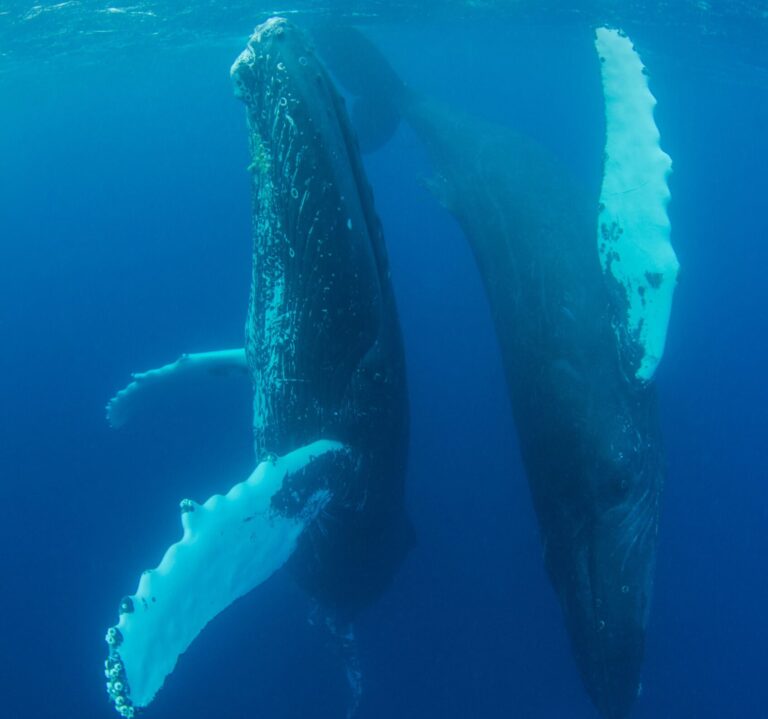
Scientists increasingly recognise that many animals engage in behaviours that don’t appear directly linked to feeding, reproduction, or survival. Dolphins surf waves. Sea otters juggle stones. Humpback whales repeatedly breach despite the enormous amount of energy required.

Some researchers have suggested that at least some ray breaches may belong in the same category.

That doesn’t mean rays are “having fun” in the human sense. But it does raise the possibility that not every behaviour has a strictly practical explanation.

For now, the question remains open.

One of the Ocean’s Enduring Mysteries

The most honest answer to why rays jump is that there may not be a single answer.

A manta ray breaching repeatedly in open water may not be doing the same thing as an eagle ray fleeing a predator or a devil ray displaying during courtship. Parasite removal, communication, mating, predator avoidance, and perhaps even play may all contribute depending on the situation.

What makes the behaviour so compelling is not that we have several explanations.

It’s that none of them fully explains every jump.

Every time a ray launches itself into the air, it performs a behaviour scientists still can’t fully account for.

For all we’ve learned about the ocean, some of its most visible animals are still keeping secrets.

Explore More

Scroll to Top