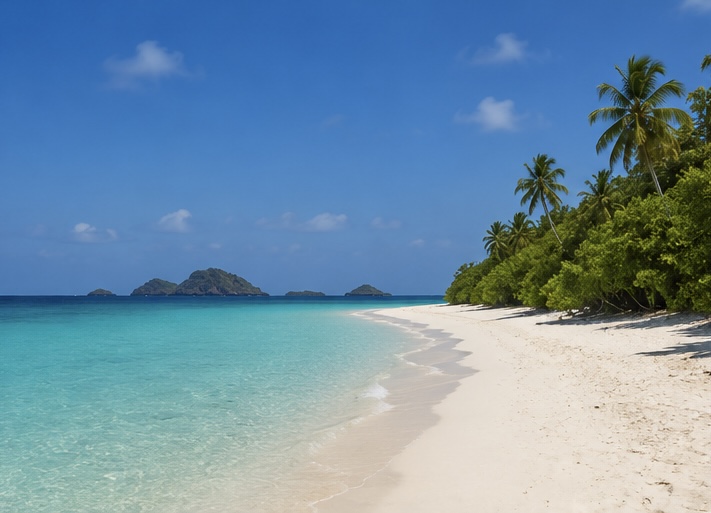
Most people imagine the white sand beneath their feet comes from broken shells, weathered rocks, or centuries of waves grinding the reef into powder.
Those things do contribute — but on many tropical coastlines, a surprising amount of that soft, pale sand comes from a brightly coloured reef fish.
Parrotfish are a quiet workhorse of coral reefs. Their constant grazing keeps algae in check, supports coral growth, and, in one of nature’s most unexpected twists, helps create the very beaches people travel across the world to enjoy.
Once you understand what parrotfish do, it becomes difficult to look at a tropical beach the same way again.
What Are Parrotfish?
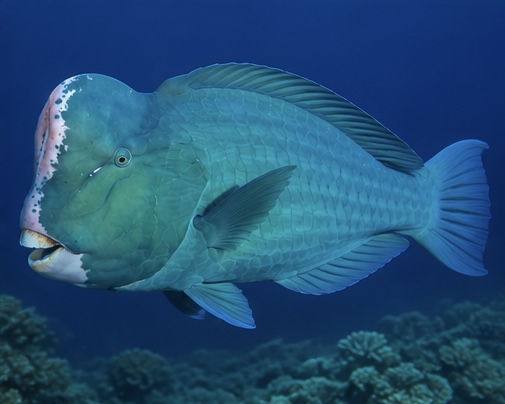
Parrotfish are found throughout tropical and subtropical oceans, with more than 80 species worldwide. Some are small and shy; others — like the bumphead parrotfish — can grow longer than a person is tall.
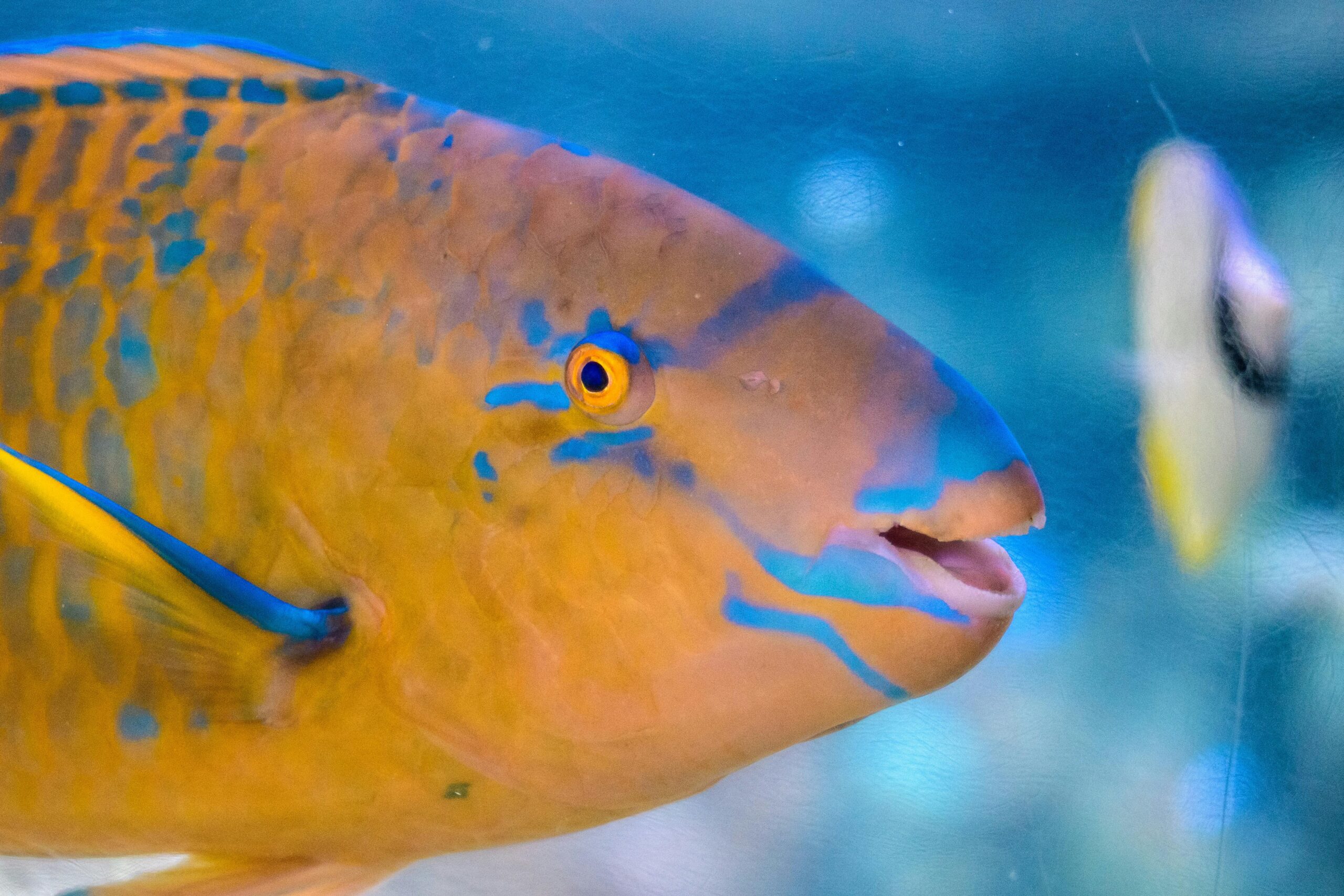
The name ‘parrotfish’ comes from their remarkable beak: a fused set of teeth strong enough to bite into solid limestone. These teeth are constantly replaced and contain a highly organised crystalline structure that makes them remarkably resistant to wear, allowing the fish to scrape coral and rock throughout the day without significant damage.
They’re also some of the most colourful fish on the reef. Blues, greens, yellows, pinks, and purples are common, and many species shift dramatically in colour as they grow. A single species can include individuals so different in appearance that they look unrelated.
But while their colours often steal the spotlight, what makes parrotfish truly fascinating is the influence they have on the world around them. Few reef animals leave a larger mark on their environment than a parrotfish that spends its day doing little more than eating.
The Constant Search for Food
Parrotfish are tireless grazers.
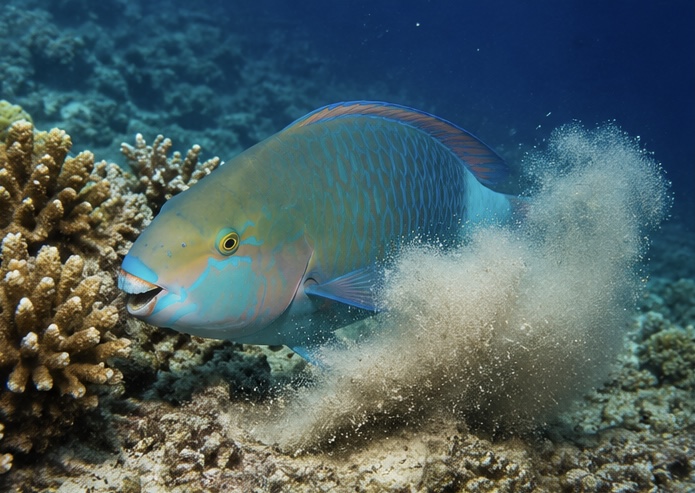
As they move across the reef, they scrape algae, microorganisms, and organic material from coral and rock. Some species skim the outer layer; others, known as excavators, take deeper bites that remove small amounts of the coral skeleton beneath. These species can take up to 20 bites per minute, each one producing the distinctive crunch you can hear underwater long before you spot the fish.
The Fish That Makes Sand
The most famous part of parrotfish biology happens after they eat.
When a parrotfish bites the reef, it often swallows tiny fragments of coral skeleton. Inside its throat, a second set of grinding teeth — the pharyngeal mill — crushes this material into an extremely fine powder.
The fish absorbs the nutrients it needs. The leftover limestone is expelled as soft, white sand.
In simple terms: parrotfish eat the reef and excrete sand.
Over time, this adds up. Just one large parrotfish can produce tens of kilograms of sand each year — approximately 90 kg for some species.
Where Does the Sand Go?
The sand produced by parrotfish doesn’t stay on the reef forever.
Waves, tides, and currents gradually transport particles onto nearby shorelines. Over years and decades, this accumulates to form the white coral-sand beaches on tropical islands around the world.
In places such as Hawai‘i, the Caribbean, and many islands across the Pacific and Indian Oceans, parrotfish contribute a substantial proportion of the sediment that ultimately becomes beach sand.
The next time you walk across a white coral-sand beach, there’s a good chance some of it once passed through a parrotfish.
Why Reefs Need Parrotfish
At first glance, parrotfish chewing on coral might seem harmful. After all, if they’re biting the reef, aren’t they damaging it?
While individual bites remove tiny amounts of coral, the overall effect is beneficial.
Without herbivores, algae can quickly overgrow a reef, blocking sunlight, smothering young corals, and slowing recovery after storms or bleaching events. By constantly grazing, parrotfish keep algae in check and create space for new corals to settle and grow.
In many cases, a reef without enough parrotfish faces a greater threat from unchecked algae growth than from the small amounts of coral removed during feeding.
This is why scientists consider parrotfish essential to reef resilience. They don’t just produce sand — they help maintain the balance that allows coral reefs to survive and recover over time.
Sleeping in a Bubble
As if making sand wasn’t unusual enough, some parrotfish have another trick that sounds almost made up.
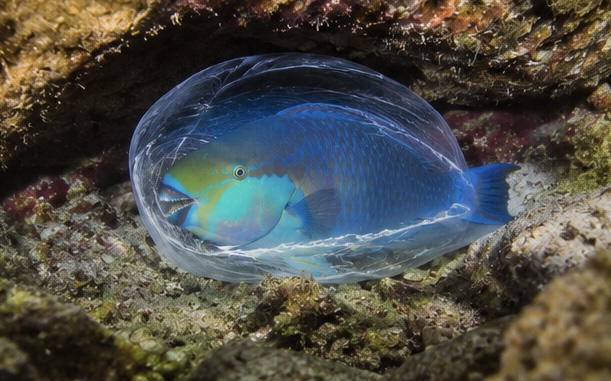
Every evening, certain species produce a transparent cocoon of mucus from glands near their gills. The fish settles into a sheltered crevice and wraps itself in this near-invisible bubble.
Cocooning themselves appears to serve several purposes:
- It helps mask the fish’s scent from nocturnal predators such as moray eels and reef sharks.
- It shields the fish from blood-sucking parasites that roam the reef at night.
Seeing a parrotfish asleep inside its shimmering bubble is one of the reef’s strangest sights.
Changing Sex and Colour
Many parrotfish also undergo remarkable transformations during their lives.
Numerous species begin life as females before later transitioning into males — a process known as protogynous hermaphroditism (try saying that ten times fast!). These changes are driven by hormones and can take years to complete. As they shift, their colours can change dramatically.
Threats to Parrotfish
Although parrotfish remain common in many regions, some populations are under pressure.
Overfishing is a major concern, particularly where large individuals are targeted for food. Removing big parrotfish reduces grazing pressure and can shift reef balance.
Habitat degradation also plays a role. Coral bleaching, declining water quality, pollution, and coastal development all affect the ecosystems parrotfish rely on.
Because these fish are so tightly linked to reef health, their decline can have consequences that ripple far beyond the species themselves.
Protecting parrotfish means protecting the reefs — and the natural processes that maintain many tropical coastlines.
Final Thoughts
Parrotfish are among the most fascinating animals on coral reefs.
Through their constant grazing, they help control algae, create space for new corals, contribute to reef recovery, and produce vast quantities of the sand that eventually reaches tropical beaches. Few animals influence both the underwater world and the coastline above it so directly.
So when you see a parrotfish grazing across a coral reef, remember that you’re watching an animal shaping both the underwater world and the beaches beyond it — one bite at a time.