The Shark That Walks on Land

If someone told you they’d seen a shark walking across a coral reef, you’d probably assume they were joking.

They’re not.

Hidden among shallow reefs lives a shark that moves in a way that seems impossible for a fish. It’s one of the ocean’s strangest predators—and one of its most endearing.

If the phrase “walking shark” makes you picture a great white stomping across a car park, relax. The reality is far smaller, gentler, and much more interesting.

What Is an Epaulette Shark?

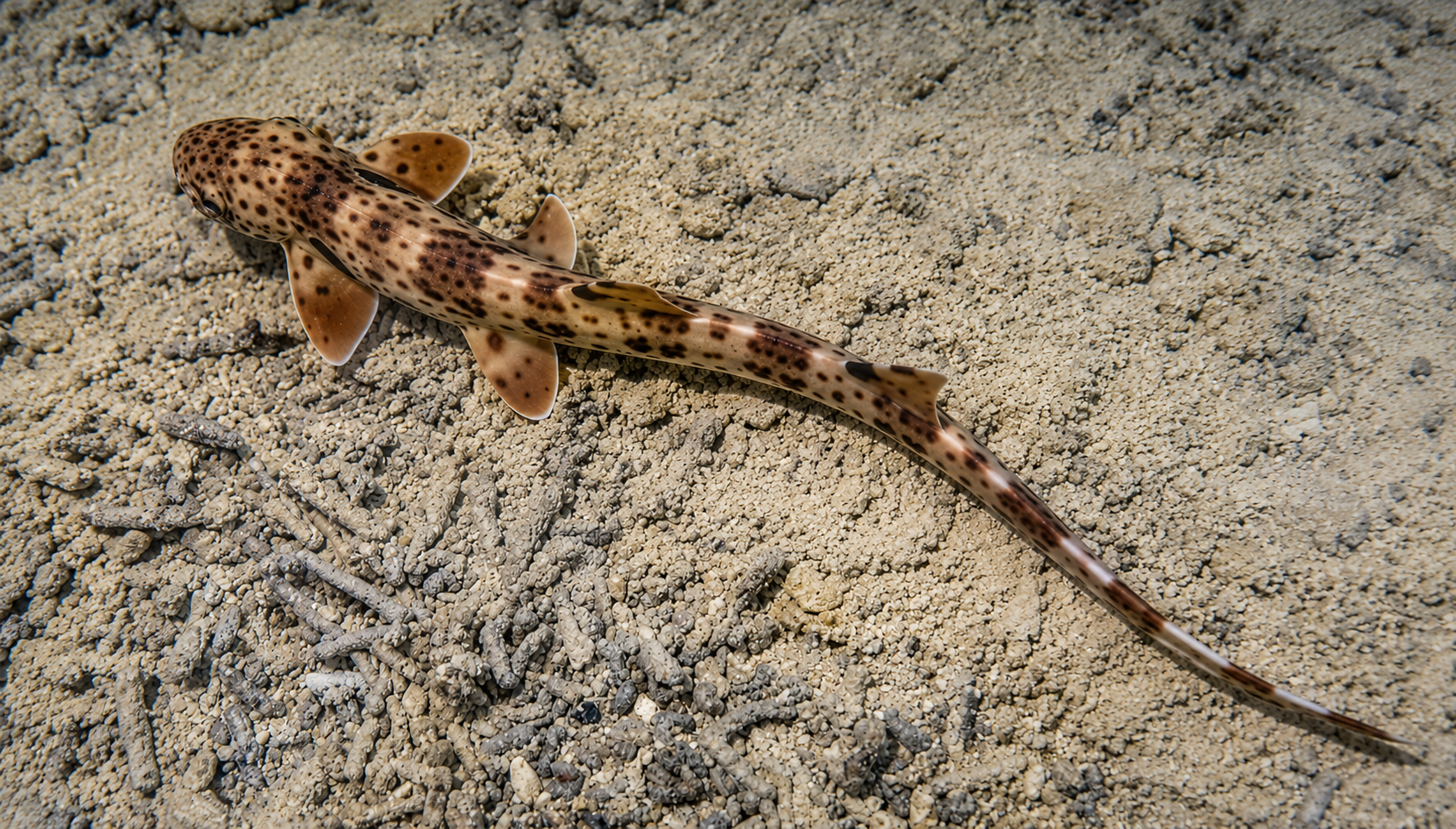
The epaulette shark (Hemiscyllium ocellatum) is a small shark found on shallow coral reefs in northern Australia and southern Papua New Guinea. Particularly common around Heron Island on the southern Great Barrier Reef, they’re often seen cruising across reef flats in water barely deep enough to cover their backs.

Their name comes from the bold black spot behind each pectoral fin—a marking that resembles the epaulettes once worn on military uniforms.

Unlike many shark species, epaulettes lay eggs rather than giving birth to live young. After roughly 130 days inside a tough, leathery egg case, a miniature shark emerges fully formed. Adults eventually reach about a metre in length.

At first glance, epaulettes seem like ordinary reef sharks. Then they start to move.

The Shark That Walks

Epaulette sharks don’t rely solely on swimming. Using their fins, they push themselves across the reef in alternating movements, giving the appearance of a slow, deliberate walk.

On a falling tide, this ability becomes essential.

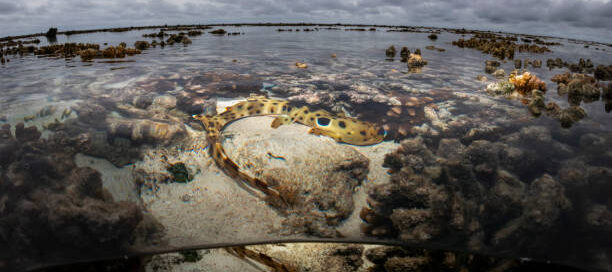
As the reef transforms from a continuous underwater landscape into a maze of exposed coral heads, ankle-deep channels, and isolated pools, larger sharks retreat with the water.

But epaulette sharks don’t.

They lift themselves over coral ridges, squeeze through narrow gaps, and cross shallow sand patches where swimming simply isn’t possible. Researchers have recorded them moving between isolated pools and navigating reef sections that would stop many other fish in their tracks.

Check out the YouTube video below from National Geographic that shows an epaulette shark walking across exposed reef

Why Walking Matters

Walking allows them to reach parts of the reef that become inaccessible to most predators.

Low tide traps small fish, crabs, shrimp, and other animals in shrinking pools.

For an epaulette shark, that’s an opportunity.

Its ability to crawl from pool to pool turns the exposed reef into a private buffet—one that opens only when the tide falls enough to expose the reef. 

Surviving Low Tide

Life in isolated tide pools comes with another challenge: oxygen.

As trapped animals continue breathing and water circulation slows, oxygen levels can drop dramatically. Conditions that would stress—or even kill—many fish can develop surprisingly quickly.

Epaulette sharks have evolved a remarkable solution.

When oxygen levels fall, they slow their heart rate, reduce their energy consumption, and enter a low-power state that allows them to ride out harsh conditions.

Studies suggest epaulette sharks can survive for up to an hour in near oxygen-free water.

For an animal living on a reef where pools can become isolated for hours, that’s an extraordinary advantage.

Life in isolated tide pools comes with another challenge: oxygen.

As trapped animals continue breathing and water circulation slows, oxygen levels can drop dramatically. Conditions that would stress—or even kill—many fish can develop surprisingly quickly.

Epaulette sharks have evolved a remarkable solution.

When oxygen levels fall, they slow their heart rate, reduce their energy consumption, and enter a low-power state that allows them to ride out harsh conditions.

Studies suggest epaulette sharks can survive for up to an hour in near oxygen-free water.

For an animal living on a reef where pools can become isolated for hours, that’s an extraordinary advantage.

Tiny Predator, Serious Senses

Epaulette sharks feed on prey that often hides beneath sand, under rubble, or deep within reef crevices.

To find it, they rely on two powerful tools:

  • Smell, which helps them detect chemical cues drifting through the water.
  • Electroreception, the ability to sense faint electrical signals produced by living animals.

Every heartbeat, muscle contraction, and nerve impulse generates a tiny electrical field.

Special sensory organs around the shark’s head can detect these signals, allowing hidden prey to be located even when it can’t be seen.

Combined with their ability to reach places other predators can’t, these senses make epaulette sharks surprisingly effective hunters.

A Different Kind of Evolution

When people imagine shark evolution, they often picture bigger teeth, greater speed, or more powerful predators.

The epaulette shark took a different path.

Instead of becoming larger or more aggressive, it evolved to exploit an opportunity that few other sharks could use. Walking, low-oxygen tolerance, and life on shallow reef flats allowed it to thrive in an environment that constantly changes with the tides.

It’s a reminder that evolution isn’t always a race toward becoming bigger, stronger, or faster.

Sometimes success comes from solving a problem no one else has solved.

Final Thoughts

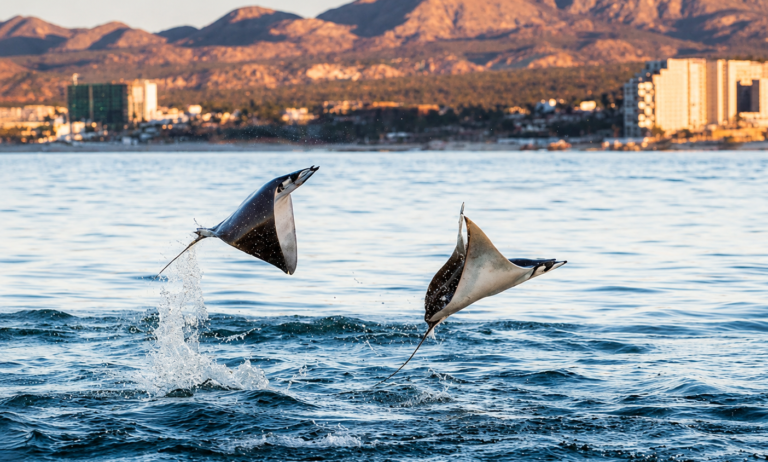
The ocean’s most famous animals often dominate our attention. Great whites, tiger sharks, whales, and giant manta rays tend to steal the spotlight.

Yet some of the most remarkable evolutionary stories belong to creatures few people have ever heard of.

The epaulette shark won’t break size records or star in dramatic shark documentaries. Instead, it reveals something arguably more fascinating: how life adapts to challenges in unexpected ways.

Because sometimes the most extraordinary animal on the reef isn’t the biggest predator.

It’s the shark that quietly walks across it.

Explore More

Scroll to Top